Wednesday, January 17, 2018

Why Do Catholic Young Adults Stay? Results Part 2: Life & Struggles

Please see my Explanation about the survey as well as Part 1 of the Results. For these results, we had a total of 301 people who answered some or all of these questions. A big thanks to every single individual, majority of whom came from the Catholic Geeks Facebook page, who participated!

I have provided a quick summary of Part 2. Following that is a more detailed breakdown of the results under each category.

The TL;DR Version

At least 77 participants attended Catholic school at some point in their lives while at least 13 participants were homeschooled.  While all homeschoolers had positive reactions to how their education influenced their faith, Catholic school attendees gave mixed responses to the influence of the educational experience on their faith. The most common struggles that people have had/ currently have in their faith lives revolved around being lukewarm, hard times finding answers, or difficulties practicing their faith on a regular basis. As far as struggles with Church teachings go, most of those struggles revolved around sexuality as well as the Sacramental or prayerful aspects of Catholicism. Majority of the resolutions to those conflicts came from relationships with friends or family, growing in the faith intellectually, and building their relationship with God. When it came to daily activities to practice the faith, the most common responses included prayer, the Rosary, and reading, both scripture-based and other spiritual works. Participants were often quick to point out that a lot of the practices mentioned did not always happen on a regular basis or were new habits they were trying to take on.
    Did You Attend Catholic School at Any Point? What Grades? Did Your Catholic School Education Influence Your Faith?

    13 participants to this question came from a Homeschool background. Anyone who commented about their homeschool experience had nothing but positive things to say about how homeschool influenced their faith lives. They mentioned things like "extensive theology study", "Catechism [was] taught every day", and that homeschool "allowed me to practice my faith on a deeper level". Beautiful stuff!

    Now, of course, when I posed this question, I was referring mainly to traditional Catholic schools, with kids in uniforms, majority connected to parishes, fancy private high schools, that kind of stuff. That's not to say I don't appreciate the input of the homeschoolers. Mainly just pointing out that this is an instance where my question was a little too broad, too open, compared to what I was intending to ask. Now, back to business!

    32 participants stated that they attended Catholic school their whole K-12 educational career. Another 10 responded that they attended Catholic grade school just from kindergarten to 8th grade. Following that, 7 other participants claimed only going to a Catholic high school. And finally, 28 people collectively claimed going to Catholic school off and on, or just a portion of their education. So,  altogether 77 participants claimed a Catholic school education.

    As far as the influence that Catholic schools had on responders, this was quite the mixed response. Firstly, 6 people just stated that Catholic school had an influence on them, without verifying good or bad (which again is my fault because of the way I phrased the question). Meanwhile, 17 participants mentioned some positive that came from Catholic school. Here's some quotes on the positive impact:
    • "It helped to enforce what I was taught at home"
    • "If not for the caring teachers in the high school environment I wouldn't be where I am today"
    • "It gave me occasion to learn how to defend my faith against bad instruction, helped keep God a constant thought, and occasionally meant I had a few good examples of the faith outside of my family"
    • "Had a class on Catholic social teaching with hard lines and answers taught by our priest. Best class to date"
    • "My high school was especially crucial to my faith formation, as I learned how to properly defend the faith"
    • "Being exposed to regular Catholic sacramental and devotional life, as well as meaningful discussions on theology and church history from teachers who cared about it intensely, influenced my investigation and ultimate decision to convert"
    • "Senior year of high school I took a class called 'Why Am I Catholic?' That was an apologetics course that really influenced me"
    Now, there were about 13 others who commented with mixed experiences at Catholic school. Whether it was differences between grade levels or just a negative counteracted by a positive in the same year, these 13 had both pleasant as well as critical things to say.

    And then there's the straight up negative influence that Catholic schools had on at least 17 other people. Perhaps influence is not the correct word in this case, but these 17 had at least critical things to say about Catholic school. Here's some reasons why:
    • "It made me not want to be involved with the church due to the people involved"
    • "It actually almost sent me away from the Church"
    • "Nothing was ever really explained, that's just the way it was"
    • "I left high school not remembering anything about my faith. I learned to pass a test, not for the knowledge or truth".
    • "The schools were AWFUL for Catholic teaching and living"
    • "The schools were completely unaware of kids talking about porn and sex, flashing each other, harassing others, and several kids were engaged in drugs and sex. It was horrible to be around that and have the schools going through the motions of Mass and spirituality. No one tried to fix the problem and engage the students. Some kids were really poor and had terrible home lives and no one engaged".
    • "It influenced it negatively as the nuns wouldn’t explain things to us and the priest was more interested in knowing if we had 'bad thoughts' when we were teens"
    1 person even straight up called out the Catholic schools in Ontario (apparently y'all need some massive reform up there according to this individual). 

    And then, not to be left out of the conversation, there was mention of Catholic colleges and universities in the responses. I didn't expect this (again, broad questions here), but they're certainly a worthy inclusion. 

    24 participants mentioned that they had gone to a Catholic college or university, majority of whom had been in a Catholic school at some point beforehand. It was kind of surprising to me that if these people talked about the influence these years had on their faith, most of them said college/ university had a negative influence on them. Although, at least 1 person talked about Mass in the dorm at Notre Dame and 1 other person talked about the positive influence of FUS aka Franciscan University of Steubenville. The surprise comes from the mention of the positive influence that other people talk about receiving during college/ university in responses to other questions.

    Were There Moments You Struggled/ Were Not Practicing? If So, What Brought You Back?


    At least 5 people shared an experience of struggling with lukewarm-ness, that feeling of not really being invested in the faith even if one is not totally fallen away. The reason for being lukewarm, that some participants shared on the survey, included the family not really being religious and marrying a non-Catholic.


    A similar yet different kind of lukewarm experience came from the college environment. 6 people referred to their college years as a time that they were struggling spiritually. Perhaps the most relateable example of this struggle came from 1 participant's testimony: "I was faced with the difficulty of accepting church doctrine or social standards.  I wasn't participating due to the knowledge of mortal sin, but [refused] to change my life". 

    On a slightly more serious note,  suicide and depression played a part in at least 3 responders' struggles. These feelings, according to the responders, came from "the social environment at the church", having "a very difficult time in college...[a] dark night of the soul", and a time where the participant "couldn't bear the pain and sorrow of [their] life".

    3 different participants struggled with going to Mass at some point. 1 said that at one point they found Mass "difficult and boring", another said they had difficulty making time for Mass, and the third one said "I did not go to Mass because of my lifestyle choices". 2 participants discussed priests in their lives being a source of struggle. 1 talked about "baggage and hurt from priests [they] had known" while the other mentioned trials that came from switching parishes due to poor pastoral leadership

    Then of course there's Sex! Don't worry, that's going to come up in more detail in other questions, but in response to this question, the struggles of 3 participants were sexuality related. Whether it was "confusion and hurt over sexuality", pornography, or just straight up being "knowingly deep in sexual sin".

    4 participants responded by saying they had a hard time finding people who could answer their questions or fully catechize and explain things to them. 1 separate individual said that since they did not fully understand Catholicism, they left the Church as a teen and had became a Wiccan.

    There were a couple mentions about belief in God being a struggle. For 1 person, struggling with belief was due to problems within their life and for the other it was...well, in their own words "I lost my belief in God, but He ended up being the only One there for me in the hardest point in my life". 1 individual mentioned their struggle with the Church's more conservative teachings such as pro-life and no contraceptives. And finally for 1 particular individual, it seemed to be a combination of things based on their place and time in life. As they said "I attended a Catholic high school with a lukewarm Catholic culture in my small town (500). Alcohol abuse, lust, drugs, they weren't uncommon to see from students out side of school. I fell victim as well".


    Some struggles were a little unique, because they related to participants who seem to be, by all other signs, practicing Catholics trying to grow in their faith.
    • Today I'm just struggling to find community with other Charismatics in my diocese and to find anyone in the world who is also liturgically Traditionalist and spiritually Charismatic.
    • Haven't been to Mass in a year because of my allergies and a lack of enriching community. I know those aren't good reasons, but when you have a panic attack walking into a church because someone smells like onions... It makes it hard to go. 
    • The services I'm going to seem too modern. People talking before, clapping after Mass, hymns that I'm not familiar with. Also, the young adult groups that I've tried to join are too forced. The person organizing the get together was also the youth leader, and she seemed to treat us like high school students. I'm 30, I don't need a chaperone.
    So, what brought people back or what helped them overcome these struggles? Even if people felt like they never really fell away from their faith or just never really explained their struggles in this survey, a ton of people were able to explain what either brought them back to Catholicism or what renewed that fire for God in their lives.

    Let's start with talking about the influence of people. For 11 participants, interaction with Catholic friends, peers, or groups helped them come back. Of these 11, there was mention of friends in youth groups, Newman Centers at college, doing choir with a college roommate, a Catholic Woman's Pregnancy Due Date Group, and a best friend convert. I smiled when I saw responses like "free food and friends" as well as "the compassion I see in others who are Catholic" because that just goes to show that simple joy, humor, and fun can be found in the Catholic Church through other people.

    College itself was actually a positive influence according to 5 responses to this question. Being in college allowed 1 individual to further study teachings and apologetics [arguments for and defense of faith and doctrine], another individual mentioned courses on Catholicism in college being a help, and 1 other person shared some personal experiences with a community of Catholics in college: "We would go to bars for theology on tap, go frisbee golfing, but just as easily hold spontaneous rosary sessions. I think having a group of like-minded people is key without it feeling forced. We were also pretty close with the priest then, too and talk to him about anything, and he would tell us truth in a comforting way". 2 other responders said priests have played a role in combating struggles. For another person it was accountability and encouragement of their youth minister "to not give up just because it got hard".

    This is how powerful a single person can be in helping someone else struggling in their faith. That person from small town (500) who fell victim to alcohol, lust, and drugs amongst lukewarm Catholics? They added  "I came 'back' through seeing 1 devoted Catholic. Now that I'm in college, I've started attending the TLM [Traditional Latin Mass], and my faith has never been better". If we learn anything from just this particular section, we learn that whether it's a whole community or just a lone person, our connection to other humans plays a vital role in our faith life, especially when it comes to overcoming struggles.

    Also in this survey response, the importance of relationships with family played a major part. 13 responders referenced family members as some component in their return. 6 of these people talked about their spouse being an influence, whether it was their spouse's conversion, their own conversion through their spouse, or even a change of life spurred on by a spouse's negative comment towards the Church. Children were mentioned in 4 of these responses and 1 participant commented that their grandparent's passing was the cause. 1 participant specifically credited the example of their parents. Then there was the testimony of 1 other individual: "Yes, I truly believe that my mother's prayers brought me back. I just woke up one day and went to Mass. I saw the priest the next day and after a powerful and moving confession, I felt whole again and at peace".

    For 1 participant, it was being involved in Lifeteen during their preparation for Confirmation. 4 people answered that a retreat or conference of some sort helped them, whether it was a youth conference or a Christ Renews His Parish (CRHP) retreat. Volunteer service was part of 2 peoples' responses, 1 mentioned volunteering for youth ministry while the other talked about volunteering with Religious Sisters and seeing the joy of the Sisters.

    Then, 13 participants talked about something involving the intellect, whether it was learning the reasons why we believe what we believe, looking for and finding satisfactory answers, asking and searching for every question and studying multiple points of view, apologetics, or even reading things from the early church. For 1 of these 13, "knowing the miracles performed by God and the Saints" makes it too hard to stay away. And another person said "Reading the entire Bible brought me back - turns out it's Catholic". 1 separate individual had a mixture of relationships and intellect by saying "Meaningful connections, practical application of the Catholic Social vision and the intellectual foundations of truth brought me back".

    Sometimes all you need is a little faith, which is what 3 participants verified when they said faith in God is what brought them back. 1 in particular phrased it this way: "Faith in God, love of Jesus. Faith in His Church". At least 5 people talked about building a relationship with God and love of Him helped bring them back. A couple felt called by God to return, another couple talked about their love for God, and 1 said "just the fact that God is always blessing me".

    8 participants stated that the Eucharist helped either bring them back or keep them faithful during hard times. Some said it was devotion to the Eucharist, 1 person stated that "there is a peace that I get from just sitting in Adoration". These 8 reinforced that there is a power that is found in the Eucharist.

    4 people had an experience with Confession that helped bring them back. 1 of these 4 testified that "A small encounter I had after confession helped set me on the path away from doubt- hearing the right thing at the right time, so to speak". 3 people referred to Beauty from the Church as an inspiration for them, including 1 who found beauty in the Church during a chronic illness and another who complimented the beauty of the Cathedral in Saint Paul, MN.

    The Holy Rosary became a powerful influence according to 4 people, including 1 person stating "The Holy Rosary changed my life" and 1 other person saying "The Rosary is my strength". 2 responders claimed growing up and reaching young adulthood helped their faith.1 participant simply stated "I could not find anything as good as Catholic liturgy and teaching".

    Media played a role in the lives of 2 responders. 1 person gave credit to The Catholic Channel on Sirius XM radio, which led them to Catholic Answers, and the other person said that listening to EWTN helped them. For 1 responder, a parish mission helped. For another, it comes from regular Mass attendance and involvement in their parish. 1 person said they were brought back because of "the grace coming from living in a house with a Tabernacle Chapel".  And 1 person simply said "Mercy".

    I wanted to end this section on a slightly more serious note, but with some hope added in as well. To lead this off, 1 person said "I came back because I felt like I was floating aimlessly". Another honest person admitted "I was knowingly deep in sexual sin. What brought me back was knowing I had no one left to turn to but God".

    There's the testimony of this person: "The mess I had made of my life left me suicidal, I couldn't bear the pain and sorrow of my life anymore, and so I asked Him to take it. And He did, He brought me back, I think when there was so little left of me, so little hope in me, that I was able to be humble and ask Him for help".

    And finally, bringing us back to the participant who said "Yes, I lost my belief in God, but He ended up being the only One there for me in the hardest point in my life". They continued that statement by saying "When I was depressed and had no friends in high school. He saved my life. There was no turning away from Him after that".

    What Teachings of the Church Have You Struggled With in the Past? In the Present? How Have You Overcome That Struggle?

    Here we go! The hot button topics! Everyone loves those...right? I think the beauty of seeing responses to this question is that, through honesty, it probably helps people connect with their fellow Catholics, creating a better sense of community. Like, "Hey, I've struggled with these issues too. Wait, you too? You mean I'm not the only one!?". The other nice thing about the responses is they offer some pretty good advice and life experiences for anyone who may be struggling with understanding a particular teaching. Please note that while various struggles are mentioned, it's never clarified whether this is a past or current struggle for each participant unless specifically stated in the latter part of this section.

    11 people talked struggling with teachings about the Blessed Virgin Mary, mentioning things like the Rosary, perpetual virginity, and her Ascension [I'm assuming they're talking about the Assumption]. 3 other times there was mention about the Saints, especially concerning veneration or intercessions.
      Abortion was brought up 7 times.
        Some variation of the term Same Sex Marriage was used 11 times. There was some variation concerning the teaching of Homosexuality used about 11 times. 1 person had stated that the church teaching on marriage was something they struggled with, which was hard to tell if that meant same sex marriage specifically or something else, so I just left it by itself. 1 other person specifically referred to the teaching against a same sex couple adopting children as a struggle.

        And that's not the only sex related responses. Man, a lot of people were focused on the sexy stuff here, or as 1 person put it "my teenage self wasn't a fan of the church teachings on sexual things" (that quote makes me laugh for some reason). The basic idea of struggling with the Church's sexual teachings was brought up from all angles by 10 people, including "sex is primarily for procreation", premarital sex, live-in boyfriends/girlfriends, what sexual practices are permissible within marriage, and abstinence.

        3 mentions of chastity in some way. The words birth control popped up 10 times, while phrases about the teaching on contraception got mentioned 7 times, including contraception in marriage. The acronym NFP was used 6 times. NFP meaning Natural Family Planning (as a bachelor virgin, I have no practical knowledge to explain NFP further). 

        The words masturbation and pornography were each used 3 times. 1 person talked about struggles with masturbation and pornography, while 2 others, very honest people, talked about addiction and masturbation. Infertility Treatments to help people unable to conceive children was brought up 2 times. 1 person wrote in "Condoms in the context of HIV in developing countries". 

        Confession and the Sacrament of Penance got 6 mentions. Transubstantiation and the True Presence of Jesus in the Eucharist was brought up 3 times. Teachings revolving around divorce or remarried peoples was mentioned 3 times, including 1 insistence pertaining to Communion. Papal Infallibility was named 3 times, suffering 2 times, and the existence of God also got a few mentions.

        Finally, there was at least 1 mention of struggling with the following 
        • Needing to attend Mass every Sunday
        • Socialist tendencies of Liberation Theology
        • No salvation outside the Church.
        • Mercy and forgiveness
        • Angels as represented in the Summa Theologica
        • The belief of Purgatory
        • Existence of Hell
        • Immigration
        • That priests can’t marry
        • The idea of free will and how God can simultaneously have a plan for the world, the mystery of the Trinity...and also charity for the enemy/just war
        So now, let's examine how people overcame any struggles they had in the direct words of the participants. These responses are hard to summarize and categorize, or maybe the quotes are just better than anything I could put my own interpretation on. Education and Intellect were major themes when discussing how people overcome their struggles, being mentioned in a variety of ways: 
        • I learned more about full church teachings and philosophy.
        • I remind myself that I had no problems with the teaching when I was able to logically analyze it in an unbiased state.
        • Realizing that the Church's wisdom is far greater than my own.
        • I learned the context for why the Church holds these positions.
        • After studying and understanding WHY the church teaches those things, it was easier.
        • I have questioned everything, but I have always found in-depth, logical answers. In fact, every time I think I have come up with a new idea, thirty people--all holier than I--from various centuries have already written about the same idea.
        • I finally both understood that people really believe it, knowingly, and so that maybe I could believe it too.
        • Educating myself on Church teaching and the abortion process, it wasn't difficult to come in line with Church teaching.
        • Overcame by learning where those beliefs came from plus deciding to trust the Church.
        • I think knowledge of WHY the teachings are the way they are is very important.
        • I overcame it by rational discussion and openness to the Holy Spirit.
        • Through other Catholics leading me to Church documents I was able to better understand.
        • What helps me is continued prayer and reading and seeking of understanding and mercy.
        • Through patience and reading on the topics.
        • [I did] my own reading and research.
        • I researched why the church teaches its stances...and I came to agree.
        That's not to say faith doesn't play a part either. We are people of BOTH Faith AND Reason. Again, in their own words:
        • Through having faith in God was I able to overcome them. 
        • I still struggle and it's faith that keeps me going.
        • I trust that God has His reasons, so I will follow His will.
        • There is simply too much that isn't explainable without Him.
        4 people discussed how both time and prayer helped them overcome obstacles, including: 
        • It took being away from the church. Living a faithless life in that lifestyle to realize that God wasn’t there. After returning, a lot of prayer and time spent with God.
        • I figured if the Church was right about everything else they must be right about these issues. I put my faith and trust in God and prayed that he would help me see and understand more clearly. He always did!!
        • I just follow teaching and pray for help.
        The idea of time and prayer also came into effect with those overcoming struggles with Marian teachings:
        • I overcame it by being less ignorant of it all. 
        • Continuing to pursue a relationship with the Blessed Mother. 
        • [Ascension/Assumption] Prayer for understanding.
        When it came to accepting teachings revolving around homosexuality, the following were mentioned: 
        • Studying Theology of the Body
        • Aided by time, good teachers who explained the truth, and the documentary "Third Way".
        • I took the class Christian Marriage at university. 
        • I was open about how the teaching confused me. I asked questions to priests to get a fuller understanding of the teaching and how it related to present day life.
        • I had the teaching explained to me by a friend, I was able to understand the nature of the human person and why it is wrong to act on same sex attraction.
        Then there's the general collection of sex-related responses:
        • The person who said "chastity (in thoughts) was difficult before I was married" then explained "now the mystery is gone and it's not as difficult for me" (which makes me laugh).
        • 1 person who struggled with contraception presented this life experience: 
          • Reading "Good News about Sex and Marriage" 
          • Doing marriage prep
          • Learning/practicing NFP with my husband.
        • For someone who struggled with both contraception and sex before marriage: "Having a Theology of the Body background of engaging, honest, simple, not overly-preachy truth was a huge help".
        • For 1 individual struggling with Sexuality, an act of faith by "trusting that Christ speaks through His Church".
        • "I struggled with masturbation because I was addicted to it. After a while, I couldn't deny what my addiction was doing to my life. I now completely agree with and submit to the Church's teaching:.
        • 1 person testified to struggles with teachings on masturbation, pornography, and sex: "I researched every doubt and couldn't argue. I can honestly say I was addicted. From there, what helped me overcome it was reading intellectual arguments from the Church, praying only the Sorrowful mysteries [of the Rosary], saying the Anima Cristi, a few litanies, and the chaplet on the wounds of Jesus. I strictly prayed these prayers for a few weeks, until I saw more progress and eased up slowly...I've been successfully chaste for almost 6 months, starting on St. Maria Goretti's feast!".
        • Infertility treatments: "we choose our faith over in vitro/ in utero".
        • Condoms in the context of HIV in developing countries: "Understanding that the health of the soul is more important than the health of the body helps".
        • I understand the detriment that birth control causes.
        • "I did a lot of reading and research and came to understand" the beauty of the teaching on birth control.
        • "It wasn't until I was married that I realized the importance of this teaching [on birth control]. Apologetics on the subject helped as well".
        For those who struggled with Confession:
        • Looking at the CCC [Catechism of the Catholic Church] and the Scriptures that are cited in support of the Sacrament changed my mind.
        • Found a parish where the priests make Confession readily available so that I am positively peer pressured into going.
        • It wasn't until I attended Confession in the Byzantine tradition that I was healed of my fear of confession.
        Suffering:
        • I primarily deal with this by attempting to draw upon a logical mindset.
        • Learning the value of redemptive suffering through daily trials and more prayer.
        Concerning struggles with the Eucharist, 1 person said: "It wasn't until I had read 'Jesus and the Jewish Roots of the Eucharist' by Brant Petre that I came to understand and fully believe".

        Other miscellaneous responses about overcoming obstacles included: reading Pope John Paul II, Pope Benedict XVI, and Dr. Ken Miller, debating with a group of devout and learned friends, and reliance on the examples and intercessions of the Saints.

        Currently, What Are the Daily Things You Do to Practice Your Faith?

        A great majority of these answers involved practices or actions that are inconsistent, or at least are more weekly or monthly in practice. Majority of the people responded that they try to do X,Y,Z every day, but added that it doesn't necessarily happen every day. So, there'll still be a lot of key words and phrases here to answer the question, just with the background understanding that the practices are not necessarily a true "daily" practice in the strictest sense. I can't fault anybody if they're at least making an effort to do some of the following on a regular basis to know God and glorify Him more.

        Of course, the most common, almost knee-gut reaction, was saying "Praying" or "Prayer" or "Pray" in some variation. There were 65 types of these general prayer responses, including 3 specific mentions of mental prayer, 1 person saying "prayer with spouse", 1 person saying "my holy hour [an hour devoted to prayer] is the most important", and 1 person saying "Pray and keep God's law". Specific prayers or styles of prayer included the Anima Christi, Angelus, saying "Thank you" to God regularly, contemplation/meditation, "prayers from my 1962 Roman Missal", and 3 people making mention of praying a novena.

        The most popular type of prayer specified in these responses was the Holy Rosary. 45 responders used Rosary in their response. Some other prayers, in connection to the Rosary or of similar style, that were mentioned included the Divine Mercy Chaplet (4 times), Chaplet of St. Michael, Little Crown of the Blessed Virgin, and seasonal Marian hymns.

        Then there were the specific mentions of what I would call bedside prayer, or perhaps a better way to phrase it is "Prayer in the Morning & Night". These are the prayers that are said first thing in the morning as well as at the end of the day, perhaps while kneeling beside a bed (hence bedside prayer?). 17 people talked about praying at morning and/ or at night. Types of prayers mentioned included Morning Offering, nightly examination of conscience, "a few Haily Mary's before bed", nighttime prayer with family, and "Charismatic praise & worship in the morning (alone)".

        At least 12 participants mentioned some variation of what I'll term as sporadic/intentional prayer. These are the kind of prayers that are not pre-planned, but just happen throughout the day as need be. For some, that meant just talking to God. For others, it's praying for the repose of the soul of anyone that passed away that day or making the sign of the cross at various moments throughout the day. This kind of prayer is often casual and small in length, but it occurs throughout the entirety of the day and it helps emphasis that communication factor of our relationships with God.

        11 mentions specifically revolving around The Divine Office/ Liturgy of the Hours, whether it was just the Compline late in the day, Vespers, Lauds, or just plain old Divine Office or Liturgy of the Hours. Some variation of a mealtime prayer was mentioned around 7 times. 6 participants mentioned praying specific devotionals or for the intercession of specific saints.There were 4 mentions of the Chotki/Jesus Prayer as part of the daily faith experience.

        18 responders discussed reading the Bible as a daily practice they do or are starting. These kind of responses included reading the Gospel and the other readings for Daily Mass, Bible Study participation, and at least 2 people mentioned reading both the Bible and the Catechism of the Catholic Church.

        30 people in this survey talked about making an effort to attend  Daily Mass. At least 7 people talked about spending time in Adoration. 5 people referred to Confession as an important practice in their faith lives.
          11 other people mentioned some form of spiritual reading, reading texts focused on the faith or written by fellow Catholics. These responses involved reading about saints, reading the actual writings of Doctors and Saints of the Church, reading other Catholic non fiction, or just simply learning and studying.

          For 11 people, interacting with children is something influential for them. This included instructing their own kids or teaching kids through religious education programs.4 people emphasized discussion about the faith with family and friends as part of their daily faith journey.

          4 people emphasized liturgical living as part of their daily faith practices. This meant that they celebrate saints' feasts days, fast on appropriate days, and adjust their lives according to the liturgical season we're in (Lent, Advent, etc.).

          8 people responding to this question talked about media resources as part of their daily practice. These included Christian music, Catholic radio, movies, Catholic podcasts, Lighthouse Media CD, and faith related videos.

          4 people use journaling to practice their faith daily. At least 6 people talked about wearing a scapular, a miraculous medal, or another sacred medal. 6 people answered by naming groups they are part of (3 Facebook-related, 2 Catholic women's groups and 1 young adult group). 3 responders talked about starting Nineveh 90, a program combining spiritual practices and physical fitness, this year.

          Finally, sacred images at the home was mentioned by 4 participants. They talked about their religious art, crucifixes, and Icons. There was 1 specific quote that made me chuckle by imagining the reactions of anti-Catholic people who see it: "I pray and venerate the crucifix in my home".

          Stay tuned for the conclusion of the Results in the next blog post Part 3!

          Monday, January 15, 2018

          Why Do Catholic Young Adults Stay? Results Part 1: Demographics

          Please see my Explanation about the survey. For these results, we had a total of 301 people who answered some or all of these questions. A big thanks to every single individual, majority of whom came from the Catholic Geeks Facebook page, who participated!

          I have provided a quick summary of Part 1. Following that is a more detailed breakdown of the results under each category.

          The TL;DR Version

          Ages represented in the survey: 21 – 26 years old (33%), 27 – 32 (30%), and 33 – 39 (30%). The remaining 7% came from responses outside of the given age range. Women accounted for 72% of the responders, leaving 28% of responses from men. Cradle Catholics represented 73% of the total participants, while Converts represented 27%. The two most popular answers given for why people converted were the Church's history and personal relationships. Participants who received the Sacrament of Confirmation before high school accounted for 33% of responders, 43% came from those who were confirmed during high school, and 24% after high school. Finally, 84% of participants normally attend the Ordinary Form/ Novus Ordo Mass, 10% normally attend the Extraordinary Form/ Traditional Latin Mass, 3% said they normally attend two or more valid rites equally, and 3% normally attend an Eastern rite.

          Age 

          (297 responses)


          Reference: (Age: Number of Responses)

          When posting this survey online, both on the actual Google Form itself and also on my post about the survey to Catholic Geeks Facebook page, I had requested an age range of 21-39 year old participants. While there was quite a lot of representation from all ages within this range, here's how the Top 4 shaped up:

          26: 24 (Way to represent, my fellow 26 year olds!)
          27: 19 (Way to represent, my soon-to-be fellow 27 year olds!)
          28: 19
          34: 19 (The only representation of 30-somethings at the top, but how appropriate that this is the                       middle of the 30-somethings).
          21: 18
          25: 18
          24: 17

          Majority of the remaining age groups were in the double digits.

          22: 15
          30: 15
          39: 15
          36: 14
          29: 14
          32: 11
          37: 11
          38: 11
          31: 10
          33: 10
          35: 10

          The only one that was in the single digits in this range was:

          23: 6

          Now, by the grace of God's free will and the ability to do whatever we want on the internet, some people outside the range responded to the survey. Sure, I expected a couple of 20 year olds, just on the brink of becoming 21, to respond, but not as many that did.

          20: 13

          Then we even had some teens who had the audacity to complete this survey as well (punk kids...gotta love 'em!)

          19: 3
          17: 1
          14: 1

          My biggest shock was finding people beyond the 39 year old limit who wanted to submit responses to the survey (punks...I guess we're all young at heart though.)

          40: 2
          42: 1
          Sex 

          Not much to say on this category other than: Way to go, ladies! Men, let's step it up next time and really represent!

          So, as you might've been able to guess before even seeing the results, more women answered the survey call than men did. There were nearly 3 women to every 1 man in this survey.

          (300 responses)

          Female:  217 participants or 72.3%

          Male:  83 participants or 27.7%

          Cradle or Convert? 

          Again, not much to say here since results kinda speak for themselves and the results aren't necessarily shocking. It was another near 3:1 split, where the Cradle Catholics, those born and raised in the Church, dominated the number of Convert Catholics.

          (299 responses)

          Cradle:  218 participants or 72.9%

          Convert: 81 participants or 27.1%

          If Convert, What Inspired Your Conversion?

          Before diving into the reasons for people's conversions, it's worth noting that 7 people replied to this question explaining that they were a Revert, a cradle Catholic who had basically fallen away from their faith and over time chose to return to it, as if converted, with greater love for God and the Catholic Church. I know that I definitely feel the same way about my own faith journey, even calling my own return to faith a conversion experience for awhile before hearing the term "revert".

          There were two big reasons for why participants on this survey converted to Catholicism. The first one is the history and tradition of the Catholic Church, the authority and truth that upholds Catholicism. At least 20 people responded explaining that some variation of history, universality, and tradition of the Church was an inspiration, with 3 people specifically mentioning truth, 2 shout outs to the Church Fathers, and a couple mentions of authority or theology each. I loved this one response when they said they "recognized the roots of [their] faith were here, untainted".

          The second biggest reason for participants' conversions to Catholicism was through personal relationships. At least 19 people talked about some person in their life being a huge influence. This is a moment where men began to shine, since 6 times a husband/boyfriend was mentioned as the main inspiration. After that, 5 other participants gave shout outs to women in their lives, from wives to girlfriends to moms and even a grandmother. Also, there were 5 mentions of raising a family or the family unit being inspirations for conversion. Finally, there were 3 participants who talked about the influence of ministers and chaplains in their faith lives.

          2 people gave all the credit to God bringing them to the Catholic Church. 1 individual specifically stated the Holy Spirit was their conversion inspiration.

          4 participants specifically used the word Sacrament and the inspiration the Sacraments had on them, including 1 specific mention of the Sacrament of Reconciliation. Yet, perhaps the most influential Sacrament has been, of course, the Eucharist. 10 people discussed, in some form, the Eucharist, the Body and Blood of Jesus Christ, as a major inspiration for them. Within those 10 responses, 3 of them mentioned Eucharistic Adoration, praying in front of the Blessed Sacrament, with 1 participant saying "getting face-to-face with the Blessed Sacrament was the catalyst". Another individual specifically referenced John 6, the chapter of the Gospel of John where Our Lord Jesus Christ talks multiple times about receiving eternal life through consuming His body and blood.

          And where do you mainly find the Sacrament of the Eucharist? Why in the Mass, of course! 4 responders mentioned the Mass as part of their conversion, including 1 Latin Mass and 1 Easter Vigil Mass.

          7 people talked about some sort of media being an influence in their conversion. Things like EWTN and Mother Angelica, local Catholic radio and Sirius XM's Catholic Channel, author/speaker Scott Hahn, and St. Augustine's Confessions book were referenced. 1 person went so far as to say that they had "a spiritual experience seeing Gibson's Passion" [The Passion of the Christ movie directed by Mel Gibson].

          There were about 6 people that, while sharing a variety of different experiences, talked about what I would call an intellectual pursuit of Catholicism. These 6 people were the kind that did a bunch of research on the Catholic faith, reading about the saints or examining different denominations of Christianity until they settled upon Catholicism. Whether the Catholic Church was something that was forbidden to them earlier in life  or they just chose to seek it out through free will, these people talked about using logic and intellectualism as part of their faith journey.

          3 participants give credit to spiritual experiences that they had. They had stories where they talked about a "miraculous encounter", a "supernatural moment",  and an "intercession from the Blessed Virgin Mary and the Saints". 3 people mentioned a spiritual retreat or conference experience, including a Catholic charismatic conference. 3 other people emphasized the importance of Scripture in their faith journey, including 1 individual saying "I'm Jewish, so Isaiah 53 [a chapter the Catholic Church believes to be prophesying Christ's Passion and Crucifixion] inspired me". 1 other person simply said "Long story short: St. Paul".

          Travel played a part in 2 people's conversions, 1 while in Rome, the other 1 spending a semester in France. 2 other people actually credited Catholic school as a positive influence in their faith journey here. 1 person chimed in with the Rosary.

          There were other individual responses that just really stood out on their own. 1 person talked about infertility and the Catholic stance on ethical treatments being an influence. Another person referred to the Church's social teaching. A very honest person straight up said "Fear of Hell". Another person simply exclaimed "Holy Thursday!", which I didn't know whether that referred to the Mass, a spiritual experience, or something different entirely, so I just let it be its own solo, enthusiastic thing.

          Finally, there are two remaining responses that are really awesome quotes and bring a smile to my face. I'll just share them separately, like inspirational soundbits:
          • Pope Francis telling me to "get off my spiritual couch".
          • It was my teenage rebellion
          Confirmed Before, During, or After High School?

          Kind of a basic random question. However, I think it helps the participant especially to look back on their faith journey, comparing life before and after receiving the Sacrament of Confirmation. It's just interesting because I would think the results reveal two big things: The age you receive Confirmation often depends on which diocese you live in (different diocese have different ages confirmandi, the people receiving the Sacrament, receive it). Also, the after high school number largely reflects the number of converts in this survey, coming to the Church after the teenage craziness of high school.

          (298 responses)


          During: 128 participants or 42.9%

          Before: 98 participants or 32.9% (My people! I received the Sacrament in 8th grade).

          After: 72 participants or 24.2%

          What Mass Rite (Novus Ordo, TLM, Byzantine, etc.) Do You Normally Attend? 

          I was not very surprised and simultaneously a little surprised by the responses to this question. Perhaps the best way to look at the results is through an understanding of which Rites of the Mass are, currently, most readily available for Catholics, especially here in the United States.

          I wasn't surprised by how an overwhelming number of the responders normally attend the Novus Ordo/the Ordinary Form of the Mass (the rite most people, even non-Catholics, are familiar with today), and I wasn't too surprised when some people were confused by what I meant by saying Novus Ordo (which is Latin for New Order).

          I was somewhat surprised by how few responders said they normally attend the Traditional Latin/ Extraordinary Form of the Mass, which is seeing a resurgence now due in part to interest from young adults. Though maybe the number was smaller than expected because of the people in the Blend category. These are people who may go to a Latin Mass as well as a Novus Ordo Mass, participating in two or more different valid rites almost equally, depending on circumstances.

          I anticipated/ hoped I would get some responders representing the Byzantine Rite, though I was genuinely surprised to see 1 person say East Syrian and then 1 other person say Syro-Malabar, both different yet valid rites representing the Eastern side of Catholicism. Again, I think these results speak to the availability of the different rites and forms of Mass. At this point in time, almost every single parish does the Ordinary Form, a decent number also offer Extraordinary Form, and then a very small percentage celebrate the Eastern rites.

          (289 responses)

          • Novus Ordo/ Regular Mass/ Ordinary Form: 242 participants or 83.7%
          • Traditional Latin Mass/ Extraordinary Form: 30 participants or 10.4%
          • Blend: 10 participants or 3.4%
          • Byzantine: 5 participants or 1.7%
          • East Syrian: 1 participant or 0.34%
          • Syro-Malabar: 1 participant or 0.34%

          Check out Part 2 of the Results in the next blog post!

          Sunday, January 14, 2018

          Why Do Catholic Young Adults Stay? An Explanation

          This post is meant to act as a prologue to any and all result postings of my survey related to why Catholic Young Adults stay in the Church. This post will answer: "What inspired the survey?", "What is the point of the survey?" and finally "What to expect from the result postings".

          Over the past couple of years, I feel like I've seen multiple news headlines or online commentaries worrying about the population of the Catholic Church. Seeing different headlines saying things like "Why Are Millennials Leaving the Church?" or "Young Adults Aren't Going to Church Anymore" or "More People Stop Believing in God Before College Than Ever Before" can get pretty disheartening and irritating after awhile. Especially for a young adult Catholic man like myself.

          A part of me is also sitting here, selfishly, being like "What am I, chopped liver?". Like, we're paying so much attention to why people in my generation are leaving and trying to figure out what exactly is keeping them away that we're not paying attention to those of us who aren't even leaving. Hello, guys! I'm here! I'm trying real hard to practice my faith and grow in my relationship with God!

          I started to think that I'm probably not the only one who's had reactions to these news articles or has felt ignored despite being as faithful as can be or even growing as a Catholic disciple of  Jesus Christ. There's got to be other people around my age who have different yet similar experiences to my own, right? My point is that there's often so much worry and dread and concern that seems to come from the news articles that we see regularly now or the kind of talk that we might hear when figuring out how parishes can draw in younger people.

          Whether it was people coming into the Church later in life or if they've been here the whole time, I know I've seen plenty of other young adults in the Catholic Church, yet the headlines would make you think there's just a handful of us left. I decided that if I was getting all huffy about these cynical type of articles that 1) I needed to do something about it and 2) I need to present a positive, hopeful message rather than a negative, worrisome one.

          Why focus on the negative when instead we can focus on the positive? Perhaps by shifting our focus, we can transform the conversation.So, how do we shift this focus? My answer: create a survey that allows fellow Catholic young adults to give their voice and experiences to help  figure out why we choose to remain faithful to God and to Holy Mother Church. So, let's find out why Catholic young adults stay in the Church!

          Sure, there's books out there with more in-depth knowledge and examination on this subject. Just by announcing this survey on a Facebook group page, I had people talk about The Four Signs of a Dynamic Catholic by Matthew Kelly (a great read, by the way) and Forming Intentional Disciples by Sherry Weddell (on my reading list for this year). Yet, that's a ton of reading with all sorts of data, statistics, and long paragraphs of examination.

          For every great book like these worth reading, there's a large stack of news articles that are shorter in length and easier to read. So, I wanted to combat those news articles with something of similar length and intensity. Therefore, my solution is writing blog posts. Still going to throw a lot of information and statistics your way, just hopefully on a smaller, more casual scale that's easy and maybe even fun to read.

          I learned so many things while assembling this survey and the results. Number one being, choose an easy online option instead of a Word document to collect interest and data. People had to point me in the direction of Google Forms before this thing took off. The next thing I learned was that maybe putting a bunch of questions that allowed long form sentence answers was not the best way to go. Only by examining the results did I see "Oh, I totally could've made this thing a multiple choice question and made this a whole lot easier for everybody!". Along with that, I realize that some questions could've been phrased differently. There are many open questions which provided answers from all sorts of angles. Lots of living and learning on this thing.

          When creating the survey, I set an age limit I was looking for, asking for participants aged 21-39 years old. This way, I felt like it gave enough time for hindsight and separation from other phases of life. Those at the younger end of the spectrum could look at their teenage and youth years without still being directly connected to it, really taking on that change into young adulthood. Those at the older end of the spectrum could reflect on the past couple decades of their faith life and see just how they've grown as a Catholic young adult before transitioning into regular ol' adulthood with bigger responsibilities.

          I readily admit I'm not a scientifically minded statistics guy nor am I a full blown Catholic scholastic know-it-all. I try my best to explain everything in a way that everyone can understand without either dumbing the information down too much or overexplaining something I don't fully understand. There's some survey responses that I was confused by, information or resources I had not known about before receiving these responses, and so on. I even had to look stuff up and figure out what certain acronyms stood for.

          You'll also notice that when analyzing or discussing the collected data, I will be doing so in my own style, in my own voice. Just be aware that I get goofy sometimes or maybe I just phrase things weirdly. But hey, it's not all my voice in this survey. There'll be quotes from the survey takers thrown in, and of course none of the information could be presented without those participants sharing their own personal experiences. There's tons of honest, vulnerable life-sharing going on in this survey, and that was beautiful to see as I was editing.

          My hope is that the responses to this survey will provide solid information to why young adults stay Catholic by sharing their life experiences. Moreover, I want these results to bring hope to all the people in and out of the Catholic Church, particularly fellow young adults. Perhaps there is a Catholic young adult who has fallen away or is struggling with something in their faith, these survey results could provide some assistance in their lives. Perhaps you know a young adult who has a certain struggle or doubt and you can use the information provided by the participants to guide that person towards answers. Maybe you're just a practicing Catholic young adult, just trying to do your best, and when you see this survey you can use the wisdom and resources shared by the participants to help you further pursue that relationship with God.

          There are many young adults in the Catholic Church and we should not take that for granted. We are here for a multitude of reasons and because of the experiences we have had in life. On top of that, there's always something we can do as a next step to be a better Catholic and grow in our relationships with God. I hope these survey results can show you that. Thanks to all who participated in this survey and thank you for checking it out.

          Sunday, December 31, 2017

          The Cinematic Version of Catholicism

          The following is an article written in the format found in The Catholic Hipster Handbook. Meaning it will have a Topic Article, Cool Saint, Forgotten Prayer, and Activity. This is written partially as a daydream, a creative writing exercise where I asked myself "If I had contributed something to The Catholic Hipster Handbook, what would it look like?". If you happen to enjoy this post, feel free to check out my thoughts on the book here or better yet go out and buy the book to enjoy the many great things it has to offer. Hopefully Tommy and fellow contributors will find this imitation a form of flattery instead of the bizarre fanboy weirdness that is actually is...

          Most of us have seen The Sound of Music, The Passion of the Christ, Les Miserables, and even Sister Act...and even The Exorcist. Sometimes you may have sat down with parents or grandparents who were watching a movie on TV and you might've seen Bing Crosby or Pat O'Brien playing a priest or Jennifer Jones portraying St. Bernadette. Point being that there's just those staple movies involving Catholicism that most of the American population has seen and it makes it feel like there's a very limited representation of Catholicism on the Silver Screen.

          In some ways, it may feel like the Catholic faith and the movies just don't really get along. Sure, there's those golden oldies from back in the day, but really, since the end of the Hays Code when American society started becoming more secular and relativistic,  how many good Catholic movies have been made compared to the vast amounts of trashy or anti-Catholic movies? I can almost hear some of you asking what the Hays Code is and others ready to blame these problems on Vatican II.

          Perhaps the answer to the above question comes in the form of other questions: What do you know about the Vatican Film List? When was the last time you sat through an exorcism movie? Wasn't that Brendan Gleeson movie about a small village priest in Ireland really well done?

          Basically, there have always been hidden gems of Catholicism in movies around the world, even today. The fact that there are a bunch of great movies about Catholicism out there that most people don't really know about is something that should perk up all of you Catholic hipsters out there. Hidden, obscure, indie!? There's just something truly hipster about the best Catholic movies. While every other Christian person out there is watching another sequel to God's Not Dead or supporting other "Christian" movies with a VeggieTales level of theology, you could be scavenging the libraries and the interwebs to watch some truly great pieces of Catholic cinema, such as:

          -I Confess (1953), a movie directed by Alfred Hitchcock about a priest who is falsely accused of murder and cannot break the Seal of the Confessional to claim his innocence.

          -Deliver Us From Evil (2014), where Eric Bana plays a New York cop that partners with an exorcist priest to stop a crime with supernatural elements.

          -Becket (1964), in which Richard Burton as St. Thomas Becket and Peter O'Toole as King Henry II go from friends to frenemies after Becket is made Archbishop of Canterbury.

          -The Hoodlum Priest (1961), a B movie shot in St. Louis about a real life priest that ministered to and evangelized ex-convicts.

          -Au Revoir Les Enfants (1987), a true to life French movie about two boys at a Catholic boarding school during World War II.

          Now, when I talk about Catholic Movies, I mean movies that are positive portrayals of specifically Catholic subjects. Movies where priests or nuns are the main characters. Movies about the lives of saints. Movies that involves the Sacraments and exorcisms. Movies that are biblical and movies that are about recent events. These traits are the basic elements of what define a good Catholic movie.

          I wasn't kidding about the library and the interwebs either. A lot of the best Catholic movies I've seen have been what I've found at my local library since they have a wide selection of DVDs to take home. Other times, I've had to search around Amazon or elsewhere on the internet to find that next special Catholic DVD. Occasionally you may come across a selection of DVDs at a Catholic supply store or at a conference or a relative may just give you one, but otherwise you're not going to have an easy time finding the truly great Catholic movies in major retail stores. You gotta go on a hunt and find the diamonds in the rough. Yet, that's part of what makes being a hipster so worthwhile, isn't it?

          Cool Saint

          St. Genesius

          I tried hard to find a saint that wasn't replicated from the book, but I think this saint's story is too applicable to the topic.

          St. Genesius was an actor from the Roman Empire during the third and fourth centuries. Tradition tells us that he was pretty much just living a good ol' pagan life when one day he had a brilliant idea to impress his pagan master, Emperor Diocletian, by creating a parody play that mocked Christianity. Putting his acting to the test, St. Genesius found some Christians (who were laying low because of religious persecution, mind you) and pretended to be interested in receiving the Sacrament of Baptism. All to do research on it so he could properly mock it in his parody. Hhhmm, sounds like method acting to me...an ancient Roman version of Daniel Day Lewis perhaps?

          Anywho, once he's got enough information, tradition says that St. Genesius cut ties with the Christians before actually receiving the Sacrament, grabbed his troupe, and put on the show in front of an audience, including Emperor Diocletian. Onstage, St. Genesius portrayed a sick man, receiving a baptism from a priest. Again, tradition says that right after the mock baptism, St. Genesius had a sudden conversion and he changed right there on the spot. This story kind of reminds me of stories like how Sir Alec Guinness converted after playing Father Brown in The Detective or how the actor who played Judas in The Passion of the Christ converted during the filming of that movie. There's just something about being in the spotlight and pondering God and faith in word and deed.

          So, St. Genesius, during this performance, turned it from a parody into a testimony by proclaiming Jesus Christ as God and King. He even told Diocletian himself to repent and convert. This did not sit well with the emperor, who had St. Genesius put to death. Therefore, as tradition goes, St. Genesius received a baptism by blood through his martyrdom.

          Forgotten Prayer

          Prayer to St Genesius
          Actor and Martyr

          Holy St Genesius,
          martyr for Christ,
          by the grace of the Holy Spirit
          through your acting
          you came to discover
          the truth of the Christian faith.
          In your first profession of that faith
          you were baptized through the shedding
          of your blood,
          offering your life for the praise and glory
          of our Lord Jesus Christ.
          Pray for those who dedicate their lives
          to the theatrical and cinematic arts.
          Like you may they find the presence
          of the Lord in their work
          and generously open their hearts
          to his teaching,
          living it in the midst of the challenges
          and demands of their calling.

          In this novena, I remember most especially…., commending him/her to your care.

          Let us pray:
          Eternal Father, in your love you call all men and women to come to know you and to share in your divine life. Through the intercession of your martyr, Genesius, who responded so generously to the grace of conversion, grant that the same grace may be given to those who as yet do not know you, and may be renewed in those who do. We ask this through Christ our Lord.
          Amen.

          Activity

          Go to Google and search "Best Catholic Movies". Look through the various lists you and find the movies that are specifically Catholic Movies like the descriptions above. Spot the names of movies you'd never heard of before and look interesting to you. Check out the trailers on Youtube or read a quick synopsis on IMDB. Of those movies that interest you, pick 3 movies to watch at home. Buy them, rent them, stream them, do whatever you legally have to do in order to watch these particular 3 movies in the next month.

          Sources:

          http://www.catholic.org/saints/saint.php?saint_id=185

          http://www.stgenesius.com/dedicatedmembers.html

          Saturday, December 30, 2017

          Book Review: The Catholic Hipster Handbook


          I received The Catholic Hipster Handbook as a Christmas gift in the year of our Lord 2017. After quickly reading it and feeling very passionate about the contents, I decided to share my thoughts and passion in the form of an extended review.

          The book title pretty much explains what it's all about. It's focused on Catholic subjects, written by various practicing Catholics with a Catholic audience in mind. It emphasized the Hipster attitude and mentality, the desire to be outside of trends, to be highly attracted to vintage things, and to dig deeper into stuff that is obscure in mainstream pop culture contexts. And it was a Handbook in the sense that it covered a variety of ways on how to be a Catholic hipster and provides the reader with various prayers and activities to push them to become an even greater Catholic hipster than before.

          Each chapter was written in this specific format:

          1) Article on chapter topic

          2) A Cool Saint (or Blessed) that connects to the topic

          3) A Forgotten Prayer that connects to the Cool Saint (or Blessed)

          4) An Activity that connects back to the topic

          It's hard to say that each topic is divided up into "chapters". Each chapter felt more like a short article or a blog post written by the individual contributors. Even the occasional footnotes sometimes made it feel more like a research paper from college than an actual book.

          With that being said though, each article is engaging, intriguing, and fun to read. The uniform format with which each article is written also gives the book more of a professional touch rather than just a potpourri of friends writing whatever they feel like contributing to a blog. And there was still enough individual approaches to that uniform style that allowed each contributor to stand out in their specific way and provide various amounts of information depending on the topic at hand.

          It helped me to be familiar with some of the contributors beforehand through other forms of media, including Youtube (Steven Lewis), podcasts (Sarah Vabulas), radio (Anna Mitchell), and Twitter (Tommy Tighe). This foreknowledge provided me with a better understanding of the voice that the writers were using, allowing me to detect the humor and wit with which they wrote their articles. This understanding also clued me in to how I was supposed to receive the writings of the other contributors, taking them seriously overall while also understanding that there is humor and joy at work in the writing as well.

          This book is a very quick read. Even after reading a couple bits at a time, putting it down to do something else, and then picking it up again, it only really took me a couple of days to finish the whole thing and it really could've taken one single day if I was less distracted. Majority of the articles are only about four pages long or so, and each article offers something intriguing to keep the reader interested.

          If there was one downside to how fast of a read the book is, it's that I felt like I always rushed through the Forgotten Prayers too quickly, especially when it came to the longer prayers. Whether it was my own desire to bust through each topic as quickly as possible, the overall pace/flow of each article, or my inability to read the book in a prayerful manner, I just always felt like I did not pace myself correctly when it came to the Forgotten Prayers. The good news is that, being a book that I own, I have the ability to go back and re-read each prayer and personally take my time with any of them that I choose to.

          The Activities portions of each article provided the most fun and simultaneously the most challenging elements of the book. Sometimes it was simple stuff like take a quiz or look up certain people and websites online. Sometimes they would spiritually dare the reader to begin doing something like go to Daily Mass or begin praying the Liturgy of the Hours.

          Then there were surprises like recommending a pilgrimage to local shrines without driving there, reconnecting with people you disagree with to grow in mercy towards them, and practicing minor mortification and Ignatian prayer. There was never any activity that I objected to, just sometimes I would get caught off guard by things that I thought would be hard for me to do initially. Aside from the challenges, there's other fun recommendations for events and games to try with friends. I'm making it a goal to do each activity at some point during 2018.

          This book has some potential to appeal to non-Catholic readers as well as the intended Catholic audience. I think non-Catholics can learn some truths about the Catholic faith/ culture from people who seriously practice it and live it out. I'm not saying a lot of non-Catholics are gonna understand or appreciate this book, but I don't think it's so narrow that it doesn't invite non-Catholics to the party. The witty writing and hipster sensibilities are the main elements that will engage non-Catholic readers.

          Catholic readers, meanwhile, are given a book that is a step up from the usual How-to-Catholic books that cover the initial basics. This handbook not only reinforces good daily spiritual practices, but also challenges those of us who already strive every day to grow closer to God. That challenge comes through unique activities and events as well as further daily practices. I think this is one of the main reasons why I like this book so much. It mainly addresses those of us Catholics who are daily practicing the faith and looking for something to help us make further improvements as disciples of Jesus Christ.

          Since this book not a beginner's level guide to reversion or conversion, it is able to assume that the intended audience already knows a lot of Catholic buzzwords and is probably already doing something for daily prayer and spiritual growth. Sure, it's not a deeply mystical tome heavy on theology and high falutin' scholarly language, but it doesn't have to be because there's other books for that. I find it refreshing to have a book that's in between the intro level and monastic level of understanding Catholicism that can also provide me with insights and challenges that are related to my current way of living and applicable to how and why I want to grow in my relationship with God.

          Here's how much I recommend this book: I would give this handbook to every young adult Catholic I know and interact with. I wanna get a book club going on this thing! I wanna hear a talk or give a talk about this book! I wanna hear or do a podcast episode solely about this book! It provides a lot of good conversation material and spiritual things to reflect upon. It's definitely worth having in your personal library at home.

          Wednesday, December 13, 2017

          Valuable Movies: The Hoodlum Priest Movie Review

          The cover and title that caught my attention
          I'm a fan of my local library. It's a great place to access so many different mediums of learning and entertainment. Many of the movies and things I've talked about on here have come from what I find at the library. Just like at a movie store, when I look through the shelves of DVDs at the library, I have so many options of things to choose from. Some great classics, some crappy modern schlock, some hidden gems I'd never heard of before, and some B-movies that just should've never been made. I often feel like the bad choices outweigh the good choices in most instances, but maybe I just have too narrow of movie standards, and I do really appreciate when I find some great, great pieces of cinema.

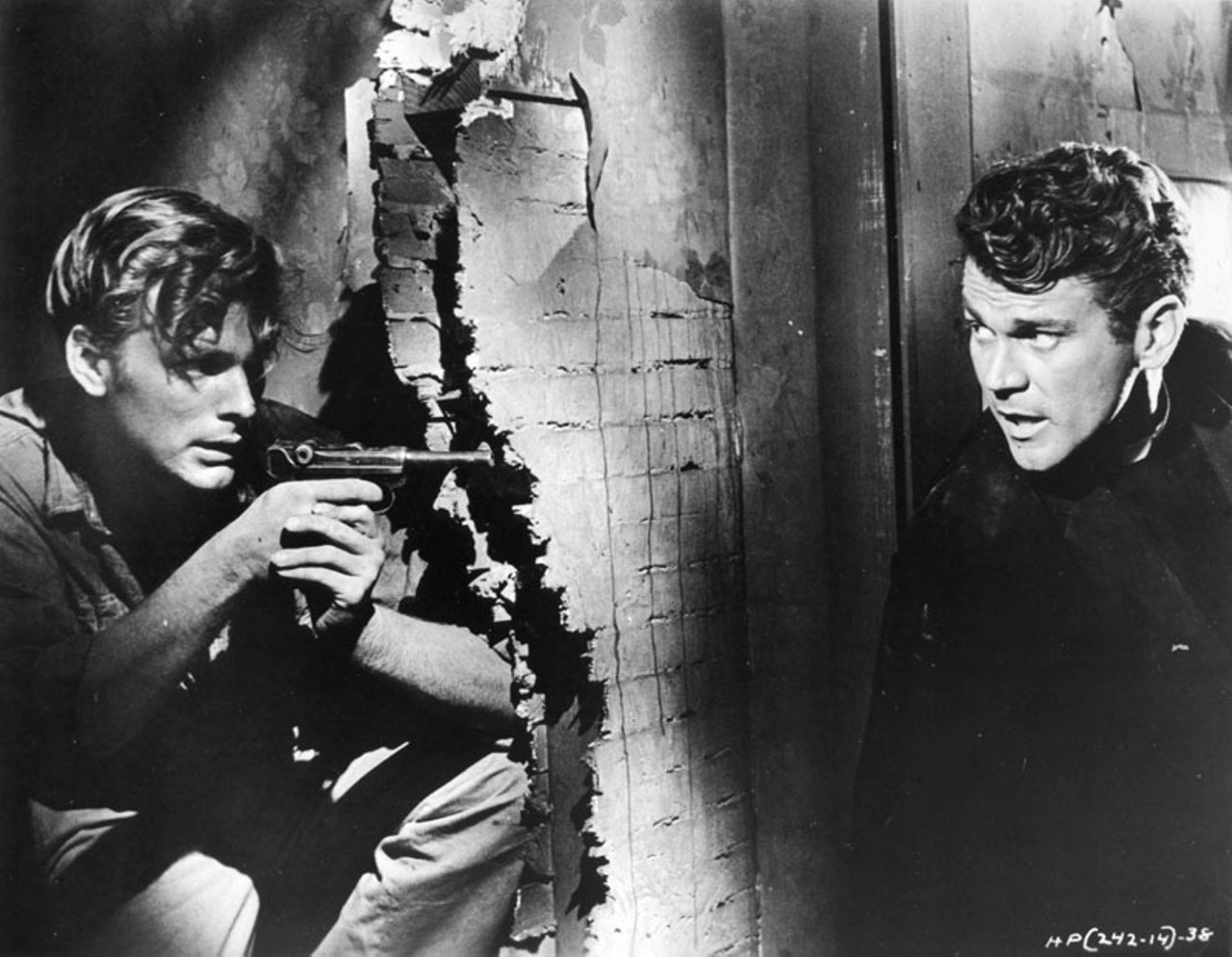
          Rambling aside (hopefully) I recently came across a movie in the Dramas genre, "The Hoodlum Priest". My Catholic Movie senses began tingling, yet I didn't recall hearing of it before. I quickly looked online. No real reviews for the movie, barely a word on Rotten Tomatoes, mainly just some newspaper-type articles about the history of the making of the movie as a cheap, true-to-life B movie. The actors weren't familiar names to me (though one of them, Keir Dullea, went on to star in "2001: A Space Odyssey") and this was one of the first directing gigs for Irvin Kershner, who everybody loves now because of "The Empire Strikes Back". Unsure about the quality of the movie, I eventually decided that I was going to check this movie out, whether it turned out to be great or terrible. The reasons being:

          1) It's a movie with a Catholic subject.
          2) It's a real life story about a priest whose passion was helping ex-convicts.
          3) It was filmed on location in St. Louis

          I also knew I wanted to write a review of  the movie after seeing it, to try to either get this movie more positive reviews and credibility as a good film or to steer people away from it if it turned out to be an abysmal waste of time. My ratings below should indicate how I felt after finally watching this movie.

          Artistic Value (Rating: 4)


          Let's start with a little surprise towards the beginning. After we see our main ex-con Billy Jackson, played by Keir Dullea, being released from prison, a friend of his takes him to a shady part of town. They are planning a robbery and the friend, Pio, leads Billy to a third guy. The way these three interact, you think this third guy is just some other criminal in town, one who is cool, streetwise, and critical like any other typical gangster you've seen in other movies. By the end of the scene though, the man changes his clothes and you realize that the guy the cons have been talking about doing a robbery with is the priest, Father Charles Dismas Clark, played by Don Murray. It's a confusing yet interesting entrance.

          At first, it feels misleading. We spend enough time with Billy and Pio in the beginning, and I'm just waiting for the priest, you know, the main character of the movie, to show up. And then this third guy who I don't think is the priest shows up and I'm like "Give me the main character all ready!" when suddenly the movie's like "He's been here the whole time" and I'm like "WWWhhhhaaaaa???!!!". This scene has unexpected value though, other than just introducing characters to us in a unique manner. It provides some context to dialogue and scenes that appear later on in the movie, so that we better understand Father Clark's reasoning and motivations in this opening scene.

          The script is also surprising, confusing, and unexpected. Some dialogue can make this movie feel dated or stuck in its own time period. There's lots of lingo and slang from late 1950s used by our main characters, and you'll often hear words like "square" being thrown around in a city gangster tone. Sure, it gives you an idea of what kind of background these characters come from, but at times it could feel like how the Brady Bunch kids would throw around "groovy" or "right on" in an attempt to be hip and cool with the current audience. Don Murray's accent as Father Clark also goes back and forth. Sometimes it's a little too thick, a little too gangster, a little too specific to a particular time and place. Other times he just sounds like a regular guy at any time.

          Yet, like I hinted at before, there's some good things going on in the script too. It reveals information about different characters at the right time and place. It helps you understand our main character and his motivations well, along with understanding the theme of the movie without feeling like it's talking down to its audience. The actors all say their lines with conviction and purpose, so there's less melodrama and more real life happening on screen. There are also a few moments of silent interactions, where you see people engaging in conversation, but don't hear what they're saying, or they're observing a situation without saying anything. Yet, you still clearly understand what's going on by the body language and facial expressions on the actors' faces. I liked that.

          The two lead actors, Don Murray and Keir Dullea, have fantastic performances. Keir Dullea especially impressed me since he had to go through a variety of emotions and had to handle more of the quieter dramatic moments than Don Murray. Yet, even when Murray's Father Clark had to get emotional or extreme, I never found it overblown or past the point of disbelief. It sounded like a man who was convicted of his way and caught up in the passion of the moment.

          It's hard to examine this movie's story and its main character without comparing to or pondering other movie priests from around this time period. Classic Hollywood is known for some great movies with interesting priest characters, and this movie matches a lot of these other classics:

          -"On the Waterfront": Karl Malden's Father Barry also goes to the seedy, grimy parts of town you don't expect to find a priest at, in order to find the lost sheep and help people who would otherwise be ignored by other Christian people. There's even a powerful monologue where the priest gives an impassioned speech about helping these men.

          -"Angels with Dirty Faces": Pat O'Brien's Father Jerry also has a desire to help criminals and low lives around him. He knows how to speak truth to these gangsters in a way that they understand and make them think because he comes from the same background as the criminals. There's also a scene with a criminal facing death row.

          -"Going My Way/ Bells of St. Mary's": Bing Crosby's Father O'Malley is also a charismatic, streetwise priest.

          -"I Confess": Montgomery Clift's Father Logan also ends up in some courtroom drama and has a surprising background for a priest.

          I've even seen comparisons to other priests in movies like "Boys Town", "Fighting Father Dunne", and other movies that I haven't seen yet. I mean, here in "Hoodlum Priest", you've got a streetwise priest who devotes himself to saving needy men in criminal circumstances and ends up having to go to court or aiding someone on death row. It's hard not to think of movies with similar circumstances and made around the same time period, or in a sense paved the way for this movie to be made.

          Yet, Father Clark was also a real person, with a quirky personality and strange history. They bring that reality and history of the legitimate Father Clark to the screen as well, you can feel like this all stems from a real person, not just somebody written up for the screen. Of course, as we know with any movie based on a true story, the movie isn't 100% authentic in its retelling of history, but I think this one does a good job of blending reality with the positive traits found in previous priests and stories in other movies.

          The aesthetic of the cinematography worked very well. The black and white film helped to emphasize the shadows and special light effects that honed in on important moments. Also, with it being about dark subject matter and filmed on location, the black and white punched up the realism and better connected with the themes. When it came to editing the movie though, there were lots of jump cuts where they set up a scene and immediately cut in the middle of the action. You're seeing the exact same location, except the position of the actor or the angle of the camera is just a little off, just different enough to notice that something changed at a time and place that should've stayed the same.

          For a film set in St. Louis, this movie shows a lot of the dirty, grimy parts of town, even back in the day before Downtown really became infamous for crime and grime. It goes through a lot of rundown buildings, shady alleyways, and seedy venues. Sure, you see some nice courtrooms, the St. Louis Zoo, and shots of St. Louis University High School (SLUH for locals), but otherwise this isn't exactly an attractive advertisement for the city of St. Louis.

          The best reason for why it is acceptable for them to film in so many bad parts of town (or at least, unattractive parts of town) is because the subject of the movie is about criminals and working with people in the city's underbelly. As far as what particular locations were used and how they look similar or different today, someone more familiar with the St. Louis city and region would be better able to identify all of that than myself. For me personally, there wasn't much that helped me identify it as specifically St. Louis, but maybe that's because I'm not all that familiar with downtown architecture and history and such.

          Like I mentioned before, there's plenty of scenes with some really great acting and there's some suspenseful scenes. There's a moment of great tension where Billy takes part in a crime. At first, it's just Billy and his friend Pio working on breaking into a small business vault. There's no music, just lots of shots establishing the scene and space. Suddenly, we start cutting back and forth between a truck pulling into the business and Billy slowly realizing that one of the bosses has returned to work. It's just several minutes of visuals without any background music or even much sound except for the tools used in the robbery. You know that something dramatic is going to happen and you know it's not going to be good, so you're just waiting for chaos to come crashing down and when it finally happens it's so worth it. This even leads to another fantastic scene filled with tension and terrific acting where you can see the aftereffects of the robbery scene have very deep psychological and emotional impacts on our leading characters.

          Moral Value (Rating: 4)


          The major theme of this movie revolves around Father Clark's desire to aid ex-convicts. His dedication to help people transition from criminal to moral citizen is inspirational to see and cunning in design. It's one part relationship-building, another part social justice, some tough love, and a dash of carefree rebellious attitude. In this movie, Father Clark really lives out Christ's call to visit the imprisoned and help the least of His brothers. We see Father Clark going into the jail and build relationships with the men inside. We see him provide people with means of escape from an impoverished life to one that provides better opportunity and rises above crime. We even see him pound the pavement for awhile just to get a guy a job.

          Sometimes the testament that someone is living a Christ-like life is seeing good people cringe and think the worst of the intentions of the do-gooder-in-question. Just as the Scribes and Pharisees thought the worst about Jesus interacting with the tax collectors and prostitutes, good Christian citizens of St. Louis in this moviedon't seem to think it's good for Father Clark to engage with ex-cons. However, Father Clark brings up some good points and reasons for why he does what he does. How else are the ex-cons going to turn away from a life of sin and choose to do good? How can they do that without someone who provides resources and, perhaps more importantly, believes that they have what it takes to be more than just a common criminal?

          One of the few downsides to this movie's morality stems from people who are antagonistic without much character growth. One such example is a newspaper man named McHale who is a journalist for the Times-Herald newspaper (which doesn't exist anymore fyi). He is continually trying to find ways to ruin Father Clark's plans and his life. The journalist thinks there's ulterior motives involved in Father Clark's actions. He thinks because Father Clark spends so much time with the criminals that there is something criminal about the Hoodlum Priest too (McHale is even the one that gave Father Clark that nickname).

          The shame is that there is no resolution to this issue. There comes a point in a court room scene where Father Clark makes a passionate, almost confrontational, statement, aimed in part at the journalist, but that's the last that we see of the journalist and that's almost halfway through the movie. It would've been nice to see if the journalist changed his attitude towards the priest or if he remained an antagonist throughout the rest of the movie, provided there was good reason.

          The other main antagonist in this movie is Mario, one of Billy's new bosses. Right from the get-go, Mario has a strong dislike and prejudice against Billy because of his past time in prison. The two never really get to know each other and whenever Mario gets a chance to vent his anger or display his strength against Billy, he takes it. At least this part of the story has a resolution, and it impacts the rest of the actions in the movie.

          There are several times in this movie when characters talk with Father Clark about Saint Dismas, the thief hung on a cross next to Jesus in the crucifixion, who repented at the end. They continually connect St. Dismas with the title "good thief", constantly connecting the fact that the man had been a criminal but turned from his sinful ways in the end. The priest even goes so far as to use the story of St. Dismas as inspiration for a man who is on death row, in order to give him hope and even possibly a conversion experience at the end. I like that this man and his conversion story is used to relate to the situations the characters are going through, even if sometimes it feels like it's brought up more out of desire for the movie to sound more dramatic rather than just naturally stemming from character interactions.

          I can see where some people may see this movie as preachy. It gets pretty focused on the death penalty near the end and there's a lot focus on social justice throughout the picture. It also talks about bringing dignity to men who may lack it because of their involvement in the prison system. However, if the acting was off or if it really felt like the movie was hitting the audience over the head with its themes, then maybe I can see the moral value of this movie being diminished. However, I find it all warranted based on how the audience connects to the characters and how much the story depends on the characters' connections to the themes. It's a good story that even has some relevance to today's audience.
          Overall Value Rating: 4/5

          As you might be able to tell, I was very satisfied with my viewing of "The Hoodlum Priest". I suggest finding it wherever you can check it out. I think it deserves more recognition and should be viewed by a wider audience. However, with that said, the fact that it is a relatively unknown movie and that there's more information online about the history of it rather than actual film criticism of the movie gives me some pause.

          I wonder if I enjoyed this movie as much as I did because I have a personal connection to the region  or if it is because of my Catholicism. I wonder if someone who isn't from around St. Louis or who isn't Catholic/ religious would enjoy this movie as much as I did. Does the movie stand on its own or does it need some personal attachment in order for it to work? Sure, you can tell it's low budget, but for as quick as it was made, the fact that it was put together by a group of newbies and veterans in the movie business, and also with the understanding that it was set in a real place and about a real person, it makes up for most of its defects with lots of charm and passion.

          This movie got me thinking about other movies I've seen, especially Catholic movies, and how much I appreciate when the people and philosophies of the faith are done well, as well as when things don't always get produced well. I really think this movie deserves more recognition and should be viewed by more people than just random film connoisseurs and the viewership demographic of TCM.


          Sources for photos (all credit and rights to the rightful owners):

          Wikipedia
          The New York Times
          The Riverfront Times