Showing posts with label movies. Show all posts

Wednesday, August 22, 2018

Top 10 Western Genre Movies of All Time

Defining the Genre

AFI defined the Western as a movie "set in the American West that embodies the spirit, the struggle and the demise of the new frontier". The online Encyclopedia Britannica specifically defined the setting of a Western as something "set in the American West, usually in the period from the 1850s to the end of the 19th century".

A writer at a website called Filmsite agreed with both of these descriptions saying "Westerns are often set on the American frontier during the last part of the 19th century (1865-1900) following the Civil War, in a geographically western (trans-Mississippi) setting with romantic, sweeping frontier landscapes or rugged rural terrain". Overall though, we know the general time and the general place that define Westerns.

I also liked their description of the feeling and attitude of a Western where they wrote that a Western is "a nostalgic eulogy to the early days of the expansive, untamed American frontier (the borderline between civilization and the wilderness)". I like that emphasis on the borderline between civilization and wilderness, where people in the frontier were not living in big cities or developed areas, but they weren't exactly surviving in the wild either, for the most part.

Westerns are generally also defined by the presence of cowboys, which when you see one you know what it is. Sometimes the cowboys are soldiers fighting Native American warriors, sometimes they're marshals fending off bandits and outlaws, but no matter what there's always revolvers and rifles involved. Most often a cowboy is a lone wolf and a heroic legendary figure, though sometimes they rely on allies and shed back the legendary layers to become rounded, vulnerable people.


AFI's Top 10 Westerns List

1. The Searchers
2. High Noon
3. Shane
4. Unforgiven
5. Red River
6. Wild Bunch
7. Butch Cassidy Sundance Kid
8. McCabe & Mrs. Miller
9. Stagecoach
10. Cat Ballou

Majority of these, especially the Top 3, are very well known and well renowned Western genre movies. I had not really heard much of #8 before and I surely never heard of #10 before. Notice also that, while not totally dominating the list in the same way that Disney dominated the Animation list, John Wayne leads 3 of these movies, and there is a surprising lack of Clint Eastwood, though again that might be because AFI was limited to American movies and could not include the Spaghetti Western subgenre selections.

My Outline for My Genre List

I had two guides for helping me outline my own defining features of the Western genre. The first was the basic principle definitions found above. The second was a list of various subgenres of Westerns I found on the New York Film Academy website. Those subgenres include: Epic, Spaghetti, Revenge, Outlaw, Marshal, & Revisionist

-Character archetypes: Heroic cowboy, tough prostitute/saloon gal, marshal/sheriff, prim-proper lady
-Cowboy's features: Wide-brimmed hats, bandanas, boots, spurs, and horse-back riding.
-Morality examination: Right versus wrong and lawful versus unlawful, asks when it's okay to take law and order into one's own hands.
-Beautiful vista shots of rural landscapes including plains, sagebrush, desert, and mountains.
-Small developing town with a hotel, a saloon, and/or a tavern.
-Guns constantly used or play an important role.
-Late 19th century timeframe, not around modern times.
-Romanticized view of the past and the cowboy figure.
-Honest look at the reality of men and the frontier life, if not romanticized.


Honorable Mentions

-Assassination of Jesse James
-True Grit (Coens, I haven't seen the original all the way through)
-Open Range
-3:10 to Yuma (both versions)

As you can tell, majority of these mentions are more contemporary and newer movies. The themes and attitude come from a more modern sense, so they have a more honest look on life and philosophy in the west than older romanticized cowboy movies.

I generally consider Assassination of Jesse James to be more of a melodrama than a Western, though it certainly has the setting, gunplay, and thematic qualifications to be a Western. Not to mention Jesse James is a pretty common figure in Western cowboy mythology and media.

Ultimately, even though movies like Open Range and True Grit have sleek looks and fit within the confines of the Western genre, they ultimately do not hold my interest and excitement upon rewatching them, nor do I find them unique enough to be definitive examples of the genre.

My Top 10 Westerns List

10. Sukiyaki Western Django
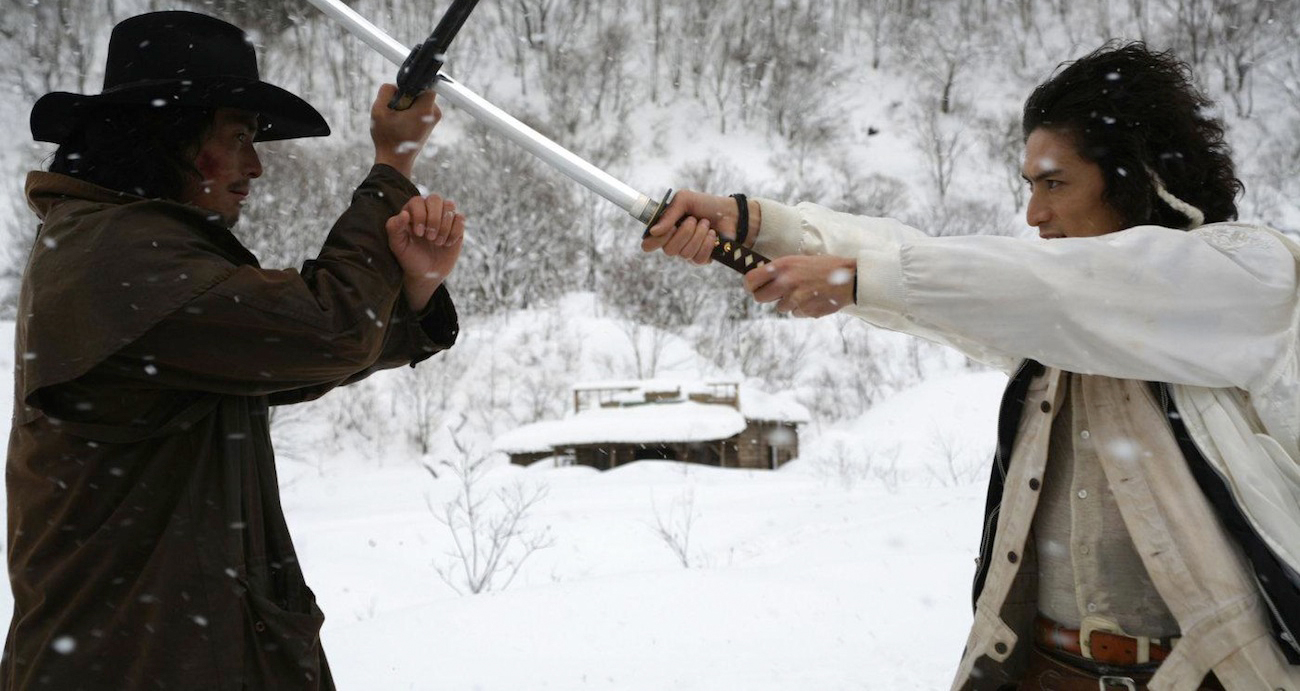

A twist on Spaghetti Westerns, where instead of European actors having their lines dubbed over by native English speakers, this movie has Japanese actors speaking their own broken English dialogue. You have the heroic cowboy figure, clad in hat, boots, & spurs, staying in a small town in a desert mountain area. There's lots of gunplay involved, obviously influenced by the more ridiculous B-level Spaghetti Westerns of yore. Though there is also the presence of Japanese samurai movie artistry, it's cool to see another nation and culture interpret the American cowboy mythos and Western genre and put their own spin on it.

9. Hostiles


I was hesitant to put this movie on the list since it is the most recent out of the bunch and not necessarily even the most memorable movie I've seen in 2018. There's not even a typical cowboy figure. What impressed me the most about this movie was the landscapes. The places that this group journeys through out in the wild frontier really reminded me of the kind of landscapes I saw when I spent time in Montana and Colorado. These are very definitive Western locations and the cinematography captures them beautifully. Add in the struggle of frontier survival and antagonistic relationships between white soldiers and Native Americans and you have a recipe for a subtle yet realistically human Western.

8. Tombstone
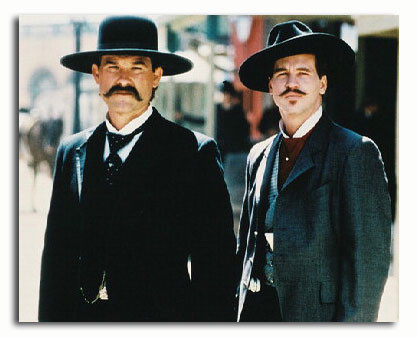
There had to be some interpretation of the infamous O.K. Corral battle on this list, and it just happened to be the most fun, most Hollywood version of it (technically also the only one I've seen). There's drinking, there's cigar smoking, there's gambling in saloons and taverns. Handsome mustaches, cowboy hats, revolver twirling, marshals battling outlaws. It's very much a definitive Western. What makes this movie stand out though is Val Kilmer as Doc Holliday. He embodies that tough heroic cowboy figure often given in to vices, but he's a charming southern gentleman and a good friend to other tough heroic cowboy figures.

7. Magnificent Seven
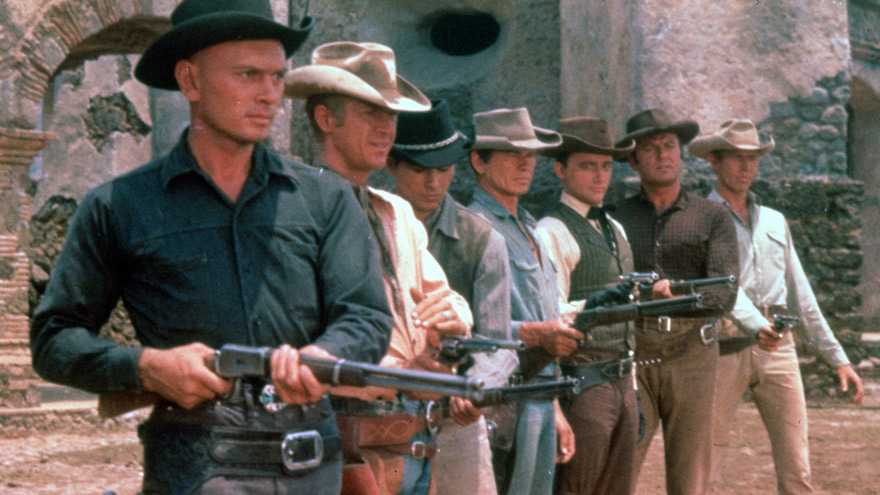

Yes, a part of me put the movie here for a joke. Courageous cowboys stand up against insurmountable odds out of a sense of honor and pride. Poor farmers take the law into their own hands in a place without law & order. There's plenty of gunplay and dusty trails covered. The cowboys are very romanticized in this movie since they are the heroes, even if they are selfish or troubled.

6. Unforgiven
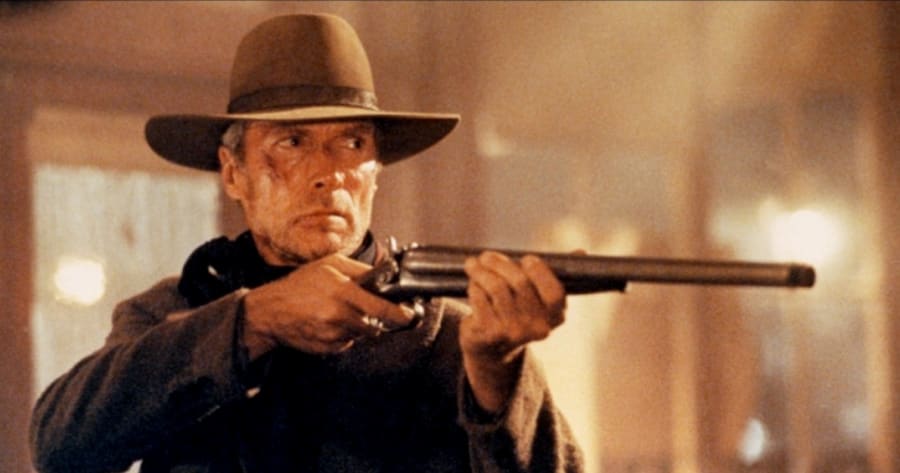


I initially had this movie in the Honorable Mentions area because of just how dark and revisionist of a Western it is. Our protagonist used to be a ruthless killer who has worked to amend for his past sins but in the end reverts to his old ways. And the antagonist is not really anything too different, it's just a beyond-tough lawman who abuses his power without remorse. There's nothing very noble going on about either of their actions since the main conflict revolves around the protagonist accepting a financial reward by killing men in order to avenge an abused prostitute.

I think what makes this Western work and stand out compared to the others is that if this was a Clint Eastwood movie 20 years earlier (like Outlaw Josey Wales), his character and actions would be glorified, but here it's depressing and examined in a negative light. No one is heroic or glorified here in the traditional sense of standard Western films.

5. Rio Bravo
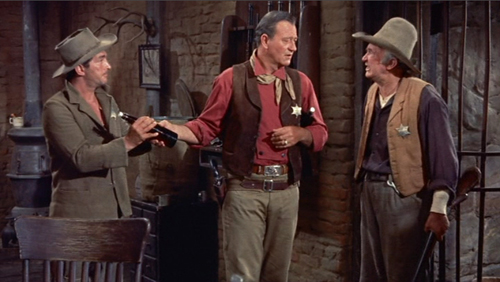

This one is just more of a model of fun, action Western. You've got John Wayne in his typical cowboy gear with rifle in tow. Dean Martin is an alcoholic gunslinger. There's carefree yet tense use of guns throughout. It's about the courage of a few in the face of many enemies, an alternative take on High Noon. The marshal must defend himself and his friends from outlaw thugs bent on freeing their captured leader. Like I stated earlier, I mainly just remember this movie for the fun interaction between the romanticized cowboys and the gunplay involved throughout the movie.

4. High Noon


What puts this movie ahead of Rio Bravo is the philosophical, moral quandary at its center. Is it better to give up violence and run away, or to stand up and fight even if it means doing it alone? There's the law versus the outlaws. There's a tense gun battle at the end. The protagonist sheriff is obviously afraid and nervous about having to face the battle alone, but none of the other men in town have the courage and loyalty to fight alongside him. The sheriff wants to put away the past, but there's a new prim and proper Quaker wife that he has to live for and protect.

3. The Man Who Shot Liberty Valance


Once again, it's the philosophical questions that really make this film special. When is it okay to kill someone? Is truth or legend the better reality? Should a man avoid guns at all costs or learn to live with them? Jimmy Stewart and John Wayne are both known for their dramatic roles in Western movies and these performances are highlights of that fact. This movie both romanticizes the wild past of the west and gives an honest examination on what the men, life, and ideas were really like in the wild west.

2. The Searchers


The cinematography is one of the most outstanding elements of this movie. It really captures the look and feel of living out in the American western frontier. The colors really stand out and the shots are framed with purpose. John Wayne plays more of a gritty Clint Eastwood type in this movie, having a sense of purpose in his actions but lacking the romantic charm and friendliness of cowboys in earlier Westerns. This seems to be the start of the divide between fun, idealized cowboy movies and the gritty honest look at real frontier living. I think had Johns Ford and Wayne not visited this location and made such a stellar team up in an earlier movie, this may have been the number one. 

1. Stagecoach


In my Valuable Films list, I placed Stagecoach as the top Western movie and I still stand by that. Some of the defining traits of the Western film genre that I mentioned included: character archetypes, guns, horseback riding, particular landscape locations in southwest US, 19th century time period. I also mentioned how it lacked gritty violence and anti-heroism seemed to define later Western movies. People are not as good as they seem nor as they as bad as they may seem. I'd say the only characters that really lack depth or complexity to them is the thieving banker, Mr. Gatewood, and the whiskey drummer Rev. Hancock...I mean Mr. Peacock.

Movies That May Replace Choices on My List Upon Future Viewing

Shane
Red River
The Good the Bad and the Ugly
Once Upon a Time in the West

Saturday, August 18, 2018

Valuable Movies: Mission Impossible Fallout

Warning: Your mission, should you choose to accept the consequences of reading this review, is to not freak out when you see any spoilers for the movie without having seen it first. You have been warned.

So, the sixth Mission Impossible movie came to theaters recently. As someone who has been entertained by several of the MI movies, most especially the previous two installments before this latest release, I looked forward to seeing this movie on the big screen.

This was also the first time I can recall seeing a movie in IMAX in a long time. Here's what I thought in terms of artistic and moral values to the movie.

Artistic Value (Rating: 4)

It's hard to talk about this movie without breaking up its artistic value (how the movie was presented) into two categories: Stunts/Action Scenes and Story Plot Points.

I came in wanting crazy Tom Cruise action scenes and I got them! We saw a HALO (high altitude low opening) jump, an intense fisticuffs brawl, obligatory motorcycle chase, obligatory yet hilariously awesome Tom Cruise running, and even a helicopter chase/ literal cliffhanging finale.

The best thing was that none of these stunts were super-hyped in the marketing as far as I can remember (unless I just wasn't paying attention). In Rogue Nation, they pushed the fact that Tom Cruise was hanging onto a flying airplane and held his breath for 4+ minutes underwater. In Ghost Protocol, they wanted you to know that Tom Cruise really was climbing the tallest building in the world.

Here, there's several crazy stunts, and you get a sense of them in the promotional trailers, but I can't really recall hearing things like "Come see Tom Cruise soar through the air in a HALO jump" or "Can you believe Tom Cruise really hung from a rope underneath a flying helicopter?". I was just stunned and impressed by Cruise's running here, especially when he's sprinting along on top of the London train station.

Sound effects and music were prevalent and essential here. These are the second best parts of the movie after the action stunts. Music emphasized important moments and established emotional highlights. Noises stood out too, like the gun shots or moments like Ilsa riding her motorcycle down a Parisian walkway with columns and highlighting the engine and wind tunnel sounds.

Now like I said, the artistic value is mainly split by the action and the story, and unfortunately here's where the weaknesses pop up. Rarely does the script explain much in between the action. It's almost like when developing the story, the action scenes were the primary focus and the idea of how to get from Point A to Point B was only thought up when they needed to set up the next stunt.

Moments of exposition dialogue really highlight this fact, such as the opening mission briefing or the team's drive in to Kashmir and establishing the goals to accomplish the final mission. All of this is to get the audience up to the speed to understand what all is about to happen.

The reason why this is a weakness is because I found myself asking questions I shouldn't have to be asking, wondering what's going on in the story. Here are a few major problems I thought of during my viewing of the movie (heavy spoilers ahead):

-Where is Jeremy Renner?
-Alec Baldwin's character matters in this movie, but he's completely forgotten after his death.
-No real resolution at the end. No "where do we go from here?" moment with intention to establish what's going to happen next time.
-Cruise's wife character comes back, but there's not really much time given to have closure.
-How did the bad guys run away with the plutonium in the middle of the movie? I thought they were supposed to be making a rendezvous with White Widow to trade Lane for the plutonium. All of the sudden, poof, they have plutonium and are about to annihilate the world.

Now, while the script had a few problems, there were also a few strong emotional moments with great drama. There is a particularly touching scene delivered by Ving Rhames that actually worked surprisingly well because the movie took its time to put character development ahead of action. I'm glad to have characters and plot threads from previous installments back and continued here in this story. That continuation in the series is the saving grace of the script's plot.

The visual element, the way that the movie looks, is a mixed bag for me here. In my eyes, the cinematography or types of cameras kept changing. Some shots looked so smooth and high resolution, they looked like they came from a GoPro. Other shots, especially in the dark or distanced from action, looked grainy and low resolution like film stock. Could this have been because of my IMAX movie screen? Either way, the lack of consistent visual style bothered me.

This two hour movie in some ways almost felt like an extended TV show episode. The editor used wipes to move between scenes/ locations. The expositional style of dialogue between the characters was very TV-esque. Even the abrupt ending just made it seem like we'll see these characters again soon in next week's episode. This is not necessarily a bad thing when this is the sixth movie in a major franchise based on an older TV series, with homages and connections to both.

I wasn't initially sure what rating on the 1-5 scale to give this, but I think ultimately I am won over by the astounding and thrilling action scenes. They are the most important element of this movie, and in certain ways made up for any storytelling elements that may have been lacking.

Moral Value (Rating: 3)

Mission Impossible as a movie series has always been a good guys versus bad guys plot line, though understanding who is on which side has been a little more blurred in some movies than others. Thankfully, it's pretty well established here that Ethan Hunt and his friends are all good guys while Solomon Lane and his Apostles are the bad guys.

In this movie, the bad guys, the Apostles, like to pretend that they're the good guys because their ultimate goal is "world peace" but the means with which they're wanting to achieve that goal is by demolishing a third of the world's population. Even the CIA in this movie is willing to do whatever it takes, even if it means killing potential threats, in order to achieve their missions, so they're presented as more anti-heroes, or at least not the primary protagonists.

I do appreciate the fact that in this movie they emphasize the fact that Ethan Hunt cares a great deal about lives on an individual basis, especially the life of an innocent bystander. They put a moral ethic in the good guys and a lack of empathetic morals in the bad guys. However, I often wondered why Tom Cruise...I mean Ethan Hunt...has a problem with killing innocents, but not bad guy lackeys? We see him struggle to shoot people in certain circumstances, but shows no remorse or concern whenever he kills a villain or their henchmen. Just because they work for the bad guy does not mean that their lives are anymore expendable.

I do think the movie makers tried to establish important figures in Ethan's life and had an interesting contrast near the end. This movie builds up the fact that Ethan has a budding relationship with Ilsa Faust (Rebecca Ferguson) and an antagonistic relationship with Walker (Henry Cavill). Near the end, Ethan is reunited with his former wife (Michelle Monaghan) and her new husband (Wes Bently). It may just be me but not only do Monaghan and Ferguson look similar, but (at least in the eyes and facial features/ facial hair) so do Bentley and Cavill. I think it presented an interesting character dilemma where we see where Ethan's passions, concerns, and struggles really lie.

The movie presents some potential religious themes and ideological overtones at first. There was the opening wedding dream sequence, the group name The Apostles, the fake nuclear disasters to three holy sites, and the constant quote "There cannot be great peace without first great suffering". This opening led me to believe that there would be some discussion or examination on themes and ideas from a religious or theological perspective, almost a battle of philosophy and ideology. In some ways it was a battle of philosophy (life is sacred versus peace through death), but the religious aspect quickly quickly disappeared and I feel like that was a missed opportunity.

Some action movies are all about the spectacle, the crazy visuals they can throw on the screen, and that's it. The Mission Impossible franchise, especially here, understands that a good movie with action has to have more than just spectacle. You have to care about characters and have them overcome personal struggles in order to have a good movie (my artistic value and moral value highlights this). Fallout takes some time in between the spectacle to build up characters and relationships, even if that's not the scripts strongest suit.

I found that I laughed at moments I maybe shouldn't have. I laughed because of the overblown action scene over-the-top-ness. Most memorably this was Cavill's death scene at the end. This is where Hunt's blurred line on when it's okay and not okay to kill causes confusion or struggle. We're supposed to root for Tom Cruise because he cares who he is shooting at, but then the moments like Cavill's death scene went to such heights of crazy movie spectacle that I couldn't help but grin and chuckle at the absurdity of it all. It's one of those moments when I become more conscious of how a movie influences the way I think and feel. If the movie examined its good vs. evil themes with some more depth instead of basic action movie formula, I may have given it a higher ranking.

Mission Impossible Fallout is rated PG-13 mainly for the violence of the action, which sometimes can get bloody, as well as profane language, from some using the Lord's name to even a use of the F-word, though ultimately none of the negative language is necessary for this movie.

Overall, this movie is thrilling throughout. Tense action scenes and even tense character moments in between the stunts are all part of the fun. This is a great movie to wonderful on the big screen, despite any weaknesses or issues.

Overall Rating: 3.5 out of 5

Saturday, August 4, 2018

Top 10 Animation Genre Movies of All Time

I recently examined the 10 Top 10 Lists of Movies by the American Film Institute. These are lists compiled by a prestigious cinema organization and each list is split by a different genre, from romantic comedy to courtroom drama to epic and animation. After looking at some of the lists, I got inspired to create my own versions of them.

My goals are for these Top 10 lists are: to properly define and identify the genre in question, quickly examine the picks from the American Film Institute, and then present my own list to show my own take on the genre in question.

As per usual, my own personal list will be presented in descending order from 10 to 1 (least to greatest) and is just made up of movies I have personally seen all the way through, so chances are there may be some movies you think are missing from my list that deserve a spot. Feel free to let me know if that's the case. Anyway, without further ado, let's kick of these Top 10s with an examination of Animation.

Defining the Genre

The AFI's website broadly defined the Animation genre as movies where "the film’s images are primarily created by computer or hand and the characters are voiced by actors". The Merriam Webster Dictionary definition kind of further specified that by stating that an animated movie is "a motion picture that is made from a series of drawings, computer graphics, or photographs of inanimate objects (such as puppets) and that simulates movement by slight progressive changes in each frame".

So, as could be assumed, defining the genre for animation into a specific, finite definition is a challenge. This is mainly because animation is a form of art within a form of art, with various techniques and styles from around the world on display. Technology has also played a huge role in expanding the capabilities within the world of animation, making it tougher to narrow down.

Basically, what we really know is that "animation" means real-life actors are not the focal point of a movie's presentation and that some sort of series of handcrafted images are put together instead. It's basically like the cartoon found in the corners of a flipbook.

AFI's Top 10 Animation List
1. Snow White
2. Pinocchio
3. Bambi
4. Lion King
5. Fantasia
6. Toy Story
7. Beauty & The Beast
8. Shrek
9. Cinderella
10. Finding Nemo

Not too much to say here, other than Disney obviously dominates the genre selections. Which is expected since Disney has been the primary and dominate company creating movies in this genre. It looks like the AFI wanted to give a shoutout to computer-generated animation, though I'm somewhat surprised that movies like the first Shrek and Finding Nemo won over some of their counterparts in their respective studios. The list is also somewhat limited by the fact that, well, their selection was only from movies made in the U.S., which leaves out international companies like Studio Ghibli which could also dominate the list.

My Outline of My Genre List

This is basically the guidelines for how I'm going to select movies for this list. These are the standards by which I will hold the chosen animated movies to. The hope is that the movies on my personal Top 10 list will reflect the traits below and help us better understand what it means for a movie to be in the animated genre.

-Only 1 choice per studio (not a list full of Disney, Pixar, or Ghibli options)
-Still images coming to life through motion
-Variety of colors and hues
-Effective use of shadows and darkness
-Specially effective use of light
-Vivid textures
-Showcase the history of animation styles and artistic technological advances
-Show an improvement over time of a particular company or group's technique, if applicable.
-Timeless artwork

Honorable Mentions

The Thief & The Cobbler
Isle of Dogs
Titan A.E.
Fantasia
Bambi
Beauty & The Beast
Prince of Egypt
Toy Story
The Peanuts Movie

These are all movies that are high quality movies from within well-respected animation companies or they stand out as unique pieces of cinema. Basically, if I didn't have my option of watching the following 10 movies, these would be the backups I would happily watch again and again.

My Top 10 Animations List

10. Lord of the Rings-Ralph Bakshi


Hear me out. It's an example of doing animation with a miniscule budget. Infamous for its use of rotoscoping over live actors, especially in the second half of the movie. Lots of deep, painted backgrounds. Very dark and shadowy in the right moments. The hand-drawn characters on top of the landscapes really transports us to a fantasy setting.

9. Shaun the Sheep-Aardman


Exemplary stop motion animation using play-doh-esque material, a.k.a claymation. Stylish and improved art style by Aardman studios (Chicken Run, Wallace & Gromit). Shiny and sleek appearance. Fluid movement yet malleable character designs for creative stop motion. It almost makes you think you really are seeing sheep walking about in a real life city.

8. Kubo and the Two Strings-Laika


A form of stop-motion, utilizing a combination of claymation and computer generated images.
Good use of Japanese-influenced artistry and scenery. Improved, definitive art style by Laika (Coraline, Paranorman). Proper atmosphere built between dark spooky moments and bright, lighthearted comedy. The designs and textures of our main characters really bring the animation to life.

7. Fantastic Mr. Fox-Wes Anderson


Stop motion using puppetry/ doll-like models. Very textured appearance, with specific details in the fur of the animals as well as phenomena like water and smoke. Hues of yellow, orange, and brown match the appearance of the titular character. Beautiful glow to the lighting in sunsets and apple juice basement scene. There's even an interesting scene with an alternative art style involving a cartoon wolf.

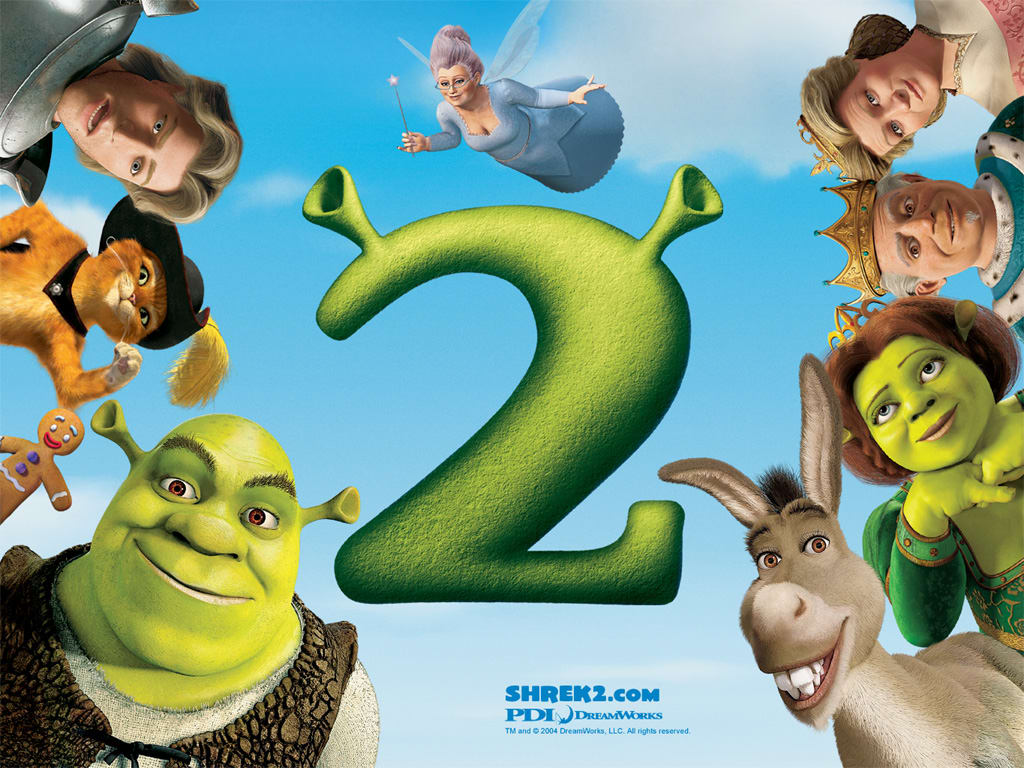
6. Shrek 2-Dreamworks


While Prince of Egypt stands out as the exemplary 2-D animation by Dreamworks, and later movies like How to Train Your Dragon or Kung Fu Panda are more fluid in motion/ colorful in design, Shrek 2 to me stands out as the model CGI animation work by Dreamworks. It sharpens the CGI from original Shrek. The humans look like real life humans, not obvious cartoons like Dragon. The fantasy and realism blend together well here, and all the characters have unique textured designs. The realism in the CGI artwork is so effective, at one point I really did believe a giant ginger-bread man wreck havoc on a Starbucks knockoff Godzilla-style.

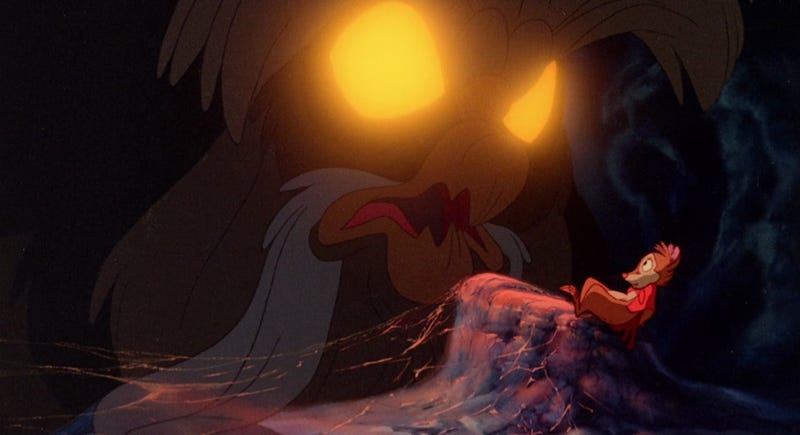
5. Secret of NIMH-Don Bluth


I was very close to putting Titan A.E. on this list for its blend of CGI and hand-drawn animation. However, Secret of NIMH really shows the hard hard work that Don Bluth and company went through to achieve success from the get-go. It's very stellar hand-drawn artistry that equals the skills of early Disney masterpieces. What especially stands out is the glowing lights that pop up in characters' eyes and in the backgrounds. The movement is very fluid and while the characters are cartoonish interpretations of real animals, they still feel and look like real mice, rats, crows, cats, etc.

4. Secret of Kells-Cartoon Saloon


Hand-drawn animation with trippy uses of flats character designs and fleshed-out, developed backgrounds. Takes inspiration from the Illumination techniques used in Biblical artwork (ex...The Book of Kells) and translates it into bright, explosive layers of colors and lights. Finely detailed line work. The fantasy elements are given some special designs and treatment, but the animation still gives grandeur and respect to the religious elements.

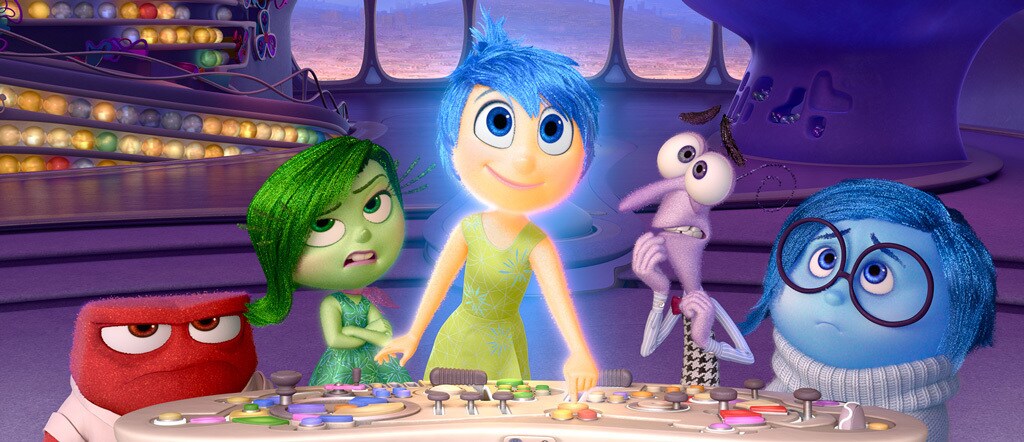
3. Inside Out-Pixar


You can see lots of fine details in the various textures of the characters, from Joy's skin to Disgust's hair to Anger's fire. Creative physical representations of words, ideas, and phrases. The humans are drawn and presented in a realistic way, not cartoony. Tons of different shades of color and glowing lights, though the momentary uses of darkness and shadows are effective. There's even enough time for a playful experiment in abstract CGI animation. This movie shows the continuing development in Pixar's mastery of the CGI animation style.

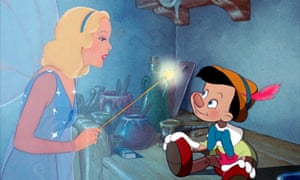
2. Pinocchio-Disney


It is a signature Disney art style. It doesn't have similar problems to Snow White where the animation truly shows its age. It also has a higher quality to the animation than some of my favorites like Robin Hood. I think when people think of Disney, people think of this kind of fantastical 2-D hand drawn animation. It has some dark, shadowy moments, but also some color and pizzazz. Pinocchio almost looks and moves like a real boy, and it's only when he transforms into the real thing in the end that you realize he was really wooden all along.

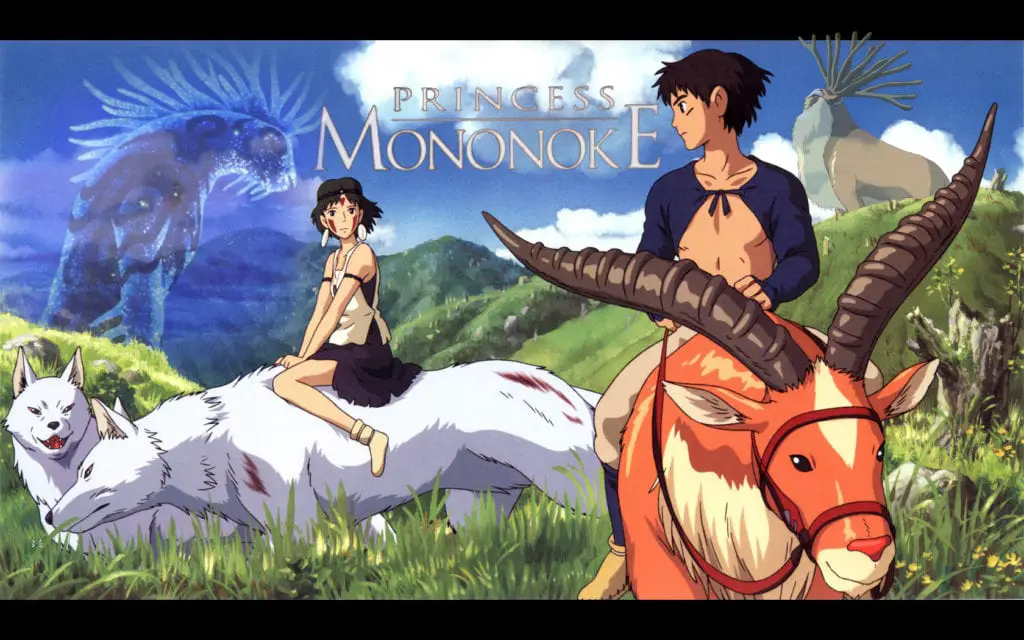
1. Princess Mononoke-Studio Ghibli


Exemplary of the anime style of animation, and a particularly timeless example of Studio Ghibli's artistry. Presents both bright, colorful, well-lit images as well as shadowy, grotesque, violent images. Humans are either realistic or cartoonish as necessary, but the creatures are all impressive and vivid. Mixes fantasy with realism. Miyazaki's appreciation for nature and distaste for industrial interference with nature is on display in the animation. The battle scenes are all paced well and move in a way that is flowing yet understandable visually.

Movies That May Replace Choices on My List Upon Future Viewing

Akira
Triplets of Belleville
Wolf Children
The Adventures of Prince Achmed

Sunday, December 31, 2017

The Cinematic Version of Catholicism

The following is an article written in the format found in The Catholic Hipster Handbook. Meaning it will have a Topic Article, Cool Saint, Forgotten Prayer, and Activity. This is written partially as a daydream, a creative writing exercise where I asked myself "If I had contributed something to The Catholic Hipster Handbook, what would it look like?". If you happen to enjoy this post, feel free to check out my thoughts on the book here or better yet go out and buy the book to enjoy the many great things it has to offer. Hopefully Tommy and fellow contributors will find this imitation a form of flattery instead of the bizarre fanboy weirdness that is actually is...

Most of us have seen The Sound of Music, The Passion of the Christ, Les Miserables, and even Sister Act...and even The Exorcist. Sometimes you may have sat down with parents or grandparents who were watching a movie on TV and you might've seen Bing Crosby or Pat O'Brien playing a priest or Jennifer Jones portraying St. Bernadette. Point being that there's just those staple movies involving Catholicism that most of the American population has seen and it makes it feel like there's a very limited representation of Catholicism on the Silver Screen.

In some ways, it may feel like the Catholic faith and the movies just don't really get along. Sure, there's those golden oldies from back in the day, but really, since the end of the Hays Code when American society started becoming more secular and relativistic,  how many good Catholic movies have been made compared to the vast amounts of trashy or anti-Catholic movies? I can almost hear some of you asking what the Hays Code is and others ready to blame these problems on Vatican II.

Perhaps the answer to the above question comes in the form of other questions: What do you know about the Vatican Film List? When was the last time you sat through an exorcism movie? Wasn't that Brendan Gleeson movie about a small village priest in Ireland really well done?

Basically, there have always been hidden gems of Catholicism in movies around the world, even today. The fact that there are a bunch of great movies about Catholicism out there that most people don't really know about is something that should perk up all of you Catholic hipsters out there. Hidden, obscure, indie!? There's just something truly hipster about the best Catholic movies. While every other Christian person out there is watching another sequel to God's Not Dead or supporting other "Christian" movies with a VeggieTales level of theology, you could be scavenging the libraries and the interwebs to watch some truly great pieces of Catholic cinema, such as:

-I Confess (1953), a movie directed by Alfred Hitchcock about a priest who is falsely accused of murder and cannot break the Seal of the Confessional to claim his innocence.

-Deliver Us From Evil (2014), where Eric Bana plays a New York cop that partners with an exorcist priest to stop a crime with supernatural elements.

-Becket (1964), in which Richard Burton as St. Thomas Becket and Peter O'Toole as King Henry II go from friends to frenemies after Becket is made Archbishop of Canterbury.

-The Hoodlum Priest (1961), a B movie shot in St. Louis about a real life priest that ministered to and evangelized ex-convicts.

-Au Revoir Les Enfants (1987), a true to life French movie about two boys at a Catholic boarding school during World War II.

Now, when I talk about Catholic Movies, I mean movies that are positive portrayals of specifically Catholic subjects. Movies where priests or nuns are the main characters. Movies about the lives of saints. Movies that involves the Sacraments and exorcisms. Movies that are biblical and movies that are about recent events. These traits are the basic elements of what define a good Catholic movie.

I wasn't kidding about the library and the interwebs either. A lot of the best Catholic movies I've seen have been what I've found at my local library since they have a wide selection of DVDs to take home. Other times, I've had to search around Amazon or elsewhere on the internet to find that next special Catholic DVD. Occasionally you may come across a selection of DVDs at a Catholic supply store or at a conference or a relative may just give you one, but otherwise you're not going to have an easy time finding the truly great Catholic movies in major retail stores. You gotta go on a hunt and find the diamonds in the rough. Yet, that's part of what makes being a hipster so worthwhile, isn't it?

Cool Saint

St. Genesius

I tried hard to find a saint that wasn't replicated from the book, but I think this saint's story is too applicable to the topic.

St. Genesius was an actor from the Roman Empire during the third and fourth centuries. Tradition tells us that he was pretty much just living a good ol' pagan life when one day he had a brilliant idea to impress his pagan master, Emperor Diocletian, by creating a parody play that mocked Christianity. Putting his acting to the test, St. Genesius found some Christians (who were laying low because of religious persecution, mind you) and pretended to be interested in receiving the Sacrament of Baptism. All to do research on it so he could properly mock it in his parody. Hhhmm, sounds like method acting to me...an ancient Roman version of Daniel Day Lewis perhaps?

Anywho, once he's got enough information, tradition says that St. Genesius cut ties with the Christians before actually receiving the Sacrament, grabbed his troupe, and put on the show in front of an audience, including Emperor Diocletian. Onstage, St. Genesius portrayed a sick man, receiving a baptism from a priest. Again, tradition says that right after the mock baptism, St. Genesius had a sudden conversion and he changed right there on the spot. This story kind of reminds me of stories like how Sir Alec Guinness converted after playing Father Brown in The Detective or how the actor who played Judas in The Passion of the Christ converted during the filming of that movie. There's just something about being in the spotlight and pondering God and faith in word and deed.

So, St. Genesius, during this performance, turned it from a parody into a testimony by proclaiming Jesus Christ as God and King. He even told Diocletian himself to repent and convert. This did not sit well with the emperor, who had St. Genesius put to death. Therefore, as tradition goes, St. Genesius received a baptism by blood through his martyrdom.

Forgotten Prayer

Prayer to St Genesius
Actor and Martyr

Holy St Genesius,
martyr for Christ,
by the grace of the Holy Spirit
through your acting
you came to discover
the truth of the Christian faith.
In your first profession of that faith
you were baptized through the shedding
of your blood,
offering your life for the praise and glory
of our Lord Jesus Christ.
Pray for those who dedicate their lives
to the theatrical and cinematic arts.
Like you may they find the presence
of the Lord in their work
and generously open their hearts
to his teaching,
living it in the midst of the challenges
and demands of their calling.

In this novena, I remember most especially…., commending him/her to your care.

Let us pray:
Eternal Father, in your love you call all men and women to come to know you and to share in your divine life. Through the intercession of your martyr, Genesius, who responded so generously to the grace of conversion, grant that the same grace may be given to those who as yet do not know you, and may be renewed in those who do. We ask this through Christ our Lord.
Amen.

Activity

Go to Google and search "Best Catholic Movies". Look through the various lists you and find the movies that are specifically Catholic Movies like the descriptions above. Spot the names of movies you'd never heard of before and look interesting to you. Check out the trailers on Youtube or read a quick synopsis on IMDB. Of those movies that interest you, pick 3 movies to watch at home. Buy them, rent them, stream them, do whatever you legally have to do in order to watch these particular 3 movies in the next month.

Sources:

http://www.catholic.org/saints/saint.php?saint_id=185

http://www.stgenesius.com/dedicatedmembers.html

Wednesday, December 13, 2017

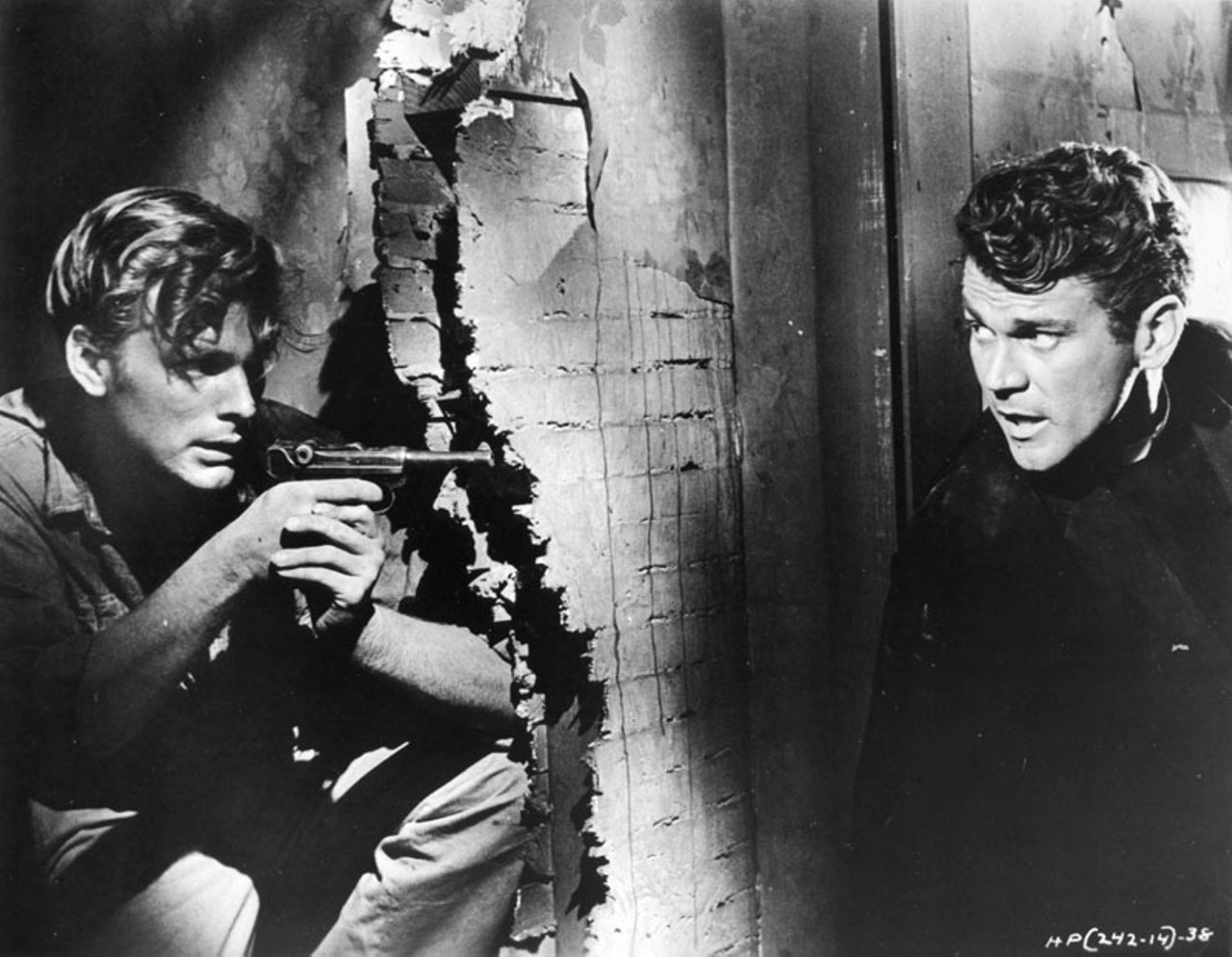
Valuable Movies: The Hoodlum Priest Movie Review

The cover and title that caught my attention
I'm a fan of my local library. It's a great place to access so many different mediums of learning and entertainment. Many of the movies and things I've talked about on here have come from what I find at the library. Just like at a movie store, when I look through the shelves of DVDs at the library, I have so many options of things to choose from. Some great classics, some crappy modern schlock, some hidden gems I'd never heard of before, and some B-movies that just should've never been made. I often feel like the bad choices outweigh the good choices in most instances, but maybe I just have too narrow of movie standards, and I do really appreciate when I find some great, great pieces of cinema.

Rambling aside (hopefully) I recently came across a movie in the Dramas genre, "The Hoodlum Priest". My Catholic Movie senses began tingling, yet I didn't recall hearing of it before. I quickly looked online. No real reviews for the movie, barely a word on Rotten Tomatoes, mainly just some newspaper-type articles about the history of the making of the movie as a cheap, true-to-life B movie. The actors weren't familiar names to me (though one of them, Keir Dullea, went on to star in "2001: A Space Odyssey") and this was one of the first directing gigs for Irvin Kershner, who everybody loves now because of "The Empire Strikes Back". Unsure about the quality of the movie, I eventually decided that I was going to check this movie out, whether it turned out to be great or terrible. The reasons being:

1) It's a movie with a Catholic subject.
2) It's a real life story about a priest whose passion was helping ex-convicts.
3) It was filmed on location in St. Louis

I also knew I wanted to write a review of  the movie after seeing it, to try to either get this movie more positive reviews and credibility as a good film or to steer people away from it if it turned out to be an abysmal waste of time. My ratings below should indicate how I felt after finally watching this movie.

Artistic Value (Rating: 4)


Let's start with a little surprise towards the beginning. After we see our main ex-con Billy Jackson, played by Keir Dullea, being released from prison, a friend of his takes him to a shady part of town. They are planning a robbery and the friend, Pio, leads Billy to a third guy. The way these three interact, you think this third guy is just some other criminal in town, one who is cool, streetwise, and critical like any other typical gangster you've seen in other movies. By the end of the scene though, the man changes his clothes and you realize that the guy the cons have been talking about doing a robbery with is the priest, Father Charles Dismas Clark, played by Don Murray. It's a confusing yet interesting entrance.

At first, it feels misleading. We spend enough time with Billy and Pio in the beginning, and I'm just waiting for the priest, you know, the main character of the movie, to show up. And then this third guy who I don't think is the priest shows up and I'm like "Give me the main character all ready!" when suddenly the movie's like "He's been here the whole time" and I'm like "WWWhhhhaaaaa???!!!". This scene has unexpected value though, other than just introducing characters to us in a unique manner. It provides some context to dialogue and scenes that appear later on in the movie, so that we better understand Father Clark's reasoning and motivations in this opening scene.

The script is also surprising, confusing, and unexpected. Some dialogue can make this movie feel dated or stuck in its own time period. There's lots of lingo and slang from late 1950s used by our main characters, and you'll often hear words like "square" being thrown around in a city gangster tone. Sure, it gives you an idea of what kind of background these characters come from, but at times it could feel like how the Brady Bunch kids would throw around "groovy" or "right on" in an attempt to be hip and cool with the current audience. Don Murray's accent as Father Clark also goes back and forth. Sometimes it's a little too thick, a little too gangster, a little too specific to a particular time and place. Other times he just sounds like a regular guy at any time.

Yet, like I hinted at before, there's some good things going on in the script too. It reveals information about different characters at the right time and place. It helps you understand our main character and his motivations well, along with understanding the theme of the movie without feeling like it's talking down to its audience. The actors all say their lines with conviction and purpose, so there's less melodrama and more real life happening on screen. There are also a few moments of silent interactions, where you see people engaging in conversation, but don't hear what they're saying, or they're observing a situation without saying anything. Yet, you still clearly understand what's going on by the body language and facial expressions on the actors' faces. I liked that.

The two lead actors, Don Murray and Keir Dullea, have fantastic performances. Keir Dullea especially impressed me since he had to go through a variety of emotions and had to handle more of the quieter dramatic moments than Don Murray. Yet, even when Murray's Father Clark had to get emotional or extreme, I never found it overblown or past the point of disbelief. It sounded like a man who was convicted of his way and caught up in the passion of the moment.

It's hard to examine this movie's story and its main character without comparing to or pondering other movie priests from around this time period. Classic Hollywood is known for some great movies with interesting priest characters, and this movie matches a lot of these other classics:

-"On the Waterfront": Karl Malden's Father Barry also goes to the seedy, grimy parts of town you don't expect to find a priest at, in order to find the lost sheep and help people who would otherwise be ignored by other Christian people. There's even a powerful monologue where the priest gives an impassioned speech about helping these men.

-"Angels with Dirty Faces": Pat O'Brien's Father Jerry also has a desire to help criminals and low lives around him. He knows how to speak truth to these gangsters in a way that they understand and make them think because he comes from the same background as the criminals. There's also a scene with a criminal facing death row.

-"Going My Way/ Bells of St. Mary's": Bing Crosby's Father O'Malley is also a charismatic, streetwise priest.

-"I Confess": Montgomery Clift's Father Logan also ends up in some courtroom drama and has a surprising background for a priest.

I've even seen comparisons to other priests in movies like "Boys Town", "Fighting Father Dunne", and other movies that I haven't seen yet. I mean, here in "Hoodlum Priest", you've got a streetwise priest who devotes himself to saving needy men in criminal circumstances and ends up having to go to court or aiding someone on death row. It's hard not to think of movies with similar circumstances and made around the same time period, or in a sense paved the way for this movie to be made.

Yet, Father Clark was also a real person, with a quirky personality and strange history. They bring that reality and history of the legitimate Father Clark to the screen as well, you can feel like this all stems from a real person, not just somebody written up for the screen. Of course, as we know with any movie based on a true story, the movie isn't 100% authentic in its retelling of history, but I think this one does a good job of blending reality with the positive traits found in previous priests and stories in other movies.

The aesthetic of the cinematography worked very well. The black and white film helped to emphasize the shadows and special light effects that honed in on important moments. Also, with it being about dark subject matter and filmed on location, the black and white punched up the realism and better connected with the themes. When it came to editing the movie though, there were lots of jump cuts where they set up a scene and immediately cut in the middle of the action. You're seeing the exact same location, except the position of the actor or the angle of the camera is just a little off, just different enough to notice that something changed at a time and place that should've stayed the same.

For a film set in St. Louis, this movie shows a lot of the dirty, grimy parts of town, even back in the day before Downtown really became infamous for crime and grime. It goes through a lot of rundown buildings, shady alleyways, and seedy venues. Sure, you see some nice courtrooms, the St. Louis Zoo, and shots of St. Louis University High School (SLUH for locals), but otherwise this isn't exactly an attractive advertisement for the city of St. Louis.

The best reason for why it is acceptable for them to film in so many bad parts of town (or at least, unattractive parts of town) is because the subject of the movie is about criminals and working with people in the city's underbelly. As far as what particular locations were used and how they look similar or different today, someone more familiar with the St. Louis city and region would be better able to identify all of that than myself. For me personally, there wasn't much that helped me identify it as specifically St. Louis, but maybe that's because I'm not all that familiar with downtown architecture and history and such.

Like I mentioned before, there's plenty of scenes with some really great acting and there's some suspenseful scenes. There's a moment of great tension where Billy takes part in a crime. At first, it's just Billy and his friend Pio working on breaking into a small business vault. There's no music, just lots of shots establishing the scene and space. Suddenly, we start cutting back and forth between a truck pulling into the business and Billy slowly realizing that one of the bosses has returned to work. It's just several minutes of visuals without any background music or even much sound except for the tools used in the robbery. You know that something dramatic is going to happen and you know it's not going to be good, so you're just waiting for chaos to come crashing down and when it finally happens it's so worth it. This even leads to another fantastic scene filled with tension and terrific acting where you can see the aftereffects of the robbery scene have very deep psychological and emotional impacts on our leading characters.

Moral Value (Rating: 4)


The major theme of this movie revolves around Father Clark's desire to aid ex-convicts. His dedication to help people transition from criminal to moral citizen is inspirational to see and cunning in design. It's one part relationship-building, another part social justice, some tough love, and a dash of carefree rebellious attitude. In this movie, Father Clark really lives out Christ's call to visit the imprisoned and help the least of His brothers. We see Father Clark going into the jail and build relationships with the men inside. We see him provide people with means of escape from an impoverished life to one that provides better opportunity and rises above crime. We even see him pound the pavement for awhile just to get a guy a job.

Sometimes the testament that someone is living a Christ-like life is seeing good people cringe and think the worst of the intentions of the do-gooder-in-question. Just as the Scribes and Pharisees thought the worst about Jesus interacting with the tax collectors and prostitutes, good Christian citizens of St. Louis in this moviedon't seem to think it's good for Father Clark to engage with ex-cons. However, Father Clark brings up some good points and reasons for why he does what he does. How else are the ex-cons going to turn away from a life of sin and choose to do good? How can they do that without someone who provides resources and, perhaps more importantly, believes that they have what it takes to be more than just a common criminal?

One of the few downsides to this movie's morality stems from people who are antagonistic without much character growth. One such example is a newspaper man named McHale who is a journalist for the Times-Herald newspaper (which doesn't exist anymore fyi). He is continually trying to find ways to ruin Father Clark's plans and his life. The journalist thinks there's ulterior motives involved in Father Clark's actions. He thinks because Father Clark spends so much time with the criminals that there is something criminal about the Hoodlum Priest too (McHale is even the one that gave Father Clark that nickname).

The shame is that there is no resolution to this issue. There comes a point in a court room scene where Father Clark makes a passionate, almost confrontational, statement, aimed in part at the journalist, but that's the last that we see of the journalist and that's almost halfway through the movie. It would've been nice to see if the journalist changed his attitude towards the priest or if he remained an antagonist throughout the rest of the movie, provided there was good reason.

The other main antagonist in this movie is Mario, one of Billy's new bosses. Right from the get-go, Mario has a strong dislike and prejudice against Billy because of his past time in prison. The two never really get to know each other and whenever Mario gets a chance to vent his anger or display his strength against Billy, he takes it. At least this part of the story has a resolution, and it impacts the rest of the actions in the movie.

There are several times in this movie when characters talk with Father Clark about Saint Dismas, the thief hung on a cross next to Jesus in the crucifixion, who repented at the end. They continually connect St. Dismas with the title "good thief", constantly connecting the fact that the man had been a criminal but turned from his sinful ways in the end. The priest even goes so far as to use the story of St. Dismas as inspiration for a man who is on death row, in order to give him hope and even possibly a conversion experience at the end. I like that this man and his conversion story is used to relate to the situations the characters are going through, even if sometimes it feels like it's brought up more out of desire for the movie to sound more dramatic rather than just naturally stemming from character interactions.

I can see where some people may see this movie as preachy. It gets pretty focused on the death penalty near the end and there's a lot focus on social justice throughout the picture. It also talks about bringing dignity to men who may lack it because of their involvement in the prison system. However, if the acting was off or if it really felt like the movie was hitting the audience over the head with its themes, then maybe I can see the moral value of this movie being diminished. However, I find it all warranted based on how the audience connects to the characters and how much the story depends on the characters' connections to the themes. It's a good story that even has some relevance to today's audience.
Overall Value Rating: 4/5

As you might be able to tell, I was very satisfied with my viewing of "The Hoodlum Priest". I suggest finding it wherever you can check it out. I think it deserves more recognition and should be viewed by a wider audience. However, with that said, the fact that it is a relatively unknown movie and that there's more information online about the history of it rather than actual film criticism of the movie gives me some pause.

I wonder if I enjoyed this movie as much as I did because I have a personal connection to the region  or if it is because of my Catholicism. I wonder if someone who isn't from around St. Louis or who isn't Catholic/ religious would enjoy this movie as much as I did. Does the movie stand on its own or does it need some personal attachment in order for it to work? Sure, you can tell it's low budget, but for as quick as it was made, the fact that it was put together by a group of newbies and veterans in the movie business, and also with the understanding that it was set in a real place and about a real person, it makes up for most of its defects with lots of charm and passion.

This movie got me thinking about other movies I've seen, especially Catholic movies, and how much I appreciate when the people and philosophies of the faith are done well, as well as when things don't always get produced well. I really think this movie deserves more recognition and should be viewed by more people than just random film connoisseurs and the viewership demographic of TCM.


Sources for photos (all credit and rights to the rightful owners):

Wikipedia
The New York Times
The Riverfront Times


Thursday, May 11, 2017

Keeler’s Valuable Films List

As I may have mentioned in previous posts, I am a fan of the Vatican Film List. A list of 45 movies organized under three categories of "Religion" "Morality" and "Art". While there are still plenty of movies on that list that I need to see, it got me thinking of what my own 45 movies list would look like. So I made one.

Neither of these lists are "Best" or "Need-to-See" lists per se, but they are best stated as simply "Important" movies worth checking out. The Vatican Film List was actually compiled to celebrate the exact 100 year anniversary since the beginning of film making. My list is perhaps more simply just great movies that I have seen, made from early years of film making to present day. I repeat, these are simply movies that I have personally seen and may not even be the very best of their category, especially since it's just subjective personal opinion.

For my list, I decided to use three categories as well, but my labels include "Catholic", "Moral Value", and "Artistic Value". This is an attempt to separate my list from the other and to try to match my criteria for valuable movies with quality movies that represent the Catholic faith. The movies listed under each category are not in any particular order of rank, just a simple list of 15 movies that best represent each category. I tried as best I could to not repeat Vatican Film List picks, but some of these movies I put on the list BECAUSE I only watched them after seeing them on the Vatican Film List and I was impressed by their film making. Under the "Artistic Value" category, I chose 15 films to represent 15 different genres or styles of film. Also, I repeat, these are only movies that I have personally seen.

Catholic

-Of Gods and Men (2010)
-I Confess (1953)
-Roma, Citta Aperta (1945)
-The Flowers of St. Francis (1950)
-On the Waterfront (1954)
-Going My Way (1944)
-Henry V (1989)
-The Rite (2011)
-Calvary (2014)
-A Man for All Seasons (1966)
-The Song of Bernadette (1943)
-Becket (1964)
-Monsieur Vincent (1947)
-The Scarlet and the Black (1983)
-The Passion of the Christ (2004)

Talking Points: This is basically my list of 10 Highly Recommendable Catholic Movies with some extras thrown in, so I'm only going to explain just a few of my choices here.

I did not watch I Confess until after creating my previous list. I consider it to be an underrated Hitchcock classic. It’s a great examination of the Seal of the Confessional and also humanizes priests as men who know what love and romance is even before being ordained. The end goes a little goofy, but it’s the dedication that each character has toward achieving their desired goal that drives this movie's great use of tension. In a movie where you already know the answer to the mystery, it sure is thrilling.

Roma: Citta Aperta shares many similarities with The Scarlet and the Black since they both deal with the Nazi occupation of Rome during World War II and the stealthy response from the Catholics in and out of the Vatican.  What separates the two is Roma is an Italian movie made right on the heels of the end of World War II, filmed right within Rome itself, which emphasizes the realism of the movie.

The Flowers of St. Francis, the English translation of the title of this Italian film, is a series of vignettes focused on how St. Francis founded the Franciscan Order and some of the stories about him and his first monks during that time. I’m told that real monks were used in the supporting roles, which adds to the realism, and it really really makes you believe that you are watching slices of life about this saint and his companions right in the 13th century.

Moral Value

-Babette’s Feast (1987)

Moral of the Story: Food is awesome and you never know when your simple good deeds will provide unforeseen rewards

-The Bicycle Thief (1948)

Moral of the Story: Just because someone does an evil deed to you, is it justifiable for you to also do an evil deed out of desperation?

-It’s a Wonderful Life (1946)

Moral of the Story: Helping people is worthwhile and bears fruit, even when you cannot see it on a regular basis.

-Schindler’s List (1993)

Moral of the Story: It is better to give than to receive and people have worth. Also, Nazis are evil.

-The Last Samurai (2003)

Moral of the Story: Redemption is possible.

-The Quiet Man (1952)

Moral of the Story: Peace is the ultimate good, but true strength and courage are required to move forward.

-The Lord of the Ring: The Fellowship of the Ring (2001)

Moral of the Story: You don't have to be grand or big to do something heroic. Also, evil is bad and good is good.

-The Assassination of Jesse James by the Coward Robert Ford (2007)

Moral of the Story: Killing the bad guy is not always the right answer.

- Master & Commander: The Far Side of the World (2003)

Moral of the Story: There's a difference between the obligation of duty and personal ambition.

-Groundhog Day (1993)

Moral of the Story: Helping people is more important than your own selfish desires.

-The Prestige (2006)

Moral of the Story: Revenge can only lead to disastrous consequences.

-Sergeant York (1941)

Moral of the Story: Killing is wrong, but sometimes you've got to step up and save people.

-The Mission (1986)

Moral of the Story: There's always a chance for forgiveness and peace is the right way to live. Also, colonialism is evil.

-Lilies of the Field (1963)

Moral of the Story: Community is vital to life and sometimes you can find a mission and purpose in places you wouldn't expect.

-Au Revoir Les Enfants (1987)

Moral of the Story:Community is vital to life and you can make friends with anyone if you give them a chance. Also, not all Nazis are evil?


Artistic Value

-Animation: Princess Mononoke (1997)

I was close to copying the Vatican Film List and putting Fantasia in this slot since it is such a piece of high quality art and the hard work has withstood the test of time, but I think that this choice showcases an entire history of animation within its runtime. Hayao Miyazaki and his Studio Ghibli are one of the most renowned animation companies today because they bring a specific artistic style, rooted in their country’s culture and history, to life. The shots of nature and the spirits that inhabit the world are gorgeous, but the animation is also not afraid to give time to the grotesque and violent. If you wanted to prove the value of hand-drawn 2D animation in the modern context, this movie is the best way to go about it.

-Western: Stagecoach (1939)

While I considered other options, including other John Wayne movies, this is the definitive Western to me. The actors portray two things: caricatures of cliché Western characters and people with heavy personal struggles based on their pasts. There’s the gun play and horse riding that Westerns are known for, the location shots are infamous in their ability to define the genre, and the people all seem like they come straight from the last couple decades of the 19th century in Southwest United States. It's reserved in the gritty violence and anti-heroism that later defined the western genre and instead allows genuine humor and drama to create an enduring story and heartfelt characters.

-Comedy: Hot Fuzz (2007)

This movie is comedic in how serious it presents itself. It knows how to spoof a genre properly while simultaneously tell its own unique story. This movie invites multiple viewings because of the little inside jokes and clues it leaves along the way. Despite some profanity and modern mindsets, it is never vulgar and nowhere near as inappropriate as most other movies passing themselves off as "comedies". The characters are all cooky and fun, as are the action scenes in the last third of the movie. Seriously, the delivery of the lines in this movie is so dry and dramatic that you can't help but laugh at them. The reason this movie beats out the more quotable Big Lebowski is this one actually has a coherent plot and has restraint in areas that Lebowski lacks.

-Horror: Psycho (1960)

For the record, other horror movies like The Exorcist and even The Conjuring were in close contention for making this list. However, sometimes the natural is even scarier than the supernatural, and Psycho is the best popular example of something macabre happening in ordinary life. All of the most thrilling scenes are memorable because of their power of suggestive fright, including the shower scene, the basement scene, and the final shot of the movie. The black and white cinematography on top of the music score adds so much atmosphere to what may otherwise just be a melodrama with some absurd moments. This work is also one of the most accessible movies of the horror genre since it does not rely on gruesome blood effects and demonic voices.

-Science Fiction: Star Wars (1977)

I know. I’m surprised by this myself. I spend so much time acknowledging the Star Wars movies as just average movies given overrated praise by fanboys. Yet, if I had to pick one movie that encapsulated science-fiction and was a good representation of influence from the past and insight into the future of filmmaking, it would have to be the original Star Wars movie. There’s different planets, laser weapons, robots, space travel, alien creatures, and some philosophical dialogue. The ability of the filmmaking team to utilize little models and standard technology to create such life-like imagery is worth commending. 

-Documentary: It Might Get Loud (2008)

 I cannot say that I’m watched too many documentaries before and I am sure that there are others that deserve higher praise than this one. For my own part though, from the documentaries that I have seen overall, this is the one I hold as a standard to compare the quality of other documentaries I see. It tells its story of the history of the electric guitar, thereby the history of rock music, from different angles in a fun, entertaining, and engaging way. All three guitarists bring a different perspective and represent a different period in rock’n’roll. You want the movie to keeping going as it heads toward the finale and you want to rewatch because of the great music and the intriguing behind-the-scenes approach you're given into the world of rock music.

-Adventure: Raiders of the Lost Ark (1981)

If there was one movie that had the atmosphere and fun of old school adventure movies with modern technology and respectable dialogue, it's Raiders. The introductory scene especially looks and feels like it could've been made back in the 40s, but the longer the movie goes on, not only does it get better, but it gets bolder and more spectacular, like a modern movie. You get all of the exotic locations and fight scenes that action adventures are known for, as well as the intriguing relationships that are found in love interests, sidekicks, and bad guys. And who doesn't love a movie where Nazis are the bad guys? The characters are not caricatures or cliches, but they are also allowed to be a little melodramatic in proper movie fashion. The imagery, the locations, and the quotes from this movie are all memorable.

-War: Saving Private Ryan (1998)

There are some war movies that are all about the gunplay and get you pumped up by the exciting action. There are some war movies that are more focused on the philosophies about war, violence, and peace and don't care too much about the weaponry. There are some war movies that just want to recreate for you what happened during World War II. Saving Private Ryan is all of the above. You get such gritty violent realism that it can be hard to make it past the opening scene. There are plenty of other tense and bloody action scenes that honestly depict the horrific violence involved in war. The movie also takes time to build its characters in quiet moments, giving us insight and understanding about war from regular Joes who had nothing to do with the military before the US got involved in WWII. Despite how gruesome the movie can be, it's also worth repeated viewings and pays tribute to regular but real heroes.

-Silent: Modern Times (1936)

Just like the documentary category, I can't say I've sat through many silent movies, so I don't have much to back up this choice. I saw this movie because it was on the Vatican Film List and I can see why it was chosen. There's some thematic exploration of ideas in the industrial work world of the time as well as some interestingly choreographed scenes. Charlie Chaplin has remained popular for his comedy for a reason, and he knows how to make people laugh with goofy faces, body language, and awkward situations. Even the few moments of sound and dialogue are not necessary for this movie to function well. It works because of the grand set pieces, the goofy interaction between the characters, and the physical way that the story is told.

-Black & White: Seven Samurai (1954)

Again, this is one genre that I do not have too much experience with, so out of my limited knowledge of movies that fit this category, I think Seven Samurai fits the best. Under this heading, you might think I'm also talking about modern movies that are shot in black and white, like Sin City, The Artist, or Schindler's List, but those movies are just copying an artistic style, mainly an artistic style that existed at an older time when colored movies were too experimental or too expensive to produce. What also separates this category from something like the Silent movie genre is how dialogue and sound impacts the movie experience.

I do not think this movie would work in a new, colored setting, which is why any remake of this movie has had to set their project in a different time and location. The lights and shadows in this movie leave an impact on how the viewer understands characters and their motives. You do not need to have all the color that later Kurosawa samurai movies have to appreciate the spectacle of the realistic costumes and props. The action scenes, once you get to them, are thrilling even when they're quiet. The dialogue is poetic while remaining realistic, and there's even moments where tension is built up because of a lack of dialogue so that when you do finally hear something screamed or whispered it gives you an emotional punch. The clash of the sword, the sound of horses trotting, and gruff Japanese voices all bring history to life in a way a silent movie cannot.

-Superhero: The Avengers (2012)

The Dark Knight is probably the best made movie involving a comic book hero . However, if there was one movie that you could use as the definitive superhero movie, meaning that it tells a full comic book story in a semi-realistic-mostly-fantastical way with a cast of colorful characters that gives you the whole arc of emotions within comic books, I'd argue that The Avengers is that one definitive movie. You get all of the action that's involved in comic books, including urban destruction in a major city. You get all of the special powers that superheroes are known to have as well as the futuristic high tech gadgetry. You get the good vs. evil storyline with some plot twist elements. Finally, you get the humor and character interactions that bring some lighthearted goodness into a setting that would otherwise be gritty and depressing.

-High Art: Tree of Life (2011)

Many movies that are high art "arthouse" pieces come off as arrogant, slow, and involved in too much thinking to be enjoyed by anyone other than movie snobs who live off of watching movies that the general masses despise. However, I think that Tree of Life is an accessible and worthwhile arthouse movie if the viewer is willing to let it guide them on the journey. For my full take on what makes Tree of Life so great, read my review here.

-Romantic Comedy: The Princess Bride (1987)
             
This movie is quite literally the definition of a genre. It is primarily a romance focused on two lovers fighting to be with one another amongst beautiful locations, with soft serene music in the background. It is also primarily a comedy with witty word play and sarcastic dialogue leaping from the actors’ mouths. Now, you might usually just associate this movie with adventure or comedy, but I think the romance is an important aspect of the plot as well as the characters. It also is not anywhere near as crude or modern as most movies that are usually put under this genre category. The Princess Bride is something that both women and men, kids and adults, can watch and enjoy time and again.

-Musical: Fiddler on the Roof (1971)
            
 If you are going to turn a stage musical into a film, it has to be a different experience than just watching something live on stage. These live musicals on TV are essentially just watching a stage production through the scope of a TV screen. Some musicals, like Joseph….Dreamcoat, do the same thing by introducing their movie as a show within a show. A movie version of a musical needs to transport you to physical locations, bringing the setting to real life. That’s the fault of most classic musicals, the characters are still clearly on sets and sound stages. A movie version of a musical also needs to stand on its own as a good piece of art without relying on the quality of the stage version. That’s the fault of Les Miserables and Phantom of the Opera, their stage versions are so good that you’d rather see them live than watch the inferior movie versions, which also means that quality of the singing comes into play. Based on all this criteria and given my love for Catholicism in movies, you’d might think that this means that Sound of Music would fit in this slot.

However, my pick for this spot is actually Fiddler on the Roof and this is for a few different reasons. One reason is atmosphere. Fiddler on the Roof really provides some serious atmosphere and does so with reverence to the spirituality of its people as well as the place that it is set in. You truly believe that you are in a poor village in rural Russia, even in moments when they’re filming on a sound stage. The movie is not afraid to slowly roam over the landscape or quietly allow the emotions of the moment to settle in. Sound of Music has some good atmosphere and quiet moments, but its focus seems to be to travel quickly from moment to moment to tell the story at a quick pace. Sound of Music as a movie also takes some liberties with the story of the musical, moving songs and moments to places different than where they are in the stage production. Fiddler on the Roof is the exact same story in both movie and stage versions. There's also the reverence of the religion of its characters. Sound of Music has some scenes involving Catholicism, but it's not pervasive in the characters' lives, even Maria who struggles with her vocation. Fiddler puts a sharp focus on Judaism and how it impacts the lives and culture of the people in Anatevka. The songs, character movements, and set pieces are rooted in the religion of the main characters.

-Sports: The Sandlot (1993)

I dare you to find a movie that loves its sport as much as The Sandlot loves baseball. While some sports movies use the sport as a vehicle to push the theme or purpose of the story (*cough*RemembertheTitans*cough*), the characters of The Sandlot love to play baseball because of how fun it is. You see them enjoying the pitching, catching, throwing, and sweating of baseball, as well as the rivalries and camaraderie that stems from building a baseball team. The heroes and legends within the movie are surrounded in the atmosphere of baseball. The movie is incredibly quotable, just as fun to watch as a kid as an adult, and you learn some life lessons without it being too obvious and hard hitting.

Thursday, May 4, 2017

Top 10 Small Movies of Summer 2017

Recently, I made my prediction for the Top 10 highest grossing movies of the 2017 summer season in the United States, ranked in order so that the #1 will earn the most money overall. It's just a fun little wager that is driven by my curiosity of which movies people are most likely to spend their hard earned money on. The list is as follows:

1. Cars 3
2. Guardians of the Galaxy 2
3. Despicable Me 3
4. Spiderman: Homecoming
5. Wonder Woman
6. Pirates of the Caribbean: Dead Men Tell No Tales
7. Transformers: The Last Knight
8. War of the Planet of the Apes
9. The Mummy
10. Baywatch

When I posted the list on Facebook, I got a variety of comments making different guesses or saying where they thought I was guessing incorrectly. There was one comment, though, noting that there were no original movies at all in this Top 10, with a further comment noting how there is no more originality and creativity when it comes to stories in movies we see today. 

This got me thinking on the nature of summer movies. If we look at last summer's movies, it is a very similar environment to this year. All of the highest grossing summer movies were part of established franchises, with very basic stories and characters and even though they looked nice, the stories themselves just were not well written, meaning that they were average or bad movies. That's not to say all of the movies were bad, just that they were either based on a previously established story/ franchise before it or that the writing lacked any spark of imagination, or both. Meanwhile there were several "indie" movies or less talked about movies, like Kubo and the Two Strings, Swiss Army Man, and Sing Street, that hardly anyone was going to see in the movie theater even though the people that did see the movies all talked about how awesome they were.

I'm sure some of these movies on the above 2017 Top 10 list are going to be good, entertaining, quality movies worth seeing. I myself am excited to see Guardians, Spiderman, and Despicable Me even. I'm also even more certain that many of the movies on the same list are going to be trashy, surface-level, noisy, just-overall-BAD movies that I think people should stop spending their money on. 

So, in an attempt to try to balance the scales, and to prove that there are still quality stories coming out this summer to movies theaters, I've compiled another Top 10 list. This Top 10, which you'll soon find below, consists of movies that would fall under the "indie" category, with smaller movie studios with smaller budgets. You'll like not have seen much marketing or heard much word about majority of these movies unless you're a movie snob who has ingested all the information from the film festival circuit or otherwise watched the trailers like I had to do when I found these on IMDB.

Obviously I've not yet seen any of the below movies, so I cannot truly judge if they are good or bad, but their premises and trailers are intriguing enough to be worthy of interest. I will provide the ratings for each movie since these are likely to be darker and more mature than many of the other movies coming out this summer and therefore discretion is advised. I'm not going to applaud a movie for its inappropriate content (sex scenes, nudity, obscene amounts of profanity) and each movie needs to be evaluated individually before you think it is appropriate enough to see it. So this list is just a way to inform you that these movies exist and on the surface, before they're released to the general public, seem potentially more worthwhile on spending money to go see than my other list. The below list is ranked according to my interest/ perceived value of the movie in question (i.e. #1=Most Interest/ Best Value; #10= Least Interest/ Riskiest Value)

Ultimately, I'm just one man with one opinion. However, if I could cause some little bit of change for something as silly yet impactful as the choice of movies we see and support financially, I'd be mighty pleased. At the end of the day, remember that the big movie studios are only going to provide finances to movies that they think will rake in the cash, so if you want to see less blockbuster trash and more substantial storytelling, pay for movie tickets for movies like the ones below.

1. Dunkirk (Release Date: July 21)

Yes, I topped my list with a Christopher Nolan movie and I'm sure you're ready to call me out as a hypocrite for including such a big name with big money on a small, indie movies list. However, if Christopher Nolan's name wasn't attached to this movie, would you know that this was a big budget Hollywood production or even know that this movie exists? I include it on this list because I really do think it looks worth checking out and I do think that it should be in the Top 10 highest grossing list. So many good actors in a story of valor and bravery. However, since this is not a franchise movie and it's a war drama, the likelihood that people are going to purchase truckloads of tickets just because it's directed by Christopher Nolan is unlikely.

Rating: PG-13 for violence and language


2. Baby Driver (Release Date: June 28)

Okay, now Edgar Wright is on this list and I'm still not a hypocrite...right? Seriously though, the same idea with Christopher Nolan applies to Baby Driver. Not as many people would even know of this movie at this point if Edgar Wright's name wasn't attached, nor would it look so sleek and shiny with such a handsome budget. Yet, the blend of action and humor are still there, as is the quirkiness that is allowed in smaller budget movies. It looks like a fun summer action movie with some dark comedy and even a little romance thrown into the mix. Essentially this could please the action junkie crowd that loves smash-em-up summer blockbusters AND the comedy seekers who just want to have a good laugh in the summer.

Rating: The official rating hasn't been released as of yet, but the best guess is mainly for violence and language

3. Valerian and the City of a Thousand Planets (Release Date: July 21)

This is the last of my summer picks that may have some serious street cred to it since the director is responsible for The Professional and The Fifth Element, and the movie has the likes of Dane DeHaan, Cara Delevingne, Ethan Hawke, and Clive Owen in the lead acting roles, all well recognizable and known at this point. This is going to be the sci-fi movie experience of the summer, with the zaniness of Mad Max Fury Road mixed in with the special effects and universe setting of Star Trek. This could be a case of style over substance, where the visual eye candy overpowers a simple storyline, but at least it also looks like it's trying to shoot for a unique sci-fi experience that's both fun and adventurous. If the story it was based on and the actors involved were more popular, this might have a shot at being in the Top 10 Highest Grossing, and I will be pleasantly surprised if that actually happens (as is the case with my above two choices on this list).

Rating: PG-13 for violence, suggestive material, and brief language


4. It Comes At Night (Release Date: June 9)

Horror movies seem to have become part of the summer movie season in recent years, and last year had some memorably good ones, most especially The Conjuring 2. If you're looking to get your horror movie fix this summer, the best bet looks like this one. The trailer doesn't really give much away, nor does the description, but everything is so bizarre and intense. There's people in gas masks, dirty faces, fires, creepy doors, cramped spaces in the dark, guns being pointed at people, and everyone sounds freaked out.

Rating: R for violence, language, and disturbing images

5. The Book of Henry (Release Date: June 16)

At first this movie seems like it's going to focus on a family drama. Naomi Watts is the mother of a boy who is a super genius (like we haven't seen this kind of thing before) and they're both trying to fit in in their normal suburban life while the son tries to help his mom without dominating the relationship. THEN the rest of the trailer is this dark mystery that seems to involve rescuing a little girl from an abusive relationship, with much more suspense and action than the first half would lead us to believe. The movie totally balances the line between Oscar-bait slow indie drama and cult classic dark indie drama.

Rating: PG-13 for thematic elements and brief strong language

6. The Wall (Release Date: May 12)

A war drama that seems to actually not have too much action. Aaron Taylor Johnson and John Cena (really, John Cena in a drama?) are military guys targeted by an enemy sniper in the desert. As they attempt to take out the enemy with nothing but open desert and a small crumbling wall for cover, Johnson must deal with his injured partner as well as not let the enemy mess with his head via radio communication. Modern warfare meets character study, sounds interesting enough to me.

Rating: R for some language and violence

7. Meaghan Leavey (Release Date: June 9)

All right, you've got a quality leading lady in a movie also directed by a woman. It's even got a dog in a supporting role in a movie based on a true story. That should be enough to draw anybody in to a seat in the theater. Sure, it's another action drama movie about the modern military , but if people want there to be more lead acting jobs and directing jobs for women, going to see this movie is just one small simple action that can help. Plus it's got some solid actors that you can trust to bring good performances overall.

Rating: PG-13 for violence, language, suggestive content, and thematic elements

8. The Hero (Release Date: June 9)

Sam Elliot plays himself, or a blend of himself and Adam West, as an older man known for acting roles in the past who is blocked from further good work because everyone associates him with the past. It seems like the kind of movie made for folks of the older generation as well as anybody who is struggling with being productive in their careers in a purposeful way. I would caution that it seems like there would be some inappropriate material (the dude is having a relationship with a much younger woman), but hopefully it won't make up much of the movie.

Rating: R for drug use, language, and some sexual content

9. Maudie (Release Date: June 16)

This is the most Oscar-bait looking movie of the bunch, so if you're looking for a slow quiet drama to cool you down this summer this may be your best bet. It's about a middle aged woman, who is talented as well as handicapped, and her budding relationship with the grumpy loner middle aged man she works for. The woman character is strong and resilient, but not in a cliche way that the blockbusters make their characters to be, but she seems to overcome obstacles both by her own strength and the strength she receives from her relationships to other people. And also, it's a movie written and directed by women, which I only point out because people talk about the need for greater diversity and leadership in the movie industry and it's not going to happen if audiences don't pay to see movies when it happens (I'm sure there's other variables, but at least this is one variable that the movie viewers themselves can control).

Rating: PG-13 for thematic content and brief sexuality

10. A Ghost Story (Release Date: July 7)

If you're looking for a bizarre thinking man's movie to keep your brain active this summer, maybe look into this movie. The trailer and description are almost incomprehensible, but in a good way since they only reveal just enough to peak your curiosity. Something about Casey Affleck walking around in a ghost blanket in a house throughout history while the characters talk about love and death and life and time and all those good philosophical buzz words. But hey, Casey Affleck won an award for being in a highly acclaimed Oscar drama last year and the director was in charge of Pete's Dragon last year (as well as some other previous indie projects), so it's got some credibility to it. It doesn't seem like the kind of movie that is going to get a wide release or at least be in movie theaters for too long, so get out to your local indie joint as quick as possible.

Rating: R for brief language and A disturbing image

Post Script: You'll notice I didn't have movies like Alien: Covenant and The Dark Tower on the list (shame of me, right). Again, this is all personal opinion, so if those movies or others I missed look worth checking out to you, by all means go do it. I'm just trying to throw some support and love to smaller budget movies with bigger ideas and tons of character.

Another thing you'll notice is NONE of these movies that I mentioned in this list are PG or G. That's mainly because...families are really out of luck with movie choices this summer. SERIOUSLY, there's almost nothing for families to go see this summer that isn't rated PG-13. Aside from Cars and Despicable Me, the only other real decent movie for everyone is the Captain Underpants movie, which in my opinion looks more style over substance AND came out 10 years too late (but what do I know, maybe kids love the book series as much as my peers did back in the day). Otherwise, families will have settle for either The Emoji Movie or The Nut Job 2 and...no, just no....just don't give your money to these movies, people!