Showing posts with label God. Show all posts

Wednesday, January 17, 2018

Why Do Catholic Young Adults Stay? Results Part 2: Life & Struggles

Please see my Explanation about the survey as well as Part 1 of the Results. For these results, we had a total of 301 people who answered some or all of these questions. A big thanks to every single individual, majority of whom came from the Catholic Geeks Facebook page, who participated!

I have provided a quick summary of Part 2. Following that is a more detailed breakdown of the results under each category.

The TL;DR Version

At least 77 participants attended Catholic school at some point in their lives while at least 13 participants were homeschooled.  While all homeschoolers had positive reactions to how their education influenced their faith, Catholic school attendees gave mixed responses to the influence of the educational experience on their faith. The most common struggles that people have had/ currently have in their faith lives revolved around being lukewarm, hard times finding answers, or difficulties practicing their faith on a regular basis. As far as struggles with Church teachings go, most of those struggles revolved around sexuality as well as the Sacramental or prayerful aspects of Catholicism. Majority of the resolutions to those conflicts came from relationships with friends or family, growing in the faith intellectually, and building their relationship with God. When it came to daily activities to practice the faith, the most common responses included prayer, the Rosary, and reading, both scripture-based and other spiritual works. Participants were often quick to point out that a lot of the practices mentioned did not always happen on a regular basis or were new habits they were trying to take on.
    Did You Attend Catholic School at Any Point? What Grades? Did Your Catholic School Education Influence Your Faith?

    13 participants to this question came from a Homeschool background. Anyone who commented about their homeschool experience had nothing but positive things to say about how homeschool influenced their faith lives. They mentioned things like "extensive theology study", "Catechism [was] taught every day", and that homeschool "allowed me to practice my faith on a deeper level". Beautiful stuff!

    Now, of course, when I posed this question, I was referring mainly to traditional Catholic schools, with kids in uniforms, majority connected to parishes, fancy private high schools, that kind of stuff. That's not to say I don't appreciate the input of the homeschoolers. Mainly just pointing out that this is an instance where my question was a little too broad, too open, compared to what I was intending to ask. Now, back to business!

    32 participants stated that they attended Catholic school their whole K-12 educational career. Another 10 responded that they attended Catholic grade school just from kindergarten to 8th grade. Following that, 7 other participants claimed only going to a Catholic high school. And finally, 28 people collectively claimed going to Catholic school off and on, or just a portion of their education. So,  altogether 77 participants claimed a Catholic school education.

    As far as the influence that Catholic schools had on responders, this was quite the mixed response. Firstly, 6 people just stated that Catholic school had an influence on them, without verifying good or bad (which again is my fault because of the way I phrased the question). Meanwhile, 17 participants mentioned some positive that came from Catholic school. Here's some quotes on the positive impact:
    • "It helped to enforce what I was taught at home"
    • "If not for the caring teachers in the high school environment I wouldn't be where I am today"
    • "It gave me occasion to learn how to defend my faith against bad instruction, helped keep God a constant thought, and occasionally meant I had a few good examples of the faith outside of my family"
    • "Had a class on Catholic social teaching with hard lines and answers taught by our priest. Best class to date"
    • "My high school was especially crucial to my faith formation, as I learned how to properly defend the faith"
    • "Being exposed to regular Catholic sacramental and devotional life, as well as meaningful discussions on theology and church history from teachers who cared about it intensely, influenced my investigation and ultimate decision to convert"
    • "Senior year of high school I took a class called 'Why Am I Catholic?' That was an apologetics course that really influenced me"
    Now, there were about 13 others who commented with mixed experiences at Catholic school. Whether it was differences between grade levels or just a negative counteracted by a positive in the same year, these 13 had both pleasant as well as critical things to say.

    And then there's the straight up negative influence that Catholic schools had on at least 17 other people. Perhaps influence is not the correct word in this case, but these 17 had at least critical things to say about Catholic school. Here's some reasons why:
    • "It made me not want to be involved with the church due to the people involved"
    • "It actually almost sent me away from the Church"
    • "Nothing was ever really explained, that's just the way it was"
    • "I left high school not remembering anything about my faith. I learned to pass a test, not for the knowledge or truth".
    • "The schools were AWFUL for Catholic teaching and living"
    • "The schools were completely unaware of kids talking about porn and sex, flashing each other, harassing others, and several kids were engaged in drugs and sex. It was horrible to be around that and have the schools going through the motions of Mass and spirituality. No one tried to fix the problem and engage the students. Some kids were really poor and had terrible home lives and no one engaged".
    • "It influenced it negatively as the nuns wouldn’t explain things to us and the priest was more interested in knowing if we had 'bad thoughts' when we were teens"
    1 person even straight up called out the Catholic schools in Ontario (apparently y'all need some massive reform up there according to this individual)

    And then, not to be left out of the conversation, there was mention of Catholic colleges and universities in the responses. I didn't expect this (again, broad questions here), but they're certainly a worthy inclusion. 

    24 participants mentioned that they had gone to a Catholic college or university, majority of whom had been in a Catholic school at some point beforehand. It was kind of surprising to me that if these people talked about the influence these years had on their faith, most of them said college/ university had a negative influence on them. Although, at least 1 person talked about Mass in the dorm at Notre Dame and 1 other person talked about the positive influence of FUS aka Franciscan University of Steubenville. The surprise comes from the mention of the positive influence that other people talk about receiving during college/ university in responses to other questions.

    Were There Moments You Struggled/ Were Not Practicing? If So, What Brought You Back?


    At least 5 people shared an experience of struggling with lukewarm-ness, that feeling of not really being invested in the faith even if one is not totally fallen away. The reason for being lukewarm, that some participants shared on the survey, included the family not really being religious and marrying a non-Catholic.


    A similar yet different kind of lukewarm experience came from the college environment. 6 people referred to their college years as a time that they were struggling spiritually. Perhaps the most relateable example of this struggle came from 1 participant's testimony: "I was faced with the difficulty of accepting church doctrine or social standards.  I wasn't participating due to the knowledge of mortal sin, but [refused] to change my life". 

    On a slightly more serious note,  suicide and depression played a part in at least 3 responders' struggles. These feelings, according to the responders, came from "the social environment at the church", having "a very difficult time in college...[a] dark night of the soul", and a time where the participant "couldn't bear the pain and sorrow of [their] life".

    3 different participants struggled with going to Mass at some point. 1 said that at one point they found Mass "difficult and boring", another said they had difficulty making time for Mass, and the third one said "I did not go to Mass because of my lifestyle choices". 2 participants discussed priests in their lives being a source of struggle. 1 talked about "baggage and hurt from priests [they] had known" while the other mentioned trials that came from switching parishes due to poor pastoral leadership

    Then of course there's Sex! Don't worry, that's going to come up in more detail in other questions, but in response to this question, the struggles of 3 participants were sexuality related. Whether it was "confusion and hurt over sexuality", pornography, or just straight up being "knowingly deep in sexual sin".

    4 participants responded by saying they had a hard time finding people who could answer their questions or fully catechize and explain things to them. 1 separate individual said that since they did not fully understand Catholicism, they left the Church as a teen and had became a Wiccan.

    There were a couple mentions about belief in God being a struggle. For 1 person, struggling with belief was due to problems within their life and for the other it was...well, in their own words "I lost my belief in God, but He ended up being the only One there for me in the hardest point in my life". 1 individual mentioned their struggle with the Church's more conservative teachings such as pro-life and no contraceptives. And finally for 1 particular individual, it seemed to be a combination of things based on their place and time in life. As they said "I attended a Catholic high school with a lukewarm Catholic culture in my small town (500). Alcohol abuse, lust, drugs, they weren't uncommon to see from students out side of school. I fell victim as well".


    Some struggles were a little unique, because they related to participants who seem to be, by all other signs, practicing Catholics trying to grow in their faith.
    • Today I'm just struggling to find community with other Charismatics in my diocese and to find anyone in the world who is also liturgically Traditionalist and spiritually Charismatic.
    • Haven't been to Mass in a year because of my allergies and a lack of enriching community. I know those aren't good reasons, but when you have a panic attack walking into a church because someone smells like onions... It makes it hard to go. 
    • The services I'm going to seem too modern. People talking before, clapping after Mass, hymns that I'm not familiar with. Also, the young adult groups that I've tried to join are too forced. The person organizing the get together was also the youth leader, and she seemed to treat us like high school students. I'm 30, I don't need a chaperone.
    So, what brought people back or what helped them overcome these struggles? Even if people felt like they never really fell away from their faith or just never really explained their struggles in this survey, a ton of people were able to explain what either brought them back to Catholicism or what renewed that fire for God in their lives.

    Let's start with talking about the influence of people. For 11 participants, interaction with Catholic friends, peers, or groups helped them come back. Of these 11, there was mention of friends in youth groupsNewman Centers at college, doing choir with a college roommate, a Catholic Woman's Pregnancy Due Date Group, and a best friend convert. I smiled when I saw responses like "free food and friends" as well as "the compassion I see in others who are Catholic" because that just goes to show that simple joy, humor, and fun can be found in the Catholic Church through other people.

    College itself was actually a positive influence according to 5 responses to this question. Being in college allowed 1 individual to further study teachings and apologetics [arguments for and defense of faith and doctrine], another individual mentioned courses on Catholicism in college being a help, and 1 other person shared some personal experiences with a community of Catholics in college: "We would go to bars for theology on tap, go frisbee golfing, but just as easily hold spontaneous rosary sessions. I think having a group of like-minded people is key without it feeling forced. We were also pretty close with the priest then, too and talk to him about anything, and he would tell us truth in a comforting way". 2 other responders said priests have played a role in combating struggles. For another person it was accountability and encouragement of their youth minister "to not give up just because it got hard".

    This is how powerful a single person can be in helping someone else struggling in their faith. That person from small town (500) who fell victim to alcohol, lust, and drugs amongst lukewarm Catholics? They added  "I came 'back' through seeing 1 devoted Catholic. Now that I'm in college, I've started attending the TLM [Traditional Latin Mass], and my faith has never been better". If we learn anything from just this particular section, we learn that whether it's a whole community or just a lone person, our connection to other humans plays a vital role in our faith life, especially when it comes to overcoming struggles.

    Also in this survey response, the importance of relationships with family played a major part. 13 responders referenced family members as some component in their return. 6 of these people talked about their spouse being an influence, whether it was their spouse's conversion, their own conversion through their spouse, or even a change of life spurred on by a spouse's negative comment towards the Church. Children were mentioned in 4 of these responses and 1 participant commented that their grandparent's passing was the cause. 1 participant specifically credited the example of their parents. Then there was the testimony of 1 other individual: "Yes, I truly believe that my mother's prayers brought me back. I just woke up one day and went to Mass. I saw the priest the next day and after a powerful and moving confession, I felt whole again and at peace".

    For 1 participant, it was being involved in Lifeteen during their preparation for Confirmation. 4 people answered that a retreat or conference of some sort helped them, whether it was a youth conference or a Christ Renews His Parish (CRHP) retreatVolunteer service was part of 2 peoples' responses, 1 mentioned volunteering for youth ministry while the other talked about volunteering with Religious Sisters and seeing the joy of the Sisters.

    Then, 13 participants talked about something involving the intellect, whether it was learning the reasons why we believe what we believe, looking for and finding satisfactory answers, asking and searching for every question and studying multiple points of view, apologetics, or even reading things from the early church. For 1 of these 13, "knowing the miracles performed by God and the Saints" makes it too hard to stay away. And another person said "Reading the entire Bible brought me back - turns out it's Catholic". 1 separate individual had a mixture of relationships and intellect by saying "Meaningful connections, practical application of the Catholic Social vision and the intellectual foundations of truth brought me back".

    Sometimes all you need is a little faith, which is what 3 participants verified when they said faith in God is what brought them back. 1 in particular phrased it this way: "Faith in God, love of Jesus. Faith in His Church". At least 5 people talked about building a relationship with God and love of Him helped bring them back. A couple felt called by God to return, another couple talked about their love for God, and 1 said "just the fact that God is always blessing me".

    8 participants stated that the Eucharist helped either bring them back or keep them faithful during hard times. Some said it was devotion to the Eucharist, 1 person stated that "there is a peace that I get from just sitting in Adoration". These 8 reinforced that there is a power that is found in the Eucharist.

    4 people had an experience with Confession that helped bring them back. 1 of these 4 testified that "A small encounter I had after confession helped set me on the path away from doubt- hearing the right thing at the right time, so to speak". 3 people referred to Beauty from the Church as an inspiration for them, including 1 who found beauty in the Church during a chronic illness and another who complimented the beauty of the Cathedral in Saint Paul, MN.

    The Holy Rosary became a powerful influence according to 4 people, including 1 person stating "The Holy Rosary changed my life" and 1 other person saying "The Rosary is my strength". 2 responders claimed growing up and reaching young adulthood helped their faith.1 participant simply stated "I could not find anything as good as Catholic liturgy and teaching".

    Media played a role in the lives of 2 responders. 1 person gave credit to The Catholic Channel on Sirius XM radio, which led them to Catholic Answers, and the other person said that listening to EWTN helped them. For 1 responder, a parish mission helped. For another, it comes from regular Mass attendance and involvement in their parish. 1 person said they were brought back because of "the grace coming from living in a house with a Tabernacle Chapel".  And 1 person simply said "Mercy".

    I wanted to end this section on a slightly more serious note, but with some hope added in as well. To lead this off, 1 person said "I came back because I felt like I was floating aimlessly". Another honest person admitted "I was knowingly deep in sexual sin. What brought me back was knowing I had no one left to turn to but God".

    There's the testimony of this person: "The mess I had made of my life left me suicidal, I couldn't bear the pain and sorrow of my life anymore, and so I asked Him to take it. And He did, He brought me back, I think when there was so little left of me, so little hope in me, that I was able to be humble and ask Him for help".

    And finally, bringing us back to the participant who said "Yes, I lost my belief in God, but He ended up being the only One there for me in the hardest point in my life". They continued that statement by saying "When I was depressed and had no friends in high school. He saved my life. There was no turning away from Him after that".

    What Teachings of the Church Have You Struggled With in the Past? In the Present? How Have You Overcome That Struggle?

    Here we go! The hot button topics! Everyone loves those...right? I think the beauty of seeing responses to this question is that, through honesty, it probably helps people connect with their fellow Catholics, creating a better sense of community. Like, "Hey, I've struggled with these issues too. Wait, you too? You mean I'm not the only one!?". The other nice thing about the responses is they offer some pretty good advice and life experiences for anyone who may be struggling with understanding a particular teaching. Please note that while various struggles are mentioned, it's never clarified whether this is a past or current struggle for each participant unless specifically stated in the latter part of this section.

    11 people talked struggling with teachings about the Blessed Virgin Mary, mentioning things like the Rosaryperpetual virginity, and her Ascension [I'm assuming they're talking about the Assumption]. 3 other times there was mention about the Saints, especially concerning veneration or intercessions.
      Abortion was brought up 7 times.
        Some variation of the term Same Sex Marriage was used 11 times. There was some variation concerning the teaching of Homosexuality used about 11 times. 1 person had stated that the church teaching on marriage was something they struggled with, which was hard to tell if that meant same sex marriage specifically or something else, so I just left it by itself. 1 other person specifically referred to the teaching against a same sex couple adopting children as a struggle.

        And that's not the only sex related responses. Man, a lot of people were focused on the sexy stuff here, or as 1 person put it "my teenage self wasn't a fan of the church teachings on sexual things" (that quote makes me laugh for some reason). The basic idea of struggling with the Church's sexual teachings was brought up from all angles by 10 people, including "sex is primarily for procreation", premarital sexlive-in boyfriends/girlfriends, what sexual practices are permissible within marriage, and abstinence.

        3 mentions of chastity in some wayThe words birth control popped up 10 times, while phrases about the teaching on contraception got mentioned 7 times, including contraception in marriage. The acronym NFP was used 6 times. NFP meaning Natural Family Planning (as a bachelor virgin, I have no practical knowledge to explain NFP further)

        The words masturbation and pornography were each used 3 times. 1 person talked about struggles with masturbation and pornography, while 2 others, very honest people, talked about addiction and masturbation. Infertility Treatments to help people unable to conceive children was brought up 2 times. 1 person wrote in "Condoms in the context of HIV in developing countries". 

        Confession and the Sacrament of Penance got 6 mentions. Transubstantiation and the True Presence of Jesus in the Eucharist was brought up 3 times. Teachings revolving around divorce or remarried peoples was mentioned 3 times, including 1 insistence pertaining to Communion. Papal Infallibility was named 3 times, suffering 2 times, and the existence of God also got a few mentions.

        Finally, there was at least 1 mention of struggling with the following 
        • Needing to attend Mass every Sunday
        • Socialist tendencies of Liberation Theology
        • No salvation outside the Church.
        • Mercy and forgiveness
        • Angels as represented in the Summa Theologica
        • The belief of Purgatory
        • Existence of Hell
        • Immigration
        • That priests can’t marry
        • The idea of free will and how God can simultaneously have a plan for the world, the mystery of the Trinity...and also charity for the enemy/just war
        So now, let's examine how people overcame any struggles they had in the direct words of the participants. These responses are hard to summarize and categorize, or maybe the quotes are just better than anything I could put my own interpretation on. Education and Intellect were major themes when discussing how people overcome their struggles, being mentioned in a variety of ways: 
        • I learned more about full church teachings and philosophy.
        • I remind myself that I had no problems with the teaching when I was able to logically analyze it in an unbiased state.
        • Realizing that the Church's wisdom is far greater than my own.
        • I learned the context for why the Church holds these positions.
        • After studying and understanding WHY the church teaches those things, it was easier.
        • I have questioned everything, but I have always found in-depth, logical answers. In fact, every time I think I have come up with a new idea, thirty people--all holier than I--from various centuries have already written about the same idea.
        • I finally both understood that people really believe it, knowingly, and so that maybe I could believe it too.
        • Educating myself on Church teaching and the abortion process, it wasn't difficult to come in line with Church teaching.
        • Overcame by learning where those beliefs came from plus deciding to trust the Church.
        • I think knowledge of WHY the teachings are the way they are is very important.
        • I overcame it by rational discussion and openness to the Holy Spirit.
        • Through other Catholics leading me to Church documents I was able to better understand.
        • What helps me is continued prayer and reading and seeking of understanding and mercy.
        • Through patience and reading on the topics.
        • [I did] my own reading and research.
        • I researched why the church teaches its stances...and I came to agree.
        That's not to say faith doesn't play a part either. We are people of BOTH Faith AND Reason. Again, in their own words:
        • Through having faith in God was I able to overcome them. 
        • I still struggle and it's faith that keeps me going.
        • I trust that God has His reasons, so I will follow His will.
        • There is simply too much that isn't explainable without Him.
        4 people discussed how both time and prayer helped them overcome obstacles, including: 
        • It took being away from the church. Living a faithless life in that lifestyle to realize that God wasn’t there. After returning, a lot of prayer and time spent with God.
        • I figured if the Church was right about everything else they must be right about these issues. I put my faith and trust in God and prayed that he would help me see and understand more clearly. He always did!!
        • I just follow teaching and pray for help.
        The idea of time and prayer also came into effect with those overcoming struggles with Marian teachings:
        • I overcame it by being less ignorant of it all. 
        • Continuing to pursue a relationship with the Blessed Mother. 
        • [Ascension/Assumption] Prayer for understanding.
        When it came to accepting teachings revolving around homosexuality, the following were mentioned: 
        • Studying Theology of the Body
        • Aided by time, good teachers who explained the truth, and the documentary "Third Way".
        • I took the class Christian Marriage at university. 
        • I was open about how the teaching confused me. I asked questions to priests to get a fuller understanding of the teaching and how it related to present day life.
        • I had the teaching explained to me by a friend, I was able to understand the nature of the human person and why it is wrong to act on same sex attraction.
        Then there's the general collection of sex-related responses:
        • The person who said "chastity (in thoughts) was difficult before I was married" then explained "now the mystery is gone and it's not as difficult for me" (which makes me laugh).
        • 1 person who struggled with contraception presented this life experience: 
          • Reading "Good News about Sex and Marriage" 
          • Doing marriage prep
          • Learning/practicing NFP with my husband.
        • For someone who struggled with both contraception and sex before marriage: "Having a Theology of the Body background of engaging, honest, simple, not overly-preachy truth was a huge help".
        • For 1 individual struggling with Sexuality, an act of faith by "trusting that Christ speaks through His Church".
        • "I struggled with masturbation because I was addicted to it. After a while, I couldn't deny what my addiction was doing to my life. I now completely agree with and submit to the Church's teaching:.
        • 1 person testified to struggles with teachings on masturbation, pornography, and sex: "I researched every doubt and couldn't argue. I can honestly say I was addicted. From there, what helped me overcome it was reading intellectual arguments from the Church, praying only the Sorrowful mysteries [of the Rosary], saying the Anima Cristi, a few litanies, and the chaplet on the wounds of Jesus. I strictly prayed these prayers for a few weeks, until I saw more progress and eased up slowly...I've been successfully chaste for almost 6 months, starting on St. Maria Goretti's feast!".
        • Infertility treatments: "we choose our faith over in vitro/ in utero".
        • Condoms in the context of HIV in developing countries: "Understanding that the health of the soul is more important than the health of the body helps".
        • I understand the detriment that birth control causes.
        • "I did a lot of reading and research and came to understand" the beauty of the teaching on birth control.
        • "It wasn't until I was married that I realized the importance of this teaching [on birth control]. Apologetics on the subject helped as well".
        For those who struggled with Confession:
        • Looking at the CCC [Catechism of the Catholic Church] and the Scriptures that are cited in support of the Sacrament changed my mind.
        • Found a parish where the priests make Confession readily available so that I am positively peer pressured into going.
        • It wasn't until I attended Confession in the Byzantine tradition that I was healed of my fear of confession.
        Suffering:
        • I primarily deal with this by attempting to draw upon a logical mindset.
        • Learning the value of redemptive suffering through daily trials and more prayer.
        Concerning struggles with the Eucharist, 1 person said: "It wasn't until I had read 'Jesus and the Jewish Roots of the Eucharist' by Brant Petre that I came to understand and fully believe".

        Other miscellaneous responses about overcoming obstacles included: reading Pope John Paul II, Pope Benedict XVI, and Dr. Ken Miller, debating with a group of devout and learned friends, and reliance on the examples and intercessions of the Saints.

        Currently, What Are the Daily Things You Do to Practice Your Faith?

        A great majority of these answers involved practices or actions that are inconsistent, or at least are more weekly or monthly in practice. Majority of the people responded that they try to do X,Y,Z every day, but added that it doesn't necessarily happen every day. So, there'll still be a lot of key words and phrases here to answer the question, just with the background understanding that the practices are not necessarily a true "daily" practice in the strictest sense. I can't fault anybody if they're at least making an effort to do some of the following on a regular basis to know God and glorify Him more.

        Of course, the most common, almost knee-gut reaction, was saying "Praying" or "Prayer" or "Pray" in some variation. There were 65 types of these general prayer responses, including 3 specific mentions of mental prayer, 1 person saying "prayer with spouse", 1 person saying "my holy hour [an hour devoted to prayer] is the most important", and 1 person saying "Pray and keep God's law". Specific prayers or styles of prayer included the Anima ChristiAngelus, saying "Thank you" to God regularly, contemplation/meditation, "prayers from my 1962 Roman Missal", and 3 people making mention of praying a novena.

        The most popular type of prayer specified in these responses was the Holy Rosary. 45 responders used Rosary in their response. Some other prayers, in connection to the Rosary or of similar style, that were mentioned included the Divine Mercy Chaplet (4 times), Chaplet of St. MichaelLittle Crown of the Blessed Virgin, and seasonal Marian hymns.

        Then there were the specific mentions of what I would call bedside prayer, or perhaps a better way to phrase it is "Prayer in the Morning & Night". These are the prayers that are said first thing in the morning as well as at the end of the day, perhaps while kneeling beside a bed (hence bedside prayer?). 17 people talked about praying at morning and/ or at night. Types of prayers mentioned included Morning Offeringnightly examination of conscience, "a few Haily Mary's before bed", nighttime prayer with family, and "Charismatic praise & worship in the morning (alone)".

        At least 12 participants mentioned some variation of what I'll term as sporadic/intentional prayer. These are the kind of prayers that are not pre-planned, but just happen throughout the day as need be. For some, that meant just talking to God. For others, it's praying for the repose of the soul of anyone that passed away that day or making the sign of the cross at various moments throughout the day. This kind of prayer is often casual and small in length, but it occurs throughout the entirety of the day and it helps emphasis that communication factor of our relationships with God.

        11 mentions specifically revolving around The Divine Office/ Liturgy of the Hours, whether it was just the Compline late in the day, VespersLauds, or just plain old Divine Office or Liturgy of the Hours. Some variation of a mealtime prayer was mentioned around 7 times. 6 participants mentioned praying specific devotionals or for the intercession of specific saints.There were 4 mentions of the Chotki/Jesus Prayer as part of the daily faith experience.

        18 responders discussed reading the Bible as a daily practice they do or are starting. These kind of responses included reading the Gospel and the other readings for Daily Mass, Bible Study participation, and at least 2 people mentioned reading both the Bible and the Catechism of the Catholic Church.

        30 people in this survey talked about making an effort to attend  Daily Mass. At least 7 people talked about spending time in Adoration. 5 people referred to Confession as an important practice in their faith lives.
          11 other people mentioned some form of spiritual reading, reading texts focused on the faith or written by fellow Catholics. These responses involved reading about saints, reading the actual writings of Doctors and Saints of the Church, reading other Catholic non fiction, or just simply learning and studying.

          For 11 people, interacting with children is something influential for them. This included instructing their own kids or teaching kids through religious education programs.4 people emphasized discussion about the faith with family and friends as part of their daily faith journey.

          4 people emphasized liturgical living as part of their daily faith practices. This meant that they celebrate saints' feasts days, fast on appropriate days, and adjust their lives according to the liturgical season we're in (Lent, Advent, etc.).

          8 people responding to this question talked about media resources as part of their daily practice. These included Christian music, Catholic radio, movies, Catholic podcasts, Lighthouse Media CD, and faith related videos.

          4 people use journaling to practice their faith daily. At least 6 people talked about wearing a scapular, a miraculous medal, or another sacred medal. 6 people answered by naming groups they are part of (3 Facebook-related, 2 Catholic women's groups and 1 young adult group). 3 responders talked about starting Nineveh 90, a program combining spiritual practices and physical fitness, this year.

          Finally, sacred images at the home was mentioned by 4 participants. They talked about their religious art, crucifixes, and Icons. There was 1 specific quote that made me chuckle by imagining the reactions of anti-Catholic people who see it: "I pray and venerate the crucifix in my home".

          Stay tuned for the conclusion of the Results in the next blog post Part 3!

          Monday, January 15, 2018

          Why Do Catholic Young Adults Stay? Results Part 1: Demographics

          Please see my Explanation about the survey. For these results, we had a total of 301 people who answered some or all of these questions. A big thanks to every single individual, majority of whom came from the Catholic Geeks Facebook page, who participated!

          I have provided a quick summary of Part 1. Following that is a more detailed breakdown of the results under each category.

          The TL;DR Version

          Ages represented in the survey: 21 – 26 years old (33%), 27 – 32 (30%), and 33 – 39 (30%). The remaining 7% came from responses outside of the given age range. Women accounted for 72% of the responders, leaving 28% of responses from men. Cradle Catholics represented 73% of the total participants, while Converts represented 27%. The two most popular answers given for why people converted were the Church's history and personal relationships. Participants who received the Sacrament of Confirmation before high school accounted for 33% of responders, 43% came from those who were confirmed during high school, and 24% after high school. Finally, 84% of participants normally attend the Ordinary Form/ Novus Ordo Mass, 10% normally attend the Extraordinary Form/ Traditional Latin Mass, 3% said they normally attend two or more valid rites equally, and 3% normally attend an Eastern rite.

          Age 

          (297 responses)


          Reference: (Age: Number of Responses)

          When posting this survey online, both on the actual Google Form itself and also on my post about the survey to Catholic Geeks Facebook page, I had requested an age range of 21-39 year old participants. While there was quite a lot of representation from all ages within this range, here's how the Top 4 shaped up:

          26: 24 (Way to represent, my fellow 26 year olds!)
          27: 19 (Way to represent, my soon-to-be fellow 27 year olds!)
          28: 19
          34: 19 (The only representation of 30-somethings at the top, but how appropriate that this is the                       middle of the 30-somethings).
          21: 18
          25: 18
          24: 17

          Majority of the remaining age groups were in the double digits.

          22: 15
          30: 15
          39: 15
          36: 14
          29: 14
          32: 11
          37: 11
          38: 11
          31: 10
          33: 10
          35: 10

          The only one that was in the single digits in this range was:

          23: 6

          Now, by the grace of God's free will and the ability to do whatever we want on the internet, some people outside the range responded to the survey. Sure, I expected a couple of 20 year olds, just on the brink of becoming 21, to respond, but not as many that did.

          20: 13

          Then we even had some teens who had the audacity to complete this survey as well (punk kids...gotta love 'em!)

          19: 3
          17: 1
          14: 1

          My biggest shock was finding people beyond the 39 year old limit who wanted to submit responses to the survey (punks...I guess we're all young at heart though.)

          40: 2
          42: 1
          Sex 

          Not much to say on this category other than: Way to go, ladies! Men, let's step it up next time and really represent!

          So, as you might've been able to guess before even seeing the results, more women answered the survey call than men did. There were nearly 3 women to every 1 man in this survey.

          (300 responses)

          Female:  217 participants or 72.3%

          Male:  83 participants or 27.7%

          Cradle or Convert? 

          Again, not much to say here since results kinda speak for themselves and the results aren't necessarily shocking. It was another near 3:1 split, where the Cradle Catholics, those born and raised in the Church, dominated the number of Convert Catholics.

          (299 responses)

          Cradle:  218 participants or 72.9%

          Convert: 81 participants or 27.1%

          If Convert, What Inspired Your Conversion?

          Before diving into the reasons for people's conversions, it's worth noting that 7 people replied to this question explaining that they were a Revert, a cradle Catholic who had basically fallen away from their faith and over time chose to return to it, as if converted, with greater love for God and the Catholic Church. I know that I definitely feel the same way about my own faith journey, even calling my own return to faith a conversion experience for awhile before hearing the term "revert".

          There were two big reasons for why participants on this survey converted to Catholicism. The first one is the history and tradition of the Catholic Church, the authority and truth that upholds Catholicism. At least 20 people responded explaining that some variation of history, universality, and tradition of the Church was an inspiration, with 3 people specifically mentioning truth, 2 shout outs to the Church Fathers, and a couple mentions of authority or theology each. I loved this one response when they said they "recognized the roots of [their] faith were here, untainted".

          The second biggest reason for participants' conversions to Catholicism was through personal relationships. At least 19 people talked about some person in their life being a huge influence. This is a moment where men began to shine, since 6 times a husband/boyfriend was mentioned as the main inspiration. After that, 5 other participants gave shout outs to women in their lives, from wives to girlfriends to moms and even a grandmother. Also, there were 5 mentions of raising a family or the family unit being inspirations for conversion. Finally, there were 3 participants who talked about the influence of ministers and chaplains in their faith lives.

          2 people gave all the credit to God bringing them to the Catholic Church. 1 individual specifically stated the Holy Spirit was their conversion inspiration.

          4 participants specifically used the word Sacrament and the inspiration the Sacraments had on them, including 1 specific mention of the Sacrament of Reconciliation. Yet, perhaps the most influential Sacrament has been, of course, the Eucharist. 10 people discussed, in some form, the Eucharist, the Body and Blood of Jesus Christ, as a major inspiration for them. Within those 10 responses, 3 of them mentioned Eucharistic Adoration, praying in front of the Blessed Sacrament, with 1 participant saying "getting face-to-face with the Blessed Sacrament was the catalyst". Another individual specifically referenced John 6, the chapter of the Gospel of John where Our Lord Jesus Christ talks multiple times about receiving eternal life through consuming His body and blood.

          And where do you mainly find the Sacrament of the Eucharist? Why in the Mass, of course! 4 responders mentioned the Mass as part of their conversion, including 1 Latin Mass and 1 Easter Vigil Mass.

          7 people talked about some sort of media being an influence in their conversion. Things like EWTN and Mother Angelicalocal Catholic radio and Sirius XM's Catholic Channel, author/speaker Scott Hahn, and St. Augustine's Confessions book were referenced. 1 person went so far as to say that they had "a spiritual experience seeing Gibson's Passion" [The Passion of the Christ movie directed by Mel Gibson].

          There were about 6 people that, while sharing a variety of different experiences, talked about what I would call an intellectual pursuit of Catholicism. These 6 people were the kind that did a bunch of research on the Catholic faith, reading about the saints or examining different denominations of Christianity until they settled upon Catholicism. Whether the Catholic Church was something that was forbidden to them earlier in life  or they just chose to seek it out through free will, these people talked about using logic and intellectualism as part of their faith journey.

          3 participants give credit to spiritual experiences that they had. They had stories where they talked about a "miraculous encounter", a "supernatural moment",  and an "intercession from the Blessed Virgin Mary and the Saints". 3 people mentioned a spiritual retreat or conference experience, including a Catholic charismatic conference. 3 other people emphasized the importance of Scripture in their faith journey, including 1 individual saying "I'm Jewish, so Isaiah 53 [a chapter the Catholic Church believes to be prophesying Christ's Passion and Crucifixion] inspired me". 1 other person simply said "Long story short: St. Paul".

          Travel played a part in 2 people's conversions, 1 while in Rome, the other 1 spending a semester in France. 2 other people actually credited Catholic school as a positive influence in their faith journey here. 1 person chimed in with the Rosary.

          There were other individual responses that just really stood out on their own. 1 person talked about infertility and the Catholic stance on ethical treatments being an influence. Another person referred to the Church's social teaching. A very honest person straight up said "Fear of Hell". Another person simply exclaimed "Holy Thursday!", which I didn't know whether that referred to the Mass, a spiritual experience, or something different entirely, so I just let it be its own solo, enthusiastic thing.

          Finally, there are two remaining responses that are really awesome quotes and bring a smile to my face. I'll just share them separately, like inspirational soundbits:
          • Pope Francis telling me to "get off my spiritual couch".
          • It was my teenage rebellion
          Confirmed Before, During, or After High School?

          Kind of a basic random question. However, I think it helps the participant especially to look back on their faith journey, comparing life before and after receiving the Sacrament of Confirmation. It's just interesting because I would think the results reveal two big things: The age you receive Confirmation often depends on which diocese you live in (different diocese have different ages confirmandi, the people receiving the Sacrament, receive it). Also, the after high school number largely reflects the number of converts in this survey, coming to the Church after the teenage craziness of high school.

          (298 responses)


          During: 128 participants or 42.9%

          Before: 98 participants or 32.9% (My people! I received the Sacrament in 8th grade).

          After: 72 participants or 24.2%

          What Mass Rite (Novus Ordo, TLM, Byzantine, etc.) Do You Normally Attend? 

          I was not very surprised and simultaneously a little surprised by the responses to this question. Perhaps the best way to look at the results is through an understanding of which Rites of the Mass are, currently, most readily available for Catholics, especially here in the United States.

          I wasn't surprised by how an overwhelming number of the responders normally attend the Novus Ordo/the Ordinary Form of the Mass (the rite most people, even non-Catholics, are familiar with today), and I wasn't too surprised when some people were confused by what I meant by saying Novus Ordo (which is Latin for New Order).

          I was somewhat surprised by how few responders said they normally attend the Traditional Latin/ Extraordinary Form of the Mass, which is seeing a resurgence now due in part to interest from young adults. Though maybe the number was smaller than expected because of the people in the Blend category. These are people who may go to a Latin Mass as well as a Novus Ordo Mass, participating in two or more different valid rites almost equally, depending on circumstances.

          I anticipated/ hoped I would get some responders representing the Byzantine Rite, though I was genuinely surprised to see 1 person say East Syrian and then 1 other person say Syro-Malabarboth different yet valid rites representing the Eastern side of Catholicism. Again, I think these results speak to the availability of the different rites and forms of Mass. At this point in time, almost every single parish does the Ordinary Form, a decent number also offer Extraordinary Form, and then a very small percentage celebrate the Eastern rites.

          (289 responses)

          • Novus Ordo/ Regular Mass/ Ordinary Form: 242 participants or 83.7%
          • Traditional Latin Mass/ Extraordinary Form: 30 participants or 10.4%
          • Blend: 10 participants or 3.4%
          • Byzantine: 5 participants or 1.7%
          • East Syrian: 1 participant or 0.34%
          • Syro-Malabar: 1 participant or 0.34%

          Check out Part 2 of the Results in the next blog post!

          Friday, July 21, 2017

          Why I Suit Up for Mass


          Today, I'd like to share with you why I put on a suit for Mass and why I think it's important to dress nice for Mass. I will go through my history of the clothing I chose for Mass, my steady growth towards putting the suit on, and then examining some reasoning behind what is going to cause people to be convinced to also dress up.

          I'm mainly talking about Sunday versus the regular week. Sunday, Christians celebrate the Sabbath, so it's a special particular day of our week. If I go to Daily Mass during the week, I still try to look nice and wear some sort of collared shirt and nice pants. Generally, I stay away from shorts and the only time I don't wear a dressy shirt is when I'm dressed to go to work. At Daily Mass, some people are on their way to work like I am, and so our clothing choices are not too much of an issue.

          Now, obviously I haven't dressed up my entire life of going to Mass. This is a development from over the past few years. In college, I would still sometimes go in shorts or jeans and every once in a while I would wear a long sleeved button down but for the most part I wore a polo. I got gussied up for a few special Masses but very rarely did I go full suit and tie combo

          Even in grad school, I started feeling like I was wearing my work attire to Sunday Mass. Which was true, since at work I was dressing in a button down and nice pants and dress shoes, but at both work and Mass I had my sleeves rolled up and I didn't wear a suit jacket or a tie. I challenged myself to dress up for Sunday Mass for Lent a couple years ago and after that the habit continued so that every Sunday Mass I would take the time to tie a tie (sometimes in Creede I would wear my bowtie) and put on my suit jacket and do the full ensemble.

          Why do I dress up for Mass? I mean, I understand some people argue that our Lord doesn't care what we dress like for Mass as long as we're there. Which in a sense, yeah sure. However, at the same time, we should care about how we dress up. Often times, we dress up for going to job interviews or attending weddings and funerals, or whenever there's just some special unique occasion, we get dressed up. However, the Mass IS a special occasion, even if it happens every week. It's in a special place too. I talked in my Hands for Prayer post how the Church isn't a store, the streets, or even your house that you walk around casually. This is a temple of the Lord! This is a place specially designed and reserved for prayer, for being closer to God, and for glorifying Him. And so, since the place we are in is special, our general attitude overall should be special and the minute details of how we dress should be special.

          It shouldn't matter whether we're in a big city urban metropolis or if we're in a small rural country place. The problem is everywhere, just as the solution is applicable everywhere. Everywhere you go now, you'll basically see the same get-ups. The older guys will be in polos tucked into their jeans. The kids will be in t-shirts and gym shorts. All around, no matter where we are, there's still a need for dressing up for the Mass.

          People that are fully cognizant of what they're choosing to wear, and having the presence of mind to know what their day's schedule will be, have the presence of mind to dress up for Mass. We're giving God a little extra special time and attention by making sure that we're wearing a nice shirt, that we tie our tie correctly, and we throw our suit jacket on whether it's 100 degrees outside or 10 degrees outside.

          Some of my catalysts for changing the way I dress for Mass included reading the Catholic Gentleman's article on dressing up for Mass. Also, after moving out to St. Paul, I started going to Mass the same time as my aunt and uncle, who live near us, and I saw my uncle dress every week in a nice button down shirt, with sleeves rolled down and cuffed, and in a tie. Every week. That inspired me to at least start going in at that same level and continuing my habit and growth from there.

          Being suited up tells the people who see me and are around me at Mass that I care enough about coming to Mass, and I care enough about our God, that I will get up and I will get myself dressed a little extra special compared to my normal look so that I can glorify Him. I can mark how special this place called church is. I'm of the mindset that we should care about how we look. If we're going to treat all of these other special events as being reason enough or worthy enough to dress up for, this should be THE event that we should get dressed up for.

          Now comes the point where I start trying to guess what people's reactions or questions to this post would be. So, naturally, someone is going to point out that as a young single man, my thoughts cannot probably apply to parents with kids. True, I cannot fully speak for parents trying to dress their kids. I know sometimes it's a struggle to get kids to dress up or sometimes there's events like sports or family gatherings that are going on before or after Mass that people have to rush to or from on Sundays. I'm not necessarily speaking on that, though my only point to make is that ultimately parents have control over what their children wear so there you go.

          Another objection I can hear from people is: What about the people who can't afford to buy a suit to wear to Mass? Hypothetically, if you're asking that question to me, you're asking a man who has purchased most of his button down shirts and dress pants from Goodwill, so you're not asking someone who has had the ability to buy multiple suits worth triple digits each. Shoot, Americans in the past couple hundred years were able to buy, make, and wear their 'Sunday best' clothes, and most everyone today is generally richer than those people were. So, my reasoning is that most Mass attendees have the means to buy nice clothes for Mass. It doesn't have to be fancy or made from the finest fabrics and cost you a fortune to be worth wearing. If it's a step up from your normal attire and it shows you took special time and effort and it looks like something you'd wear to other special, fancy occasions, then you're good.

          So what's the next step? What's it gonna take to inspire more people to dress up? Some people have probably seen this sarcastic joke in their church bulletin: An ad saying the parish doesn't have a pool or a beach before explaining why casual wear like shorts and tank tops are not good clothes to wear to Mass. I've seen both positive and negative reactions to this, where some people appreciate the joke because they agree with the ultimate message but other people see how critical the message is and they respond to the sarcasm with cynicism. Ultimately, the ad is basically preaching to the choir, where the only people who appreciate it are the people who agree with the message.

          I'm not here to preach to the choir, I'm here to inspire people who don't dress up at the moment. This problem here is correlated to the overall problem of how devoted people are to the Mass, the Eucharist, and the Sacraments. I'm willing to bet that the kind of people that appreciated the above mentioned bulletin ad are also the people who actually do dress up in part because they are also trying to increase their devotion to the Mass and the Church. I'm willing to bet a lot of people that you see dressed up in the pews on Sunday are also the people that are creating their weekday schedules not just on work and responsibilities but also how they fit their prayers and spiritual development into their work week. None of this is to say that the dude in flip flops and bro tank on Sunday is definitely slacking in his spiritual life. The point is that if we make the extra effort to emphasize the minute details such as how we dress for Sunday Mass, it will most likely reflect that we are making an extra effort in living out the minute details of the spiritual life outside of Sunday Mass. This is all just my opinion based on observation and experience, so take it or leave it as you will.

          As I stated earlier, I didn't always dress nice when I went to Mass, but as I came to appreciate the importance and beauty of the Church and the Mass, I realized the way I dress can reflect that importance and beauty. It's all one part of the answer to the question: What can I do to give glory to God? I really do think that one way to inspire the people of the Church at large to become the strong faithful disciples we're all called to be is to take that extra few minutes each morning to pull out the nice shirt, tie that tie, and to put that suit jacket on!

          Monday, March 27, 2017

          Valuable Movies: The Tree of Life

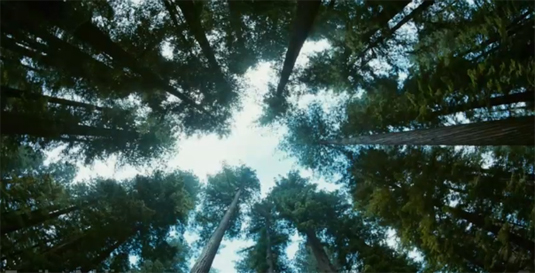
          No, this is not a scene from The Revenant, but I can see where you'd make that mistake.
          After watching Drive and feeling underwhelmed by that movie, I decided I wanted to immediately jump into another movie that I desperately wanted to see from my Need-to-See List. So, in two sittings on two separate days, I watched The Tree of Life, directed by Terrence Malick. It has been over a week since I finished the movie and I've been digesting the experience ever since.

          There's some movies I watch where I feel like I have to prepare myself ahead of time. I may not exactly know what the experience will be like, but I do know that it will be totally different from most other movies and a truly unique to the picture I'm about to witness. The Tree of Life is one of those movies I felt like I needed to prepare myself for. Get plenty of sleep the night before, be in a relaxed mood, be mentally aware, all that kind of stuff.

          This is definitely an experience of a movie. It does not play by conventional filmmaking rules so you do not examine it like every other conventional movie. It plays by its own rules and you have to follow them, allowing yourself to be led on a mystery. That does not mean I still cannot analyze and critique it for its Artistic and Moral Values, just that I have to frame my critique with a different understanding of what makes a movie bad or good compared to how I critique something like Drive.

          Artistic Value (Rating: 4.5)


          What is it? I don't know. Welcome to this movie's experience!
          Most of my critique and appreciation of this movie deals with the Artistic Value because this is mainly a piece of high visual art. This movie is filmed with tons of fast paced edits cutting to a variety of scenes throughout time and space. We get so many visuals involving water and trees, then cut back to suburban life in 1950s Texas, cut to modern urban architecture, then back to flying views of volcanoes and outer space, and in between the movie stuffs in some glowing ethereal lights like an orange Aurora Borealis.

          This movie definitely tries to fit a lot of visuals into the camera shot. Often, there are nice big fishbowl lense shots where the actor is the main focus, but there's tons of scenery around them to add to the atmosphere. This is so that, even if you may not fully understand the point of the visual, you at least know where you are and what is going on around the character. It also helps to establish atmosphere and mood, keeping the audience in a calm sense of awe and wonder.

          Here comes the sun (doo-duh-doo-doo)
          The cinematography is gorgeous, as are whatever effects were used to create the galactic and prehistoric pieces. There were many shots where I had to wonder whether a special visual effect or a practical effect was used to achieve the image. I like that mystery because that means that at least I felt connected to the movie and felt that this image is real, whether it was created on computer or created by props.

          The Tree of Life is visual poetry, which can be both good and bad. A lot of the philosophy and questions that are posed in the movie are done through what you see on screen compared to what you hear spoken. And since it does not strive to particularly answer the questions directly, that adds to the poetic aspect of the final product. The reason why it can be considered bad to be visual poetry is because it is such high art that it can feel almost arrogant or self-confident. If movies are busy trying to impress their audience and speak such lofty philosophical jargon, that can turn people off from appreciating the artistry of the movie. Thankfully, the arrogance is kept low in this movie so that the poetic aspect can still maintain integrity.

          Although sometimes it does show off.
          I often criticize movies for being slow and too quiet. This criticism stems from a connection with the pace of the movie in question. If I think a movie's pace is too slow, it means that I think a movie is lingering on some visual or some idea much much longer than necessary. The reason it's longer than necessary is because the movie was trying to make some point or feed the audience some sort of information, but once it has accomplished either goal, it continues to linger on the point or image without continuing to develop the story or the characters. So, because The Tree of Life is a slow movie in terms of plot and development, it had a hard task of being slow with good reason while keeping my interesting.

          The editing of the movie helped to keep the pacing quick enough to the point of keeping it interesting. The pacing of Drive is one of my criticisms or negative opinions about that particular movie because it made its point and yet lingered far too long. Here in The Tree of Life, even if you do not fully understand everything being said and seen on screen, it gives you enough to grasp what's happening then moves on to continue developing its point or move on to the next point of view. This pacing, especially in the first half, is what kept me engaged and interested in moments where I scratched my head and in normal circumstances may have turned the movie off.

          The first half is wonderfully enchanting, with so many various shots and angles that you do not care that you're essentially being dropped smack near the end of the story in the beginning. The characters played by Brad Pitt and Jessica Chastain first appear at older stages in their characters' lives, then during the rest of the movie we see scenes of them as young lovers and then as young parents. There are different leaps back and forth in time, almost giving the movie a dream-like quality where the dream is constantly shifting or changing but your mental awareness for the story maintains focus and awareness.
          Though you always wonder how your house moves itself to the salt flats.
          The second half takes on a more conventional narrative, or more specifically the third quarter of the movie does, which focuses on the childhood of the Sean Penn character. Instead of such dramatic leaps in time, we are treated to a straightforward progression in time and we linger longer on moments and stories that in the first half would've been told in passing images. This is where the movie drags more and actually began to lose me because it clashed so much with the first half. When you're introduced to a unique visual and storytelling style that is full of mystery and poetry, you begin to assimilate that style into your reception of the movie. Then we get dropped back into more standard plot development, even if the cinematography and editing remains somewhat stylized. I think the movie should've stuck to what it was doing, especially since in the final quarter it returns to the highly stylized visuals.

          The narrations are also one of the positive and negative attributes of this movie. The narration allows the characters to express their inner thoughts, which is made especially cool when the dialogue is phrased in a way that the character can be speaking internal thoughts about their parent, God, or both. The use of narration also allows the images to continually move in rapid fire motion while maintaining particular focus on developing the character that is narrating. The negative aspect to me, which may seem like a nitpick, is that it's essentially all done in whispers. I cannot really recall any of the narration being spoken at a normal volume level, it was all quiet and raspy. At first, you don't really notice and it keeps you calm, but after so much narration continuously being done at this pitch and volume, it eventually gets grating to listen to. I love Bob Ross, and I enjoy when he does gently whisper, but he also fluctuates his pitch and volume so that it is not constantly at one level like it seemed like this movie was going for.

          Moral Value (Rating: 5)


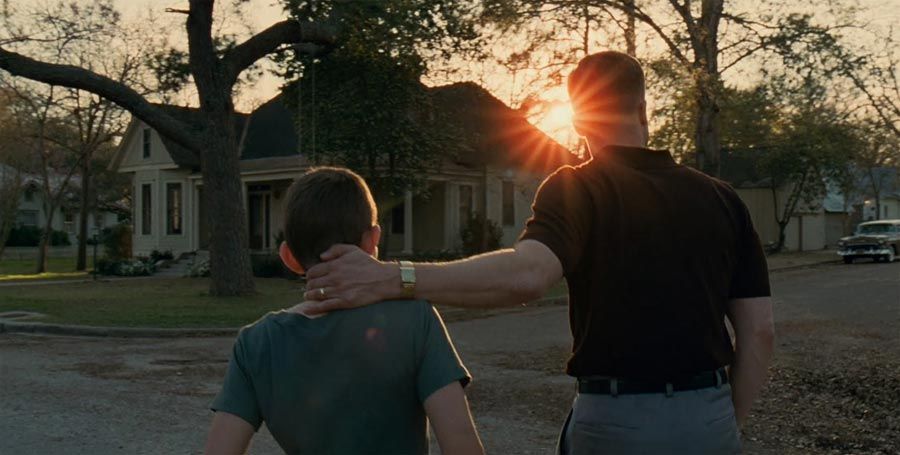
          How Brad Pitt hugs all of his children.
          Much of this movie's dialogue is like prayer, where the character is alone and communicates to God. They communicate lots of great questions as well as their interpretation of their life experiences based on those questions. We examine what is true love, what is the meaning of suffering, what is the purpose of life and death, what is right and what is wrong, all through tough questions posed by characters in vulnerable moments. Again, the movie does not directly answer the questions, but explores avenues towards answering those questions through the visuals and storytelling.

          I found myself relating to a lot of the struggles in the father-son relationship that gets explored in the third quarter of the movie. The son's attempt to understand a tough love father figure, and how that father figure plays into the son's relationship with God, spoke to me directly, as did the boy's struggles when puberty began and the impact that time period had on his relationship with his mother. It was true and genuine, at least in my own viewing of it.

           There are consequences to the negative things that the people do, even if those consequences are not immediate or seen on the surface level. Once people experience these consequences, there is acknowledgement of wrongdoing and repentance, so that they can change for the better. The beautiful thing about the struggles in this movie is that it does involve a happy ending. We experience reconciliation and love at the end after all of the pain and anguish that the characters go through beforehand. This makes the emotional stakes and the suffering of the characters pay off in the end, to me. This also helps to punch up a positive morality in this movie.

          ...I got nothing. It's just a picture of this movie's family unit.
          The MPAA rating for this movie is PG 13, which is only really because of the life experiences that the characters go through. There's images of spousal abuse (mainly verbal) and scenes of the tough physical type of fatherly parenting that we either remember or imagine growing up with in the past. The Sean Penn character, as a boy, goes through puberty and does some wicked acts out of curiosity and malice that he cannot seem to control. There are some images of a man having a seizure and convicts being thrown in police cars, but nothing is explicit or graphic. I can see this movie only really being viewed and enjoyed by adults. Not that there is much that is inappropriate for kids, but only because adults will fully appreciate and grasp the life experience of the characters. Even then, the movie is so different from a standard movie viewing experience, and the quality of the high art poetry is so high, that even some adults may not enjoy sitting through this whole movie. It is strange, challenging, and definitely worth exploring and staying with til the end.

          Overall Value Rating: 4.75 out of 5


          Monday, January 9, 2017

          Focusing on FOCUS

          FOCUS (the Fellowship Of Catholic University Students) is a 20 year old (I rounded up) American, Catholic ministry organization in America. They are now on 100+ campuses (including 2 in Austria), generally consisting of 4 missionaries per team (though the numbers range from 2-12), an online resource group for campuses that do not have FOCUS missionaries, and they are becoming one of the most renowned Catholic ministries in our time. I was personally introduced to FOCUS when I began life as a college student, going to the Catholic Campus Ministry building next to Missouri State University in Springfield. It has been seven, going on eight years, since that time (which is a strange realization of passing time for me). So I would like to examine my time with FOCUS, how I grew as a Catholic man because of FOCUS, and what the outside perception is for FOCUS at this time in order to dig through and find the golden fruit that stems from their ministry.

          Random note, in my examination for this post, I discovered that FOCUS is no longer on Missouri State's campus (which is not the first time this sort of thing has happened) and a part of me wonders what the various reasons are when FOCUS has left college campuses in the past. Anyway, onward we go.

          Entering College:

          I was a fallen away cradle Catholic when I entered my freshman year in college. I was never a regular attendant at Sunday Mass, even as a child, and I largely received the Sacraments due to my attendance through Catholic school (up until 6th grade) and then PSR (or whatever your local Religious Education program is called). After I received the Sacrament of Confirmation and entered high school, I sadly went to Mass very little or rarely did any prayers. I was also very much caught up in relativism (the idea that truth to me is not true for everyone) which mainly reflected in my minimal personal objections to/ minimal support of subjects of abortion and same-sex unions. It was only during my senior year of high school, and the summer just before I went to college, that I was asked to become a godfather to my cousin's first child. He is one of the two main reasons why I reverted back to my Catholic faith. My interaction with FOCUS during college is the other main reason.

          During College:

          There is a lot to cover during this four year history, so I will try to give you the short version. FOCUS was brought to Springfield and Missouri State University the same year as I started college. During my first Sunday at CCM, I wrote down my contact info for CCM as well as FOCUS, which I did not realize at the time was a separate entity (FOCUS missionaries are a separate organizational body from a campus' Catholic organization but they cooperate for the same purposes). Anyway, one of the missionary men, Tom May, reached out to me early on just for some recreation and he gave me the Bible I used throughout and beyond my college career. Lee Brokaw, the other male missionary who I have talked about before, led Bible Study for my age during his tenure, and he was influential in my understanding of masculinity, truth, and what being a Catholic man is all about. Through them, I joined a small group of fellow MSU Catholic men, the first real group of solid fellowship I became a part of, and throughout my time at college this group would do recreational things like go bowling as well as spiritual things like gather together to pray the Rosary once a week.

          It was because of FOCUS's influence that I actually started attending Mass not just every single Sunday, but during the week as well. It is also because of my involvement with the FOCUS men that I went to Confession for the first time in many years, and I can only be grateful that our God is merciful and forgiving of my selfishness and ignorance. Now, while I credit FOCUS with much of my spiritual growth, there are some things I independently chose to do. I voluntarily become a Lector and Eucharistic Minister for Masses, as well as that guy that handles the collection basket before the Liturgy of the Eucharist.  I also went on to be a part of the Catholic Campus Ministry Student Council (StuCo) for my last two years at MSU. Again, since I became a godfather, I began to realize I had a personal responsibility for my faith life.

          During this timeline, I also participated in my first legit spiritual retreats and went on 1 spring break volunteer trip. I was asked to become a FOCUS student leader junior year, which meant I was participating in FOCUS' evangelization efforts on MSU's campus and eventually I led a Bible Study senior year while also being on CCM's StuCo both years.

          Here was where there was an interesting, contrasting union between the two organizations. We had both FOCUS and StuCo, which should've been attempting to do the same things. However, I saw that FOCUS was more of the spiritual leadership and influence during this time while CCM was the place to have the events. Some of my journal entries from that time reflect my frustration at all of the events StuCo was planning while also trying to get them to be more spiritually focused and more spiritually invested in our peers. FOCUS was the group leading Bible Studies, evangelizing to students on campus, and I think that many people would come to this or that event at CCM because of the FOCUS missionary or FOCUS student leader they encountered encouraging them to go instead of the event itself drawing them in.

          I interviewed with FOCUS twice to become a missionary. During the second time, I had a moment of realization during the interview that I wouldn't be a missionary because I had not done everything in what I will call 'The FOCUS way' (there are multiple reasons why I did not become a missionary but this was one of them). During that interview, I felt like they were asking for lots of responsibility from a student leader, whose main focus was trying to graduate college. You know, I was attending classes full time, studying and doing the coursework outside of class, maintaining a certain GPA for my scholariship, involved in CCM StuCo, involved in FOCUS student leadership, leading a Bible Study my senior year, attempting to participate in theatre projects, do a part time desk job during my last two years, figure out what to do for the rest of my life, and still have a social life. Not saying I was constantly overwhelmed, but there were many things I was trying to juggle and focus on during college that I did not dedicate all of my time and energy into things the way I think FOCUS wanted me to. 'The FOCUS way', in the context of this interview, was wanting me to spend so much time with the men around me, doing more campus evangelization, and essentially meeting a quota increase on how many men I was bringing to Bible Study and mentoring, which I believe would have required me to put FOCUS as my top priority in college.


          FOCUS Conferences:

          Since SEEK 2017, the annual FOCUS conference, happened last week, I figure it would only be fitting to talk about my own experiences at their past conferences since they are the largest FOCUS event of the year. I attended 3 FOCUS conferences during college. When looking back on those experiences off hand, one of the things that comes to mind is I remember the venues and locations almost more than the talks each day. Which makes sense, that's like saying I remember college events and experiences more than the classes I took. For the talks I do remember, what makes them stand out is how they impacted my faith formation. Perhaps not immediately, but overtime I began to understand the truth of those talks more and my morality and faith was strengthened for the better because of those talks. The most memorable experiences I had were multiple times for Mass, Adoration, and Reconciliation at each, and I think these stand out just because thousands upon thousands of college students, religious, and missionaries were all together in a large crowd for spiritual activity and glorification of God. Some more subtle yet personal things I took away from these conferences involved learning to be less selfish, more patient, less angry, and less about my plans and more on God's.

          One of the best things that can be said about FOCUS conferences is that they have so many religious orders and Catholic organizations to encounter and get to know. This is the one collective place where it's not odd to see various orders of monks and nuns in traditional habits roaming around. You can get so many good CDs, books, and other resources on subjects important in the Catholic Church from many booths. You can learn about organizations that are looking for staff or volunteers for future projects and endeavors. Of course, as I will explain below, you better come with extra cash in your pocket if you really really want to get so many of these good things to bring home.

          Post College:

          Instead of being a FOCUS missionary and instead of trying to get a career job immediately after undergrad, I volunteered for Reach Youth Ministry, which was a traveling Catholic ministry in the Pacific Northwest. This was the first time I remember being in a place where people knew of FOCUS but were not enthusiastic about them. One of my teammates from Benedictine College and I learned there used to be a FOCUS team in the Diocese of Helena (where I was living) in the past. What would anyone have against FOCUS, I wondered then? My guesses and examinations to follow in a bit. My main point in this is that even without the presence of FOCUS and without a shared enthusiasm for them, I continued to grow in my faith through my Reach experiences, especially Daily Mass and Daily Prayer that was part of ministry life. I was learning more, getting out of my comfort zone more, and becoming more proud and glad for my Catholicism. The challenge came from returning home after Reach and continuing my faith journey alone, or rather, doing it without some ministry organization guiding my daily life and faith practices. I had to build a routine of Daily Mass before work, Daily Scripture reading, and Daily Rosary (noticing a pattern?) in order to maintain faith life and continue to grow through obstacles, doubts, and struggles. My only real ties to FOCUS during this time, aside from the occasional Facebook read-through of acquaintances' posts, was that I donated to a friend who became a FOCUS missionary.

          Others Complaints about FOCUS:

          As I mentioned before, not everyone is a fan of FOCUS. Since they're not perfect, and there's always room for improvement, there are some areas that people critique FOCUS on and mayhaps rightfully so. Here is what I have compiled, in no particular order, as to what people criticize FOCUS on and why as an outsider now I can see why they think that.

          -FOCUS is the cool kid's club:

          I remember during one of my interview weekends, one of the men gave a speech about not worrying whether we were called to be FOCUS missionaries or not because "FOCUS is not the end all be all". While people who organize FOCUS may not claim it to be the end all be all, that does not stop other people from seeing it that way. There's a certain attitude around FOCUS that exudes from people involved, mainly because of how excited and how invested they are in the organization. Even during college, I could tell some people would feel like the people most involved with FOCUS formed a clique, and I could understand where they were coming from. Even sometimes on social media, the way that people talk about FOCUS (like with SEEK)  makes it seems like some humble bragging about the greatest organization of all time. FOCUS is a great tool, with lots of time to improve since it's only 20 years old, but their mission is to reach out to everyone, to be the New Evangelization for everyone whether they grew up Catholic or not, so outsiders looking in need to see that FOCUS is not some posh country club that has a restrictive VIP list.

          -FOCUS has a specific target audience, and it's not me:

          As someone who has graduated from university and is now moving on into the truly adult stage of life, I am an outsider looking in on FOCUS. While FOCUS puts out a lot of great material, not as much of it really resonates with me as it used to. Because it's no longer speaking to me, at least, it's not aiming for me. FOCUS has a specific demographic that they gear their material towards: College students, specifically undergrads, who are either away from the Church or are at a very minimal level of their faith. Of course some of their stuff is going to sound rudimentary, generic, and beginner level. Of course some of their stuff is going to be infused with pop culture and hip, trendy lingo. They understand who their audience is and in order to reach out to them, they cannot make their material too complex and they have to use language that appeals to a wide-ranging demographic. I may personally be someone who is looking for material to go deeply orthodox, and I may personally be someone who distastes trendy words in an attempt to be cool, but that does not mean that someone else isn't getting something good spiritually from that.

          -Money:

          If there's one thing that FOCUS has truly developed a skill at, it's finding sponsors and donors. There's no way that all of these FOCUS teams could survive and thrive without the investment of thousands of people who donate financially either to specific missionaries and to the organization in general. Of course, FOCUS can also come with a price (pun intended). The conferences generally cost $700-$800 for four days of travel, to stay at a hotel, and to cover a single meal's cost per day. There's all the extra money one would need to bring for the rest of the meals and for purchasing items at all the vendor booths. FOCUS also has international mission trips, going to third world countries and areas of need, but this again requires a lot of money for travel, food, and shelter. They're asking college students, majority of whom cannot already afford college and/or are taking out student loans, to spend large amounts of dough while at the same time reminding everyone to serve and give to the poor. There are also all of the finances and resources that each diocese and campus ministry utilizes to bring and maintain FOCUS on their college campuses. Yes, everyone is aware from the beginning of the financial obligations and necessities that are required for FOCUS to stay a non-profit organization whose staff live entirely on donations, but that does not mean people on the outside will see all of the money being used for the best good.

          -FOCUS acts like a business:

          This goes back to the idea of meeting a quota and what I suspect is one of the reasons why FOCUS may come and go from different campuses. The importance of the mission of evangelization can sometimes lead to people pushing to increase the numbers and find fault with any Bible studies or groups that are not growing in number. Again, that was one of my faults when interviewing to be a missionary, I never kept mentored a fellow student leader within FOCUS for a long time and I had trouble growing my freshmen Bible Study group beyond 2-3 guys each week. I was not meeting the quota and in some ways may be part of the reason why FOCUS was not successful on campus with freshmen men during my time on campus. When you are an organization built upon donations, and having to strategize how to use all of your resources wisely, sometimes you have to play a numbers game, which is what businesses do in order to continue making profit (this is all spoken on a very generic surface level understanding of business operations and my own understanding of FOCUS).

          -FOCUS is all charismatic and not too traditional:

          Perhaps the most minor of other people's complaints, though still relevant to the discussion of why people may not like FOCUS. One of the things that I did not enjoy about my experiences at FOCUS Conferences was the music. What I mean is, a lot of the songs being played were done in a very modern way, like the kind of rock band one might find at certain Protestant services. In fact, the band would sometimes get on my nerves because  they would play too long and too modern, like their music was one of the most important things you should be focusing on in the moment instead of say THE MASS or going over whatever you learned the past couple of days. I get that music is a form of prayer, and I'm sure the musicians were just trying to lead us in prayer, but I only really enjoyed praise and worship in other circumstances back on campus or during Reach, not so much through FOCUS. This is emblematic of the way FOCUS presents itself, again going back to the trendy cool kids and target group ideas.

          Some people may also see FOCUS as a charismatic tool keying in on emotions. One of the most powerful moments during FOCUS Conferences (and I suppose even Steubenville Conferences for the youth) is the night of Adoration, where everyone is gathered to pray in front of the Eucharist, coupled with Reconciliation opportunities. It's a very emotional highlight of the conference because you're in a large dark room with thousands of other people, focusing on prayer and reflecting on past rights and wrongs, trying to get cleansed and draw closer to Christ. This is different from every day Adoration, where you're usually alone or in a small group in a chapel and still praying but in a calmer atmosphere. At least from what I could tell when I was involved, there's not much offered for those of the traditional, Solemn High Mass in Latin crowd, again because FOCUS is trying to reach a specific audience and it's hard enough to get young adults invested in the now standard form of Mass, much less the more traditional forms.

          Recap:

          Please remember that everything I have written down here is just based on my memories of the past, minimal research into FOCUS as an organization, and any chatter I catch from other people on social media.The mission of FOCUS is "Launching Catholic Students into Lifelong Catholic Mission". So really, they're just a starting point, a jumpstart, a catalyst, for someone to understand and grow in their Catholic faith. They're not trying to be a monastery or a seminary with deep, deep theological and historical studies (for the most part). They are trying to reach young Catholics raised in a relativistic secular American culture and prepare them to be disciples.

          In fact, if we think of the original disciples, the Apostles, and use their timeline for example, FOCUS is really just that three year period where the Apostles were called by Jesus Christ, educated/instructed/challenged by Him, made and fixed their mistakes, and then once He ascended and gave them the Great Commission (i.e. once someone graduates from college), then the Apostles/disciples/college graduates take it upon themselves to live out their faith, to proclaim Christ as Lord and God, and to live a truly authentic Catholic life for the rest of their time here on Earth.

          I've heard stories and known people who have gone on to seminaries and convents because of their involvement in FOCUS. I also know of some people (though not as many) who have fallen away from the Catholic faith even with their involvement in FOCUS activities. FOCUS is a resource that is constantly growing and adjusting its approach in its ministry. It provides multiple resources for people to jumpstart their faith and I think it will help us see more young adults in the Catholic Church overall. If we want to stop complaining about shrinking number of Mass attendees and how millenials are no longer practicing their faith, then we need to take all of the good that FOCUS is doing and continue to nurture that past the college years in order to help the American and global Catholic Church continue its mission.