Sunday, February 28, 2016

More Movies with Values, Please! Part 2

Definition References

Today's post continues examining movies with value, or what makes a movie a 'good' movie. This understanding of movies with value is aided by an understanding of definitions that the values of a good movie.

What is a good movie? Well, generally speaking, it is opposite of a bad movie. A good movie is one that is not only made with quality, but also contains either moral value or artistic value or both.

Artistic value can be judged based on the following question: Does it look good aesthetically, whether it is an animated movie or because of the direction and cinematography? Does the theme say something honest or truthful about the human condition? Does it have a good reason for existing?

Moral value can be evaluated based on these levels: Can this/ should this be seen by families? Is there a sensible reason for it to be made for adults or teens only? If religious, does it present spiritual truths well? Does the movie uphold natural understanding of what is good, true, and beautiful in the world? If there is a focus on a negative subject, does the positive good overcome in the end?

You may notice that these definitions actually involve questions. By looking at questions, we can discuss and discover answers. Below I pose other questions that people may have to determine whether the movies that they or other people watch carry that same value of a good movie.

Do movies need to be intelligent or ‘thinking pieces’? 

Not every movie has to be a thinking piece to be good. There are just as many boring, complicated arthouse movies as there are high quality dramas. Usually these kind of high-brow, thinking man's movies naturally carry some sort of artistic or moral value to it due to the increased detail and dedication devoted to it. At the same time, simplistic movies can be good without being stupid. There are just as many enjoyable blockbuster popcorn flicks as there are crass, rude comedies. Turning off your brain is not automatically settling for a low brow trashy piece unworthy of the name ‘Movie’. Some movies are just meant to visually entertain or are meant to draw us in emotionally without working our brains too hard. These non-thinker movies should still must contain some sort of artistic or moral quality to it though.

Do movies with value include objectionable content like violence, sexuality, and language? 

There are some people who object to a movie due to violent or thematic content. To an extent, that’s good. Some movies take it too far with blood and guts unnecessarily or provide an absurd amount of realistic sex or drug scenes. There are a few cases, however, where realism requires shocking content. In the case of violence, Saving Private Ryan shows us the horrors of warfare, especially at Normandy beach. I cannot think of an acceptable case for sexuality, where we are shown the physical movements and the nakedness involved in the act of intercourse. Only rarely is nudity acceptable for realism’s sake (a la Schindler’s List). 

Language is slightly more complicated, where depending on the type of movie and characters involved determines how much of it to tolerate. A movie like The Sandlot occasionally has a ‘damn’ or a ‘shit’ said by one of the characters, but the overall product makes that occasional slip of a light coarse word tolerable. Anything with more ‘adult’ language, and especially using mature profanities, blasphemous talk, and derogatory names, should not be tolerated and in fact most movies would be better without that kind of language involved. Sure, realistically people may use obscenities now and again, but scripts can be written in creative ways to express the same feeling or mentality without resorting to using the obscenities. 

Now, if a movie has a moment or two of objectionable content, but overall contains artistic or moral merits, can it still be a good movie with value? Depending on the movie, yes, but we also have to acknowledge these objectionable faults or negative aspects of the movie. In my posts about my favorite movies, I would try to point out reasons why I would caution people to not see my movie choices. For example, I explained that The Big Lebowski contains sexual content, a couple moments of nudity, coarse language, and drug use/ references. Yet, there are shining moments of witty humor, great character acting by John Goodman, Jeff Bridges, and Philip Seymour Hoffman, and the ridiculousness of the scenarios makes the movie memorable and quotable.

Shouldn’t movies just be escapist, feel good events? 

I think maybe if you’re a kid or someone suffering trauma and in need of relief, then movies should be limited to light-hearted, feel good entertainment. For others though, I think it puts too many limits or constraints on the value that movies can have in our lives by restricting our viewership to escapism or stuff that only makes us feel good. Movies are meant to entertain, yes, but too much pure entertainment can cause a bread-and-circus kind of environment like professional sports. Movies can help us feel good if we need the occasional pick-me-up, but they can also bring us on an emotional roller coaster and inspire or educate us through perilous, heart breaking journeys. Life is not always feel good, it involves learning, suffering, and growing. Escapism can causes stagnation if overused.

Favorite Movies That Fit Criteria

There are some movies that have been made in the 21st century that still carry the values of morals and arts. Some of them are on my favorite movies list. I will try to briefly explain why I think some of these movies demonstrate good value. I tried to pick ones made since 2000 that were released to the general public (a.k.a wide theatrical release).

Harry Potter and the Deathly Hallows Part 1

Moral Value: The Harry Potter series has always been concerned with friendship, loyalty, and love, and this movie demonstrates the struggle to maintain these three qualities in the midst of a dark hour. The three lead actors, especially Rupert Grint, give adult performances that realistically live out these traits and the struggles with them. Plus there are a few moments involved where good is about to lose to evil when right at the last minute good is saved.

Artistic Value: The animation involved in the Tale of The Three Brothers.

Hot Fuzz

Artistic Value: Part of the entertainment of this movie is how dramatic it presents itself while still being one of the funniest comedies in this century thus far. This movie is a stealthy parody and it truly understands what it is parodying. Since it is a send-up of the ludicrous action movies of the 90s, all of the loony action scenes and goofy circumstances from those cliche movies are there. Unlike other parody films, like Mel Brooks' style of movie, this movie is able to provide a few winks and nods to what it is teasing while still maintaining a sense of independence in its storytelling and characterization.

The Last Samurai

Moral Value: This movie is a story of forgiveness and redemption. Tom Cruise’s Nathan Algren is haunted by evil violence he inflicted upon a tribe of Native Americans and at first becomes enslaved by alcoholism and lack of care for his life. Then, through the time spent with the samurai village, Algren finds internal peace, asks for forgiveness, and finds value in his life by protecting the lives of those who helped him. His redemption comes from a second chance opportunity. Instead of passively allowing this clan to be massacred, he stands up to fight for the clan, even if it costs his life. In a way, the Emperor Meiji also goes through forgiveness and redemption. At first, driven by a desire for a powerfully modern Japan, the Emperor allows Omura to take over governing powers (in essence), also allowing the samurai communities to be desolated. In the end, after the climactic battle, the Emperor is driven by grief over his former mentor’s death that he stands up for the first time, to drive back Omura’s ambitions and halt the cultural implosion of Japan.

The Prestige

Moral Value: The moral value of this movie comes from watching the downfall of two men driven by revenge and pride. The main characters played by Hugh Jackman and Christian Bale are not necessarily meant to be despised, but they are not to be held up as models of honor and righteousness. Because of the desire to be the best, they are willing to sacrifice people, whether it is Bale with his family or Jackman with himself and his Scarlet Johanssen girlfriend. While the value comes from a negative examination of events, it still has value by showing us how prideful ambition can hurt not only other people but ourselves as well.

The Dark Knight

Artistic Value: The gritty realism of Christopher Nolan’s Gotham City. Before Christopher Nolan took on the Batman movies, Gotham City always had a cartoonish look to it, whether it was Adam West's 60s Batman, the animated series, or the 90s movies of Joel Schumacher. Tim Burton was probably at that point closest to making Gotham City look like a real place, but it still had unrealistic, bloated interpretations of metropolis cities. Christopher Nolan's version of Gotham City looks like a real place, and the characters inhabiting the city look and act like real people.

Moral Value: The battle of chaos-fueled evil Joker vs. rule-abiding good guy Batman. Seeing Batman struggle with trying to stop evil while holding on to the last remains of his ethics shows how dangerous and challenging the fight against evil can be, though the choice to do good in the end wins. Even Harvey Dent, until he went crazy over Rachel, shows confidence and trust in the good of law overcoming the evil of crime, even if he began to use questionable techniques to do good. Overall, this movie shows that while evil appears to be all powerful, the choice to do good is more powerful. 

Master and Commander (The Far Side of the World)

Artistic Value: The artistry comes through with a realistic sense of life on a 19th century naval ship. There are small cramped spaces inside the ship and there is the vast ocean surrounding it. With the background music establishing the period and tone and the scenes of the ship steering through the vast ocean waters, even the slow times are enjoyable. The action scenes do not go over the top, but continue to add to the realism of the movie. Everyone acts like they belong on a naval ship commanded by the British Empire in the 19th century.

Now


In the year 2015, there were some movies that show that not all is lost, that there are still movies of good moral and artistic value out there.  Movies from 2015 that I saw with these values include Inside Out, Star Wars: The Force Awakens (artistic wise only), Mad Max: Fury Road, Sicario, and Mission Impossible: Rogue Nation. Movies from 2015 that I have not seen but I have heard show good value include The Martian, The Peanuts Movie, Creed, and Cinderella.

In the end, movies with value rightfully maintain a presence in our consciousness and are worthy of even more attention. What are the movies that we really remember over the years? What movies do we want in our DVD/ Blu-Ray collections? Wouldn’t Netflix be so much better if there weren’t as many duds as there were award winning pieces? Just think of the movies that are listed and remembered from the first 100+ years of film. We only remember and hold on to the good ones and their ‘classic’ standard is something that our modern movies should be held up to.

Sunday, February 21, 2016

More Movies of Value, Please! Part 1


Disappointing State of Movies

When it comes to the overall selection of movies being created and marketed to the general public over the past few years, I have been disappointed. Many of the past family/ kid movies include blah options such as Minions, Dreamworks pictures (of late), and Dr. Seuss based movies that are all just color, noise, and annoying humor. Comedies have become so focused on what is called “adult” humor (which in reality is immature humor) that you’d think the only things people find funny are sexual awkwardness, physical pain, and alcohol/ drug-related situations. Christian movies, meaning the genre that stars and focuses on Christianity in a positive way, have become so safe and stale that even positive Christian movies are not top quality pieces of art. 

For every good movie in the general market, there seems to be ten more in the theatres ready to waste my time, energy, and money. I assume the movie industry has not always been this way. I personally cannot speak to the quality of movies since the beginning of film. The only way I can evaluate movies of the past is based on what has remained within public knowledge as well as looking at the lists of best movies of all time. I am no film connoisseur, I just enjoy watching movies. I enjoy watching good movies. What I don’t enjoy is having to search and dig around online in order to find good movies while a plethora of bad movies are easily accessible.

Definitions: Bad vs. Value

What do I think constitutes a bad movie? A bad movie is one that is lacking true quality, morals, or art. When I say quality, I mean in terms of acting, dialogue, editing, anything that involves the presentation. Morals, obviously, means whether the movie is age appropriate for the content or is lacking something due to immaturity, pushing-the-envelope-content, and indecency towards the general person. Art meaning how those first two values, quality and morals, combine into the total package of theme, purpose, and aesthetic. So, a bad movie means the presentation is bad, the content is not decent, and the artistry is lacking.

Is it not in the best interest of everyone in our community to stop supporting bad movies? Why waste our time on something that dulls the senses? Why waste brain power and money on a ‘movie’ that insults our intelligence, insults our general code of ethics, and claims to be worth the money people pay to sit in the cinema?  Major studios will only fund movies that they think will earn money, meaning what they think people will go see. If we stopped seeing bad movies, maybe there would be an increase in good movies.

What is a good movie? Well, generally speaking, it is opposite of a bad movie. A good movie is one that is not only made with quality, but also contains either moral value or artistic value or both.

Artistic value can be judged based on the following question: Does it look good aesthetically, whether it is an animated movie or because of the direction and cinematography? Does the theme say something honest or truthful about the human condition? Does it have a good reason for existing?

Moral value can be evaluated based on these levels: Can this/ should this be seen by families? Is there a sensible reason for it to be made for adults or teens only? If religious, does it present spiritual truths well? Does the movie uphold natural understanding of what is good, true, and beautiful in the world? If there is a focus on a negative subject, does the positive good overcome in the end?

Past Models

One of the main inspirations for my categories and definitions of moral/ artistic value is the Vatican Film List. The Vatican Film List was assembled in 1995 and lists 45 films, organized by the categories of Religion, Values, and Art. This is not a ‘best of’ or ‘favorite’ movies list, but rather is just an assembly of movies that have been made during the first 100 years of film from around the world that fit a particular category. The list includes some well-known or award winning movies in America, including The Wizard of Oz, It’s a Wonderful Life, 2001: A Space Odyssey, Gandhi, Ben-Hur, Chariots of Fire, Schnidler’s List, On the Waterfront, Fantasia, and Stagecoach. Each of these movies exemplifies the definitions of a good movie that I listed above. All are made with top quality, many successful experimented with new artistry, and many uphold positive moral messages.

Steven D. Greydanus, a Catholic film critic who wrote a piece on the Vatican Film List, also recently wrote an article discussing how priests and the Church have been presented in movies over the years. In the past, starting from the 30s and especially during the 40s and 50s, movies involving priest and the Church were positive pictures. Some, like Going My Way with Bing Crosby or The Song of Bernadette with Jennifer Jones, were nominated for Oscars because of the quality filmmaking, positive morality, and excellent acting, among other reasons. The article slightly goes into the fact that around the turn between the 50s and 60s, religious life was beginning to take a turn towards negative critiques. Today, most examples of priests and religious in movies released to the general public involve goofy characters, criticism of religious life or the Church, and shining a more positive light on secular life. Can you automatically off the top of your head think of a movie widely released these past few years starring a good priest character that wasn’t an exorcism movie?

The Impact

One of the big reasons why I think there needs to be an increase in good movies is because we have to become more conscious of how movies impact us personally, on a social, mental, emotional, and spiritual level. I think desensitization can truly happen if people view certain content long enough. If all someone watches are immature comedies with foul language and sexual innuendos, I can safely bet that the viewer will start using foul language more often and use sexual innuendos as jokes more often. If someone watches nothing but violent action movies and gory horror movies, how calm and personable do you think that person is going to stay? If someone only watches indie films and rare arthouse masterpieces, doesn’t it make sense that they will turn into a snobby, arrogant, opinionated weirdo?

My point is that what we watch does have an effect on us. Just like with food, the more we ingest bad movies, the more we absorb bad qualities. I have written before about how the media we consume influences our lives. If we avoided bad movies and gravitated towards good movies, movie studios would start paying attention to the market and begin funding more movies with moral and artistic value and release them to the general public. Good movies may be hard to find, but they’re out there. Let’s make more!


P.S.-You may notice that the title says Part 1. There is a Part 2 that I am working on releasing soon. You may be wondering what else do I have to say on the subject? Well, Part 2 will be more focused on breaking down elements involved in various good movies as well as provide concrete examples of what I think are good movies that have been released to the general public in recent years.

Sunday, February 14, 2016

A Defense on Food and Internet Fasts

So, we have begun a new journey of Lent this 2016. All sorts of people are trying to sacrifice something or do something good in order to grow as a disciple of God this Lent. There are some Lenten sacrifices, however, that have become somewhat cliché in this day and age. There are people who are giving up some favorite food or drink, whether it is chocolate, sweets, meat, soda, or beer. Other people are choosing to fast from or give up social media platforms, most especially Facebook.

Now, for whatever reason, there are some critiques or sarcastic feedback from people when they hear someone is giving up food or social media for Lent. Here are a few example memes about the subject https://churchpop.com/2015/02/17/16-hilarious-memes-to-kick-off-your-lent/ (ChurchPop is generally a great website though, I overall enjoy it).  I personally have had some experience with both fasts. There have been some times during Lent where I have given up meat or soda. This Lent, I am fasting from social media by limiting myself to just one time per day on Facebook and Twitter (versus the ten plus times I would normally be on both sites). Moreover, I am continuing another Internet-based fast I did last year of giving up Youtube completely. Youtube has been my bigger vice struggle since I came across it freshman year of college.

Where else am I going to see cats doing goofy things?

I am curious though. What’s up with the critiques, sarcasm, and criticism of people who choose to fast from these things during Lent? I remember one year when I gave up soda during college a non-Catholic acquaintance had posted this meme on Facebook:


It was a tease, but I was still confused why random people make memes like this to put down someone’s choice act of sacrifice. Also, that meme statement does not fully explain why I chose to fast from soda.

There have been multitudes of different food fasts that have been associated with Christian and Jewish cultures over the past several millennia. According to the Little Black Book I use for prayer and reflection this Lent, past Catholic Christian rules of fasting have included abstinence from fish, eggs, and dairy products, prohibited consumption of meat on Sundays, and limiting the number of meals to just one in the evening. Today, the Catholic Church abstains from meat on Fridays (including Good Friday as well as Ash Wednesday) and limits food consumption to one regular sized meal and two small meals on Good Friday and Ash Wednesday. Obviously, the internet and social media has not been around long enough for any doctrines to made about it yet.

Though with Pope Francis on the case, who knows. We may see something about it in the next encyclical.
Paragraph 1438 in the Catechism of the Catholic Church states that “the seasons and days of penance …are intense moments of the Church’s penitential practice [and] are appropriate for…voluntary self denial such as fasting and almsgiving”. Paragraph 2043 of the Catechism says “The fourth precept [of the Church] (‘You shall observe the days of fasting and abstinence established by the Church’)…helps us acquire mastery over our instincts and freedom of heart”. This means that, as part of our penitential acts during Lent, we voluntarily choose to deny ourselves of something. The purpose behind this self-denial is to become more self-controlled and to free ourselves from whatever things of this world are keeping us from performing our spiritual and religious duties. Isn't that what Lent is all about?

What is the purpose of Lent? Even as someone who has grown up in the Church, I cannot give a truly perfect definition, just my understanding of what the season of Lent is meant for. During Lent, we are asked to decrease ourselves and increase God in our lives. We take a big step on our journey of discipleship and self-sacrifice by devoting ourselves to forms of prayer, fasting, and almsgiving during Lent. These three elements of the Lenten journey are meant to go hand-in-hand, so our fasting fuels our prayer life which fuels our almsgiving. It’s all tied together. Fasting is just one of the ways that we can grow as a disciple of God through the sacrifice of something that is hard for us to let go of.


The truth is that some people struggle when it comes to food and the internet. How can anyone choose what is good for them in spiritual matters when they cannot even make good basic choices with food? Can someone really learn how to depend on God if they depend upon their soda or coffee just to get them through the day? By fasting from certain foods and drinks, people are taking just a small step to master their addictions and vices in order to closer to God. The same can be said for social media/ internet usage. What if I know I spend too much time on Facebook but cannot push myself on my own to get away from it? Is it really a good use of my time if I am looking at Youtube videos all weekend? Lent can be that time to begin stepping back from those things that can cause major distractions or waste a lot of time in people’s lives. Their time will be better spent away from screens and perhaps people can understand how to discern whether what they are doing on Facebook, Twitter, and Youtube are helping them spiritually or not.

But how else am I going to get my inspirational quotes and spiritual insights if not here?
Everyone has different struggles. Each individual person, perhaps with the help of friends and family, should identify what their addictions and temptations are in order to begin the process of overcoming them. We are called to serve people, to build a strong community, and live out our purpose in life. Our lives aren't meant to be spent sitting behind a screen. Our time and money should not just be spent solely on beer and treats.

Sunday, November 16, 2014

Giving Up Youtube

I did not really discover Youtube until my freshman year of college. Then all of the sudden a new world was open up to me. Music I could not find elsewhere, clear footage of live performances from my favorite bands, and funny videos focusing on video games, movies, and TV shows. Like many other people I know, I found a few channels that I dedicated my time to watching. Recent channel favorites include Honest Trailers/ Screen Junkies, TeamFourStar's abridged parody of Dragonball Z, and the Nostalgia Critic's critical reviews of movies.

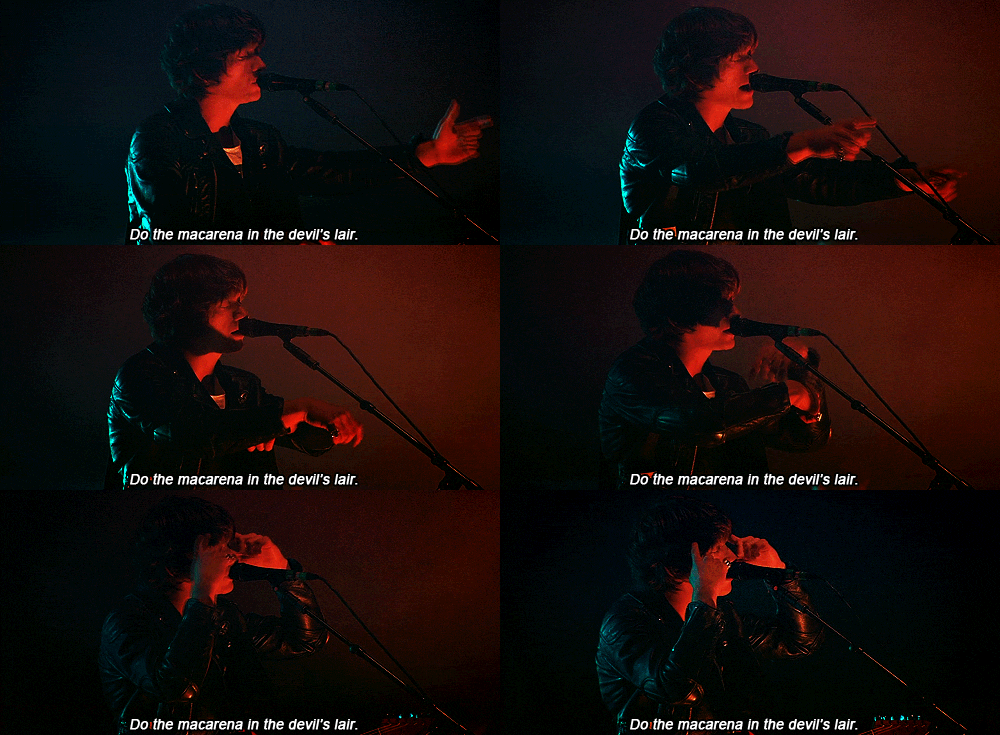
As the Arctic Monkeys once said: "We can't take our eyes of your t-shirt and ties combination".
Recently, however, I have resolved to give up these favorite videos and the rest of Youtube all together. With the aid of potential rewards (which I am still trying to figure out) I hope to not only give up Youtube for the next 10 days, but for the next 100 days, 1000 days, etc. 

This is because I have just found too much of my free time being WASTED on online videos. Even when doing mundane things like folding my laundry, cleaning, or getting ready in the morning, I would have my laptop open and would try to find something to distract myself. Even on days when I have other things going on, I would rather sit in my room and watch online videos rather than focusing on my work or using my break times for things like reading, writing, or even socializing.

Pictured: Current social life
A big part of my struggle to free myself from Youtube videos has not just been overcoming my general laziness, but it also been this feeling inside of me swelling up. I have this feeling of wanting to be productive. I have this burning desire to use my free time for a worthwhile effort. Some of these desires require me to be on my feet and physically invested, other activities may require me to sit down and be mentally/emotionally/spiritually invested (cause you don't have to be physically active all the time in order to be productive). The point is that there are so many different things I can do in this world and I do not feel like I have enough time to do it all.

There are so many books worth reading, so many cinematic masterpieces worth watching, so many places to see around the world. I can relearn to play the saxophone, become a guitar hero, and even learn an unusual instrument like the bassoon (cause why not)! I can become the next world renowned Shakespearean actor. I can learn to paint landscapes like Bob Ross. I can make a pilgrimage on El Camino de Santiago. I can get in shape and do parkour. I can write the next breathtaking young adult novel series that will eventually be turned into a dozen movies that earn $100 million each even though there were only six books in the series.

At least I'll be in good company, right?
Shoot, I don't even have to do any of that stuff to be productive. I can volunteer at a soup kitchen or walk the streets giving food and blankets to homeless people at night. I can visit sick people in the hospital or visit prisoners in jail. I can go to a poverty-stricken country and do manual labor for people in need. I can help a church in need of repairs, either by physical means or financial means. I can go to a city and preach the Gospel to people who do not believe in God.

The problem is: I don't do any of this stuff right now! I'm used to being so busy watching 10 Nostalgia Critic videos in a row or watching all of the Honest Trailers and not making any time for something more worthwhile.

Pictured: Me being busy watching videos.

I have a problem and I know it. I'm calling myself out! I'm working on controlling myself so that I can be more productive in this life and I can make more of a difference.I know I wasn't created to stare at a screen all day for no good reason.

Here is what I was created for: "He said 'Master, you gave me five talents. See, I have made five more.' His master said to him, 'Well done, my good and faithful servant. Since you were faithful in small matters, I will give you great responsibilities. Come, share your master's joy.'" (Matthew 25: 20-21).

Talent=Coin money in this case.

I was given gifts by God. I was made to share those gifts with other people, to help them and to glorify my Creator. I do not necessarily have to read every great book ever written, watch every fantastic movie ever made, or travel to each beautiful part of the world to share and use my gifts. God has called me to be faithful to Him and to use my gifts in a multitude of productive ways.

Would it hurt to watch a Youtube video every now and again? No, not really. However, to help myself maintain self-control and to use my gifts properly, I am taking this opportunity to step away from the online videos and focus on many more important things in life. 

Now to stay on the computer and write my next four blog posts

Sunday, October 12, 2014

The Hobbit Movies Are Holding Me Prisoner

I have mixed feelings about Peter Jackson's Hobbit movies. On the one hand, it has been dragging on, the inclusion of characters like Tauriel and the Laketown mayor were not necessary, and the heavy use of CGI has been distracting. On the other hand, I like the tie-in of material from the LOTR Appendices (because Tolkien wrote more material that tied the events in The Hobbit timeline to the LOTR timeline), I like Martin Freeman's performance as Bilbo, and SMAUG WAS WORTH THE WAIT CAUSE HE IS AWESOME!

Best use of CGI in the movie
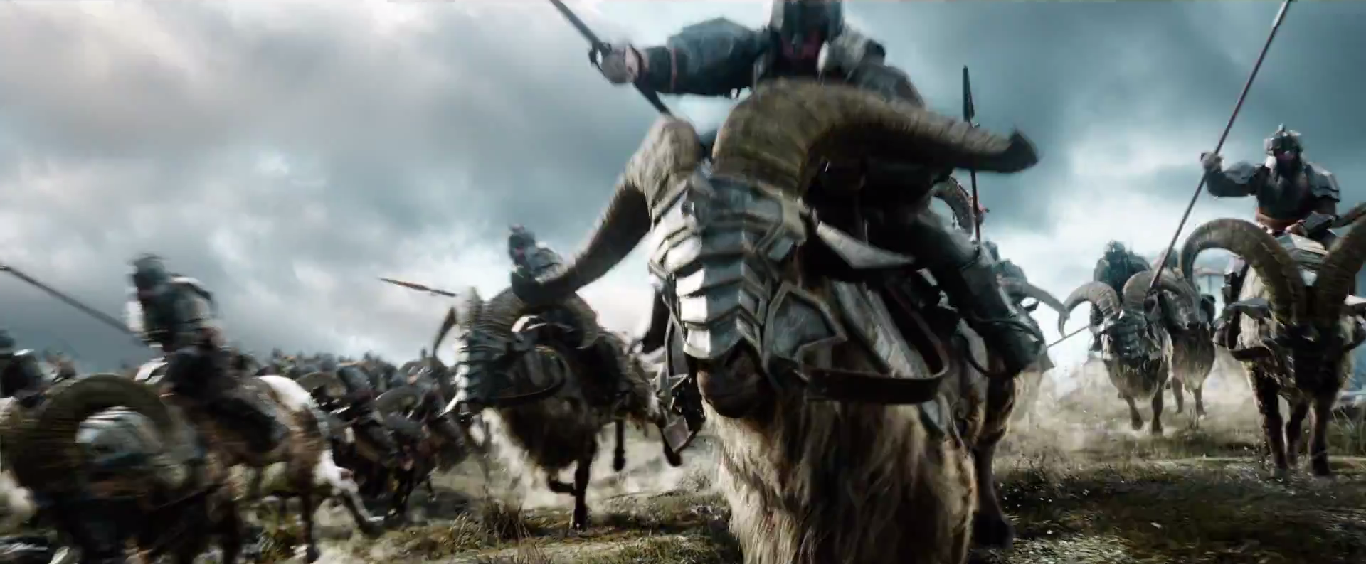
Keep all this in mind while revisiting the teaser trailer for the final installment of the Hobbit trilogy


Again, mixed feelings. On the one hand, I know I'll enjoy the action scenes as well as the conflict between the main cast of characters, and all of the main plot points from the previous two movies will be resolved. On the other hand, I know it's going to go on for too long, it's going to involve unnecessary characters, it's going lose focus on Bilbo, and not to mention Smaug is going to get killed off pretty quick. That's not a spoiler. The last movie lended on that cliffhanger, the events in LOTR would not have happened if the dragon had still been around, and Peter Jackson has to make room for 90 minutes of battle scenes.

"Wasn't this whole thing finished in one chapter in the book?"
"Yeah, so what? Didn't it take you 90 minutes to read that chapter too?"
I just feel like I'm a captive of the Hobbit movies, like they're holding me hostage until I see the whole thing through. It's like when the Harry Potter film series was coming to a close. I didn't particularly enjoy the fifth and sixth movies in theaters, so when it was announced that the last book was broken into two movies and the first part was coming out I was thinking "Oh well, I've dragged through all the films so far, might as well see it til the end".

The good news is, I really enjoyed those last two HP movies, they were very well done. So, there is hope that this Hobbit movie will surprise me and be the best one of the series.

The amount of screen time the mountain goats get is the deciding factor
The big question is: Why do I feel the need to see this movie? Well, I have twice attempted to read the Hobbit book and hardly got past the beginning both times. While there is still hope that I will pick it up and finish it before this final movie comes out, there is no guarantee. So the only way I know the full story synopsis of the Hobbit before this is by the Rankin/Bass cartoon version from the 70s.

In case you don't know what I'm talking about, here's this:


That made-for-TV release was only an hour long and covered the basic essentials of the story. The Peter Jackson movies, though, go very deep in depth into the story and the world. Also, as I mentioned before, it includes part of the Middle Earth history that ties in to the events of LOTR. It will be cool to see that part of the story brought to life, which has not made it into a screen adaptation before.

I want to see this last movie because I want to visually see the whole story played out in its entirety. I like most of these characters, so I'd like to watch their story lines come to a conclusion. Also, this may be the last time I get to see Middle Earth and its inhabitants on the big screen (at least it will probably be a long time before someone else does something with a Tolkien story). So, I guess I'll have to be satisfied with being a captive of the movies until the release of The Battle of Five Armies.

Saturday, October 11, 2014

My Lament for Saturday Morning Cartoons

In case you haven't heard the news and seen other laments about this event, the CW ended its Saturday morning animation program Vortexx, thereby bringing an end to Saturday morning cartoons on the major (meaning basic TV) networks. Leaving more room for educational programming about animals, which apparently we don't have enough of.

Daaawwww! Aren't they just the cute...Wait, what was my point again?

I realize I shouldn't feel upset by this. My weekend way-of-life hasn't depended upon Saturday morning cartoons in years. I do not have any kids of my own to watch cartoons with. Heck, most of the shows that were on Vortexx were shows that have been rerun over and over again since way back when I was watching those cartoons coming to Saturday mornings for the very first time.

At least I'll finally stop seeing these episodes being played for the hundredth time

Not to mention cartoons still exist on channels like Cartoon Network, Disney XD, and Nickelodeon. And kids these days can watch any cartoon TV series ever invented any time they wish thanks to DVDs, Netflix, and Hulu. And also not to mention I'M A GROWN MAN, WHY DO I CARE ABOUT CARTOONS ANYMORE?

I mean, cartoons are only just for kids, right?

Here's the thing though: A part of me is upset by this event, and I can't help it.

Why does this mean so much to me? After all, I've lived through this period of time where cartoons have slowly diminished from major networks, and yet there are still cartoons remaining accessible on cable/ HD TV. Well, the thing is, I didn't grow up with those cable channels. I only had basic TV, so on Saturday mornings I was switching back and forth between Fox and the WB to get my weekend fix of animation. I couldn't just turn the TV on at random on any given day and expect to find non-educational animated programs.

If I had wanted educational cartoons, I would've watched more PBS!

So while everyone else was able to catch Rugrats, Hey Arnold, Spongebob Squarepants, Rocket Power, Dexter's Laboratory, and Ed, Edd, n Eddy any old time during the week, I waited for those blissful mornings on Saturday to watch stuff like Digimon, Batman Beyond, Beast Wars, Static Shock, and Yu-Gi-Oh!. 

Where's this kid's live action movie btw?
Now, however, that opportunity is gone. That time to veg out in front of the TV on Saturdays is gone for basic TV watchers. Kids are gonna have to get that animation fix somewhere else. Which brings me to another point: the kids. And this kind of thing makes me want to say "Kids these days!",  though hopefully I don't sound like a crotchety old man sitting in a rocking chair.

You know, like this kind of guy

Kids today won't get to experience that intense excitement of waking up at 5am to turn that TV on and watch cartoons. They won't understand the thrill of finally seeing a new episode after waiting all week for it to come. They won't understand the peace of having one dedicated morning a week to justifiably sit in front of the TV for five-six hours. They won't take the same pleasure in watching the morning come to life during the breaks between shows.They won't understand that crushing feeling of knowing an all-new episode of their favorite cartoon is coming on the same morning they have a soccer game or they are on vacation. It doesn't matter that kids today have the capability to do these things, it's not the same because they live in a totally different world.

I think it's one of those things where becoming an adult means watching my way of life as a kid disappear. While kids today still have Saturday mornings free to do what they want and they can spend five-six hours every Saturday morning watching cartoons, it is a different way of life. There aren't animation classics on basic TV there to help kids kickstart the weekend. So, while I'm not going to cry and sob and break down in my lament for the fate of Saturday morning cartoons, I can get super nostalgic. I can look back at the fun and carefree Saturdays of my youth with happiness, rather than be focused on the jaded somberness of the present. And at least I have that.

Sunday, October 5, 2014

Entertainment Content: A Conflict

Awkward Entertainment Media

So, in case it was not obvious from previous posts, I like consuming entertainment media. Movies, music, TV, books, I like to be entertained like anyone else. The biggest problem with being a consumer of entertainment today, however, is that the media I consume is hazardous. Hazardous in a spiritual, emotional, and mental sense.

Twilight was so hazardous, I had to put on this suit just to get through it for a class.
One of my earlier blog posts was a review of a movie called About Time. You should read it, but the reason why I bring it up here is because of a small portion of the movie's content. There are a couple of sex scenes in this movie. I was watching this movie with my Reach team and our host mom, a mother of two very young children who had recent been put to bed. When the first scene came, it was definitely an awkward moment, but thankfully a short one once we figured how to fast-forward to the next scene (we were watching the movie on demand on Apple TV), and we were prepared to skip the next one.

Why was that moment awkward? Well, I was watching it with my team of Catholic youth ministers and a Catholic mom who coordinated the Confirmation class. As a Catholic person, my ethics and morality informs me that sex outside of marriage is sinful.

Here was a scene of sinful immorality happening in a home of ethical, moral people in front of a group of ethical, moral people. If it were not for these few moments involving the characters' sexual relationship and lifestyle before marriage, I could wholeheartedly recommend this movie and promote it.


The Media Conflict

During my late high school, early college days, one of the TV shows I discovered and watched all the way through was Deadwood. The show has a lot of interesting characters, intriguing (however coarse) dialogue, and complex plots. However, the show also has plenty of violence, obscene language, drunkenness, sex and nudity. I have, in recent years, resolved to no longer watch the show. Even though the story and the characters are interesting, I cannot in good conscience watch a show that freely and graphically presents unethical and immoral behaviors.

When it comes to music, I enjoy rock'n'roll. Some of my favorite modern rock'n'roll music comes from bands like Arctic Monkeys and Coheed & Cambria. While I enjoy the sounds and the instruments, however, I am cautious of certain songs because of their words.

See what I mean?
Arctic Monkeys, especially with their most recent release, has a major lyrical focus on a sexualized partying lifestyle. Coheed & Cambria has a mythological storyline that involves warfare, violence, and damaged emotional romance and the lyrics on their own are not always positive words to share with others.

Why Does It Matter?

In the end, the media I consume and the media I share with people is correlated to what I am promoting. For example, if I listen to a band called The F@&!#ing Flowers and the message of their lyrics is about killing, and I just say "Oh this band is good", I'm promoting their content without acknowledging the negative aspects of them.

Another example, if I watched a TV show called Teenage Annie's Sex & Drugs Escapades and I just say "This is a great show, it's so complex!" without acknowledging the show's immoral focus, what I'm telling people is "I'm okay with this kind of stuff".

I have noticed a shift in the way I allow media to affect me since I have been more cautious of the media I consume. In high school, I used to watch a lot of stuff that casual threw out curse words and sexual references, and I in turn (usually amongst my peers) would spout out obscene language and sexual references with ease.

Now, I severely limit the amount of media I watch that has curse words or sexual references and I find myself rarely tempted to use that kind of language (which isn't to say I slip up every now and again). My struggles with emotions like anger and envy have also had a positive change because of my shift in media consumption.

My road rage was much worse 5 years ago

Where Do I Draw the Line?

Here's a major dilemma though. Can I still consume media that involves negative things? The Big Lebowski is a favorite movie of mine because it's funny, it's very quotable, and the performances by actors like John Goodman and Philip Seymour Hoffman are good.

However, I also have to be aware of and acknowledge that the movie features frequent obscenities, some drug use, and a small of amount of nudity/sexuality. These are not why I like the movie, in fact I wish they weren't part of the movie, and I would always caution people about these things before telling them to see it.

I can read books like Lord of the Rings and the Harry Potter series because they are not promoting witchcraft, violence, greed, and a hippie-flower child fantasy dream.What they are promoting is good triumphing over evil, courage, wisdom, intelligence, friendship, environmentalism, adventure, and love.

Although now I'm wondering if Harry Potter has been secretly evil all along
I think the line has to be whether I can consume entertainment and be able ethically reassured about suggesting it to people and comfortable with consuming that media with other people. I think I can safely say that, even though I haven't seen The Wolf of Wall Street I have read enough about it that I cannot in good conscience see it or promote it because of the explicit content involved.

Whereas something like Braveheart, which features bloody violence and some language, I can promote to a certain audience because of its good vs. evil, right vs. wrong morality, sacrificial warrior storyline, as long as I acknowledge the violence and any other objectionable content within.

St Paul and Food

"here are some who have been so used to idolatry up until now that, when they eat meat sacrificed to idols, their conscience, which is weak, is defiled. Now food will not bring us closer to God. We are no worse off if we do not eat, nor are we better off if we do. But make sure that this liberty of yours in no way becomes a stumbling block to the weak...Therefore, if food causes my brother to sin, I will never eat meat again, so that I may not cause my brother to sin." 1 Corinthians 8: 7-9, 13.

In this excerpt from St. Paul's letter to the Corinthians, St. Paul is discussing how recent Gentile converts are struggling spiritually between letting go of the old and pursuing the new. St. Paul does not have this struggle eating meat sacrificed in idol worship since it does not cause him to become spiritually conflicted. 

He knows, though, that others do have a spiritual struggle if they consume that same meat. Since St. Paul does not need that food to survive, and he recognizes that the struggle with the food leads others to sin, then he is willing to give that up for the spiritual sake of these people.

In a (somewhat) similar manner, I want to be conscious about my media consumption. Part of my struggle with growing in my faith has been letting go of media that is not good for me spiritually and yes, that media has affected the sins that I commit. If I promote a movie or TV show that causes someone else to go through this struggle, then I have to be willing to let go of that movie or TV show and no longer promote it. If someone raises an objection to a media that I consume because of its content, and they are reasonably right in objecting to it, then I have to let go of that media for my own sake.