We all know about the major professional sports leagues in this country. There are standard youth and community leagues devoted to all of the usual suspects like Soccer, Softball, Flag Football, and others. Sports like Rugby and Lacrosse and even Ultimate Frisbee are starting to gain popularity in the United States because of their uniqueness and lack of playing that is standard with other sports like football and baseball.
However, there are so many beautiful sports in this world that we do not really hear of. Sure, there may be some small leagues in major cities, but for the most part, if I mentioned Hurling or Sepak Takraw or Shinty to you without any context, you'd probably look at me funny.
To remedy that, I have compiled a list of 10 sports, plus some variations and some honorable mentions, that are played in other parts of the world, but should be played more in the United States. I will just be giving a brief synopsis of each sport, along with a picture, to give you an idea of what they're about and why I think they're so awesome.
HURLING
I've told a lot of people about this, and I have played this sport in a league in St. Louis. It's a Gaelic sport popular in Ireland, and a lot of metropolises across the U.S. have teams and leagues devoted to this sport.
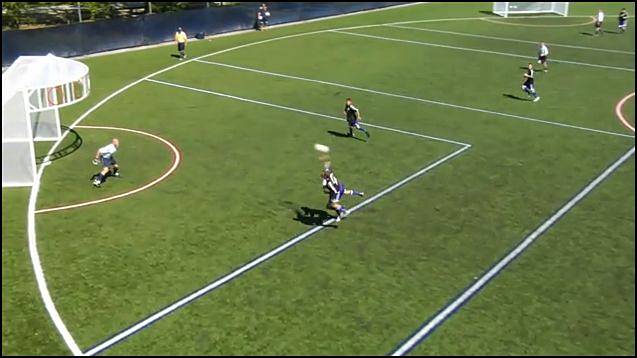
In Hurling, here are two teams on a soccer-type field, each team with 11 or 15 players. Each player has a hurley (stick) and they are all chasing a ball (sliotar a.k.a. slitter). The objective is to score the most points through the opposite team's goals, which is a combo of a soccer goal with field goal posts. Over and between the crossbars equals 1 point and each sliotar that goes into the net goal is 3 points.
There are various rules for how long you can run with the sliotar in hand, how you can pick it up off the ground, and how aggressive you can play. Ireland also offers Camogie, essentially a women's league version of Hurling, though back home some ladies played on both Camogie and Hurling teams. This game takes plenty of stamina, accuracy, and courage to play, but it's all fun!
GAELIC FOOTBALL
 |
| My people! Players from County Mayo in the green and red. |
It's Soccer with your hands! It's Rugby without the scrums and rucks! It's another Irish sport! Gaelic Football has the same number of players, same rules of movement, and same goals as Hurling. The main difference is the ball this time looks like a volleyball, only bigger and heavier, and you can use both your feet and your hands to move the ball around the field.
I could also pick Aussie Rules Football. Aussie Rules uses a rugby shaped ball and is more of a mix between Gaelic Football and Rugby. However, because of huge and oddly shaped those fields for Aussie Rules are (Gaelic game fields are already big enough) and the greater risk of injury in Aussie Rules, not to mention more complicated scoring and posts involved, I would recommend Gaelic Football as a fun alternative to Soccer in the U.S.
PESAPALLO
Baseball may be America's past time but it has a variety of bat and ball games that it came from and that it inspired. Baseball mainly came from two English sports. One is Rounders, which has a similar base and running set up but has a smaller, single-handed bat. The other is Cricket, the second most popular sport in the world (thanks Britain and India), which used to be played in early U.S. history and has some clubs scattered in major cities today.
Anyway, one of the sports that baseball helped to created is Pesapallo, which was established in Finland after a Finnish man watched Baseball in the U.S. The major difference between Pesapallo and Baseball is the base set up and the pitching. Rather than a diamond shape for base running, the bases are in a zig-zag pattern, where runners first go left, then right, then make their way back to the left and around to the home plate. The pitchers do not have a mound in the middle, but just toss the ball right next to the batter. This game also uses bats and gloves, though they have a different shape than the American versions. Also unusual or unique is Pesapallo players have padded helmets like boxers and the coach has an area of colored sticks to use for signaling. Pesapallo is meant to be a faster paced and more exciting version of Baseball, so people who enjoy the challenge of bat and ball games, but despise the pace of Baseball/ Softball can get behind Pesapallo.
As you might imagine there are many many bat and ball sports around the world. Besides the ones I included earlier, there is also Vigoro in Australia (Tennis meets Cricket), Oina in Romania (Pesapallo meets Cricket), Lapta in Russia (Baseball mixed with Oina), Brannboll in Sweden (Baseball meets Vigoro), and my personal favorite Kilikiti in Samoa/ the Pacific Islands. Kilikiti is based on Cricket, but it is played with larger more triangular bats that look like decorative clubs and players wear traditional lavalava skirts. Kilikiti is an example of a culture updating a popular sport and transforming it into part of the cultural identity, which is why I would recommend Pesapallo becoming a league sport in the U.S. over Kilikiti, since Kilikiti has deep roots in its culture.
FIELD HOCKEY
Sure this is one of the most popular sports in the world, and you may be telling me that we already have field hockey in this country, but really, outside of the Olympics or a school (high school, college, whatever) team, when was the last time that you saw field hockey being played in this country?
Field hockey, like its ice variant we see in the NHL, is about players chasing a small round object with a stick. Unlike ice hockey sticks, one side of the stick's bend is round while the other side is flat. There is a ball instead of a puck and you can only hit the ball with the flat side. This looks like another game that takes lots of stamina, strength, and flexibility to persevere, which makes it a great sport that you can get in shape from just playing.
SEPAK TAKRAW
 |
| I believe I can fly! |
Volleyball is fun and all, but how much cooler would it be to play it with your feet instead and do kick flips? That's what Sepak Takraw, a popular sport in Southeast Asia, is often described as. There are two teams with 2 or 3 players kicking a ball over a net into their opponent's side of the court. Like volleyball, there are only 3 touches allowed on one team's side and points are scored if the ball falls to the ground or goes out of bounds.
Unlike volleyball, a single player can take all 3 touches and, as mentioned before, arms and hands are not allowed. Similar to soccer, players can use their heads, chests, and especially their feet to move the ball (which is smaller than a volleyball and made of rattan material). Videos of games often show players spiking the ball over the net by flying into the air and flip kicking the ball.
As you might imagine, Sepak Takraw takes lots of skill, which might turn people off. A different game similar to Sepak Takraw is Bossaball. This game brings back the volleyball sized projectile but also allows players to maintain the kicking elements of Sepak Takraw. Instead of being played on an indoor court though, Bossaball is played on an inflatable court, with trampolines on each side for players to bounce high enough to do their kicks. Bossaball also allows players to use any part of their body to move the ball around.
I love trampolines and inflatable, bouncy things. Both do require physicality to move around for a long time. However, I would usually associate those with carnivals or just goofing around in someone's backyard. A sport, to me, especially for clubs and leagues, should be a little more established or at least less cartoonish. That, and the cool ninja moves, are the reason why I would recommend Sepak Takraw over Bossaball.
BANDY
Do you love ice hockey? Well, what if the rink was a larger size so that 11 players could be on each team? Also, what if the goalie was not allowed a stick but instead had large fuzzy gloves only? Also also, instead of a puck, you skate around a ball and hit it with a stick that is bent but not curved, allowing you to hit the ball on both sides?
While I described the game in a joking manner, I think Bandy is a cooler, much more intense version of ice hockey that could catch on. For one reason, whereas Ice Hockey encourages physical contact, Bandy penalizes players for intentional pushing and roughing other players, which means that players have to be skillful at keeping the ball as well as taking it away while avoiding their opponent as best as possible. At the moment, Bandy in the U.S. only seems to be played in the Twin Cities of Minnesota, where they have the means to have a large outdoor ice rink and people willing to play Bandy instead of Hockey.
A possible alternative to Bandy is Ringette. Another Ice Hockey variation, this game from Canada has three major differences. Instead of a puck or a ball, the players chase a rubber ring. Instead of a bent or curved stick, the players essentially have a pole to allow them to stick it inside the ring and catch it. Finally, there are three different zones designated by blue lines that limit where players can move, depending on their position. However, Ringette was invented specifically for women to play (not saying that's a bad thing) while Bandy, as far as I'm aware, does not limit whether women or men can play.
SHINTY
The Scottish cousin to Hurling and Field Hockey, Shinty is another field and stick game. This time, instead of a hurley, players use a caman which looks like an alternately-designed hockey stick. Just like Hurling, the objective is to score the most goals by moving the ball up the field using your stick. If you can imagine hockey players attempting golf, you can probably imagine Shinty. The swings look like someone is driving their ball from the tee box.
Another offshoot of both Hurling and Shinty is Cammag, a game found on the Isle of Man (between England and Ireland). On St. Stephen's Day/ Boxing Day/ The Day After Christmas, citizens gather together into giant teams with whatever long sticks they can find (hurleys, camans, brooms, golf clubs, a tree branch). The teams fight to move a ball from one end of the town to the other without any solid boundaries. This is more of a Culturally Specific Honorable Mention since Cammag is only played on the Isle of Man specifically on December 26 and seems ran more on tradition than actual rules or guidelines.
HANDBALL
 |
| I also believe I can fly! |
It's an Olympic sport and the U.S. doesn't even have a team in it this year! If we really wanted to dominate the Olympics, we'd make sure to have a team or person in each event to better our chances of getting all the medals! Okay, I really don't care if we win a medal, but Handball looks like a fun sport and it seems a shame for the rest of the world to have all the fun while we ignore this.
There are two teams of seven people each on an indoor court. As you can imagine, the object is to use your hands to move a ball down the court and score a point. There is a limit to how long a player can hold a ball or how many steps they can take before passing the ball to another player. Essentially basketball combined with soccer, Handball offers some sweet moments when watching people trying to score goals and is just as physical as any other popular sport in the U.S.
Also, in my internet searches of different sports around the world, I keep seeing Quidditch popping up as a growing popular 'game' to play. Let's substitute Quidditch for Handball as THE new hand ball sport to play, for multiple reasons. First and foremost, you're not actually flying in this muggle version of Quidditch. Next, you can stop holding the broom between your legs. Also, you're essentially trying to achieve the same thing in both sports Everyone is running around the field trying to get ahold of the ball and throw it into their opponent's goal to score the most points.
PATO
Perhaps this could be saved for my Culturally Specific Honorable Mentions, but it's just too cool and too little mentioned elsewhere. Pato (the Spanish word for 'duck') is a sport in Argentina. It is played on horseback, with two teams of four players each competing to score goals in a net on a post.
The reason why it is called Pato is because the players used to be fighting over and tossing around a real duck when it first started. Over the years, the duck was replaced with a leather ball with handles for gripping and pulling.
Pato, this blend of basketball and polo, seems a little similar to Buzkashi, a Central Asian sport also featuring horsemen fighting over an animal. Specifically, Buzkashi players battle over a goat carcass. From what I've glanced online, Buzkashi is translated as goat grabbing and is an especially big deal in Afghanistan as a traditional, national sport. Since Buzkashi has such strong ties to its culture and since Pato switched from tossing animal bodies to an actual ball, I say let's play some Pato, amigos!
IRISH ROAD BOWLING
 |
| Imagine getting a gutter ball in this game |
Back during my time with Reach Youth Ministry, I played a game of Bocce ball with the rest of the guys in the ministry that year. We were out camping by a lake shore for the night, so we were surrounded by natural beauty. Instead of limiting ourselves to a designated field with boundaries, we would toss the balls all around the hills, trees, concrete (parking lot), dirt, and even into the water sometimes. It was great fun, one of my favorite memories from that time.
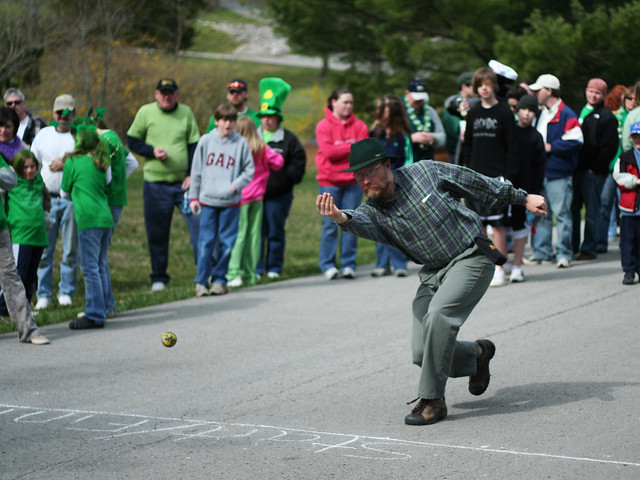
Irish Road Bowling sounds very similar to my experience with this variation of Bocce. A player is throwing what amounts to a shot from shotput (a small iron ball) down a course. Like golf, the player with the lowest score wins. As you might infer from the name, the game is played around roads and players try to roll the ball down the course like a bowling ball, though the throw has been likened to that of a cricket bowl.
Bocce seems popular enough in the U.S. that Irish Road Bowling can take off. Instead of being limited to the restrictions and boundaries of Bocce courts, players are only limited by the roads and courses they play on. There are some places in America (Boston, MA, La Crosse, WI and Ireland, WV for example) that have formed their own leagues or tournaments, trying to attach it to the Irish identity of the town. Also, adults seem to love beer leagues where skillful play doesn't have to get in the way of enjoying an alcoholic beverage, and Irish Road Bowling seems like the perfect sport for doing just that. Also also, small towns and rural areas could take advantage of their surroundings to create Irish Road Bowling events or tournaments around their town to attract tourists and visitors.
Honorable Mention Sports That Are Culturally Specific:
CALCIO FIORENTINO
Now played exclusively in Florence, Italy. The championship is held on June 24, the feast day of St. John the Baptist. I have nicknamed Calcio 'prison riot rugby' because, like rugby, two teams of tough guys are trying to carry a ball to their opponent's goal and, like prison riots, everyone is trying to punch, kick, and wrestle everyone else into a bloody pulp. At least when I call these guys Mr. Fancy Pants, I can say it with a straight face and risk my health at the same time.
KI-O-RAHI
Maori people are indigenous people from New Zealand. This sport of Ki-o-rahi is steeped in Maori tradition and culture. All of the game pieces are labelled in the Maori language and the gameplay, including the game's name, is based on a Maori legend. There is both a full tackle and a touch flag version of the game. It looks like variations of handball, rugby, and dodgeball, but I still have not really looked into this enough to really understand what's going on.
LELO BURTI
On Easter Sunday, in the village of Shukhuti in the country of Georgia, people gather together for a friendly game of Lelo Burti. The village splits into two teams, essentially a north side and south side, and the Orthodox priest blesses the ball before throwing it in to start the match. Just like Cammag, there is really no distinct boundaries of what the playing field is, just one end of town and the other. As you can see in the picture, a massive crowd is fighting over a single ball, so you can imagine the shoving, kicking, and injuries that occur. This is the closest thing in modern times, I have found, to what basic village ball games were like 1000 years ago in Europe.
To get the full picture of each above sport, I would recommend looking on Youtube for visual aid or even just Googling the rules and gameplay of the sports. On Youtube, you can find channels like Ninh Ly Explains or Trans World Sports to watch great videos about these sports. I only just learned today about an ancient Ethiopian field-hockey-ish sport of Genna and a new game called Padbol in Argentina, which is a meeting between tennis and sepak takraw, from Youtube, There is so much more out there than what is popular in the professional sports world in the United States. Go out there and play!