Man, did I get really tired really fast of seeing and hearing the phrase "give up" these past couple weeks. Of course, I refer to "give up" in the context of "What are you giving up for Lent? I gave up blah blah blah for Lent". Most of us in America, at least those of us that understand what ashes on someone's forehead on Wednesday means, know that when it comes to Lent, people get really caught up in 'giving something up' for Lent, meaning that for a 40+ day period they will attempt to stay away from something or another, whether it's a particular food, social media, or a "bad habit" that in all likeliness will return as part of their regular routine during the first week of the Easter season.
No, I'm not degrading the sacrifice and people's intentions to "give up" something for Lent. I'm just slightly burnt out after hearing something asked more regularly than the question "What high school did you go to?" gets asked in the St. Louis area. Because the phrase "give up" is so surface level to the purpose of Lent, so so easy, and yet so many people still make it sound like a chore, like a kid who is being forced to mow the lawn against his will. Well, kid, mowing the lawn isn't all that bad and it is so much easier than other acts you have to do to maintain a house, just like "giving something up" is easier than other acts we can and need to do during Lent to maintain our spiritual lives.
All right, so I've already used GU so many times that I'm sick of it again and I'm sure you're sick of it too, so I'll just use the initials here on out. Anywho, when people say GU in reference to Lent, I think what they really mean is "Sacrifice" and perhaps what mean is "Fasting". At least, based on my experiences that's the case.
As I started to take Lent more seriously after my reversion to Catholicism during college, I tried to take on multiple huge tasks of things. I began to divide my penitential acts between two categories, sacrifices and commitments. I would sacrifice or GU two or three things and I would also try to commit myself to a particular action or duty throughout the Lenten season. I've come to the realization that what I was trying to do, and what I am currently trying to do, is summed up in three categories, not two. Those categories are Prayer, Fasting, and Almsgiving.
There's many good reasons why each Ash Wednesday, the Catholic Church uses Matthew 6: 1-6, 16-18 as the Gospel reading at Mass. One of the big reasons is because it highlights the three components of penance that we need to be doing each Lent. This Gospel passage tells us how important it is to pray, to fast, and to give alms as acts of penance. These acts are not necessarily always individual, either, but can be interwoven, combined for one centralized purpose. Moreover, the Gospel tells us that we should do these acts not for personal gain, not for self-gratification or to improve ourselves in a narcissistic sense, but to do these things because there are people who need our help AND there are things that we let get in the way of God's will in our lives.
Can I also take a break for a moment and say that the Church's requirements for Fasting and Abstinence on Ash Wednesday and the Fridays of Lent are really not all that bad. Really, they should be even more challenging. Steven D. Greydanus, a man I frequently reference in my posts, a film critic as well as a Catholic Deacon, has pointed out from time to time how the fast requirements in the Orthodox, Jewish, and Eastern Rite Catholic faiths are much much more strict than our Westernized American version and how weak our version is.
Really when you think about it, how hard is it? For two days of the year, we restrict ourselves to 1 whole meal but we're still allowed a couple of snacks and all the water we want. That's the only fasting requirement of Lent. For Friday food abstinence, we just cannot eat meat, which in reality is just any warm blooded, flesh creature, but we can still have 3 normal sized meals and substitute fish for meat. Is that really that challenging? Our ancestors, who lived in greater poverty than we did, had greater restrictions on when they could eat meat, dairy products, fish, and had much more limited diets during Lent, and somehow they and the faith survived into our present times!
The reason I bring this up is because when we complain about the requirements and just talk about them on the surface level, it does three things. It diminishes the acts themselves, it confuses and turns off people who are not Catholic or believers of any kind, and it undermines the true poverty that starving people face every day around the world. When we focus on "how hard" it is to GU something or to restrict our diets on particular days, we lose focus on the purpose of those acts and it takes away any meaning or wisdom gained when we do those acts.
If people outside of the Catholic faith, especially those with heavy doubts about God, just see a bunch of miserable whiners complaining about simplistic restrictions, are they going to pursue interest in God or Catholicism or are they going to think to themselves "Well why would anyone want to be like these people if this is the case?". And finally, there are so so many people in this country and in countries worldwide that struggle just to have one solid meal each day, much less gathering food scraps and drinking good water. Just because they do not have people around them stuffing their faces on fasting days nor are surrounded by steaming plates of gluttony does not mean that they do not suffer and struggle any less than we do. In fact, it would be prudent of us to act charitably DURING LENT for those poor starving people by giving alms to them or saying prayers in our hunger for those who are truly hungry.
So, my whole point here is that we need to refocus on the true purpose of Lent. It's not just to GU one silly thing for a short period of time. It's not just to gripe and moan about food restrictions for a few days of the year (though really all Fridays should be meatless for Catholics, but we're not back to that strength of faith yet). Lent is about repenting of our sins. How do we repent? What's the best way to repent? By practicing prayer, fasting and almsgiving. All three, hopefully combined, but if not at least doing something involving all three during the Lenten season. We need to challenge ourselves. We all know that challenge is the best way we grow and strengthen our resolve. If we want a stronger faith and a stronger community, let's challenge ourselves through these three penitential acts and not complain along the way.
For further reading on my opinions about Lent and penitential practices, here's a post I wrote a couple years ago in defense of food and social media fasts.
Thursday, March 9, 2017

Wednesday, February 1, 2017
Oscars 2017 Talk
As you might be able to tell by reading my previous blog posts, I love movies. I privately include watching movies and talking about movies as some of my chief hobbies (which makes me great for trivia nights). However, I have not seen a lot of movies that came to theaters in 2016. Everyone is making their best movies of the year lists, the Oscar nominations have been called, and here I am making my must-see movies list for the year so that during 2017 I can watch the DVD versions of some of 2016's best movies.
So, just to have some fun (and to give me something to write about), I decided to examine some of the nominations for the Academy Awards in 2017. Under each category, I will list the actual nominees, examine some snubs and any nominees that perhaps should not be included on the list, predict who the Academy will give the award to and then name who the actual winner should be. Some of these will be an attempt at humor, some will be more serious, and all will be completely ludicrous because, like I said, I have not seen many of the movies involved in the nominations. So, instead I'll be stealing thoughts and ideas from other people who have seen them...I mean, I will be utilizing the wise words of movie critics and word of mouth from other best movies lists to provide me with context.
Best documentary feature:
“13th,” Ava DuVernay, Spencer Averick and Howard Barish
“Fire at Sea,” Gianfranco Rosi and Donatella Palermo
“I Am Not Your Negro,” Raoul Peck, Remi Grellety and Hebert Peck
“Life, Animated,” Roger Ross Williams and Julie Goldman

What WILL Win?: Most likely "O.J.". There's too many exciting elements for the Academy to ignore, from scandal, to sports entertainment, to tragedy, to racism issues and other factors, on top of the fact that our culture can't seem to get over the man after talking about him for 20 years.
What SHOULD Win: "Fire at Sea". While I joked above, "Fire at Sea" is about probably one of the greatest globally human conflicts currently going on, that being the crisis of refugees and immigrants fleeing the Middle East mainly into Europe.
Snubs/Overestimations: This is also the kind of category where the snubs are much more noticeable than any overestimations. Majority of these directors have a handful or less of big budget, Hollywood movies to their credits, but at the same time their movies turned out to be some of the best this year. Only Denis Villeneuve and Mel Gibson have the street cred experience to match some of the best/ well known directors working today, and both deserve to be on this list. The snubs that are most obvious include Martin Scorsese for Silence", in part or mainly because it's a project he's been developing for nearly three decades and he still crafted a captivating drama. The other snub is Denzel Washington for "Fences", since he had to juggle multiple responsibilities and also does not have as much experience in this particular director's chair like Scorcese or Gibson.

Who SHOULD Win: Martin Scorsese. The dude had to work decades to make this movie and he created a heartwrenching thinkpiece that only adds another feather in his cap of noteworthy dramatic movies. And he probably deserves to win for this even more than he did "The Departed".
So, just to have some fun (and to give me something to write about), I decided to examine some of the nominations for the Academy Awards in 2017. Under each category, I will list the actual nominees, examine some snubs and any nominees that perhaps should not be included on the list, predict who the Academy will give the award to and then name who the actual winner should be. Some of these will be an attempt at humor, some will be more serious, and all will be completely ludicrous because, like I said, I have not seen many of the movies involved in the nominations. So, instead I'll be stealing thoughts and ideas from other people who have seen them...I mean, I will be utilizing the wise words of movie critics and word of mouth from other best movies lists to provide me with context.
Best documentary feature:
“13th,” Ava DuVernay, Spencer Averick and Howard Barish
“Fire at Sea,” Gianfranco Rosi and Donatella Palermo
“I Am Not Your Negro,” Raoul Peck, Remi Grellety and Hebert Peck
“Life, Animated,” Roger Ross Williams and Julie Goldman
“O.J.: Made in America,” Ezra Edelman and Caroline Waterlow
Snubs/ Overestimations: This is probably the hardest category to make this call for, because documentaries are more subjective than other genres. Plus, who really watches documentaries except for film snobs and students? With that being said, I've seen majority of these movies on best of 2016 lists, with the biggest support for the 7.5 hour O.J. Simpson special on ESPN as well as that one about an autistic boy who uses Disney animated movies to help communicate. If there were any snubs, I'd primarily put "Weiner" at the top of the list, because apparently everyone loves the combination of sex scandals and politics. The other doc. I'd nominate is "Almost Holy", which is about a pastor in Ukraine using his faith to rescue his people from drugs, abuse, and crime by any force necessary (i.e. literally kicking ass). Wouldn't you rather see a real-life Daredevil movie nominated than whatever "Fire at Sea" was about?
Snubs/ Overestimations: This is probably the hardest category to make this call for, because documentaries are more subjective than other genres. Plus, who really watches documentaries except for film snobs and students? With that being said, I've seen majority of these movies on best of 2016 lists, with the biggest support for the 7.5 hour O.J. Simpson special on ESPN as well as that one about an autistic boy who uses Disney animated movies to help communicate. If there were any snubs, I'd primarily put "Weiner" at the top of the list, because apparently everyone loves the combination of sex scandals and politics. The other doc. I'd nominate is "Almost Holy", which is about a pastor in Ukraine using his faith to rescue his people from drugs, abuse, and crime by any force necessary (i.e. literally kicking ass). Wouldn't you rather see a real-life Daredevil movie nominated than whatever "Fire at Sea" was about?
What SHOULD Win: "Fire at Sea". While I joked above, "Fire at Sea" is about probably one of the greatest globally human conflicts currently going on, that being the crisis of refugees and immigrants fleeing the Middle East mainly into Europe.
Cinematography:
“Arrival,” Bradford Young
“La La Land,” Linus Sandgren
“Lion,” Greig Fraser
“Moonlight,” James Laxton
“Silence,” Rodrigo Prieto
“Arrival,” Bradford Young
“La La Land,” Linus Sandgren
“Lion,” Greig Fraser
“Moonlight,” James Laxton
“Silence,” Rodrigo Prieto
Snubs/ Overestimations: I think the snubs are probably easier to pick out in a category like this than others. Mainly because each movie demands a different look/ aesthetic, so the grades given for cinematography are much more subjective, making it harder to eliminate a movie from this list. With that being said, "Doctor Strange" was obviously snubbed. Yeah, it's nominated for visual effects, but the movie's best quality is its overall look, having to make reality look real, having to make magic look uniquely real, and then blending both together into a credible story and look based upon yet separate from all of the Marvel movies before it. "Doctor Strange" is a visual feast! "Birth of a Nation" is the other snub. Mainly because, in a movie about historically racist issues between people with black and white skin tones, the movie is filtered with black and white imagery. Not totally colorless, but tonally like a computerized system gave the tone of colors contrasting shades to make the black and white stand out more.

Who WILL Win: "La La Land"! These colors pop out a lot, but they are not neon or overblown. The movie is set in reality like "Silence" or "Lion", but with a sense of magical realism that brings things to life in a much more vibrant, urgent, and fun way.
What SHOULD Win: "Doctor Strange". If there's one movie this whole year whose hype and positive reviews solely depended upon its high quality cinematography alone, it's this Marvel movie right here.
Animated feature:
“Kubo and the Two Strings,” Travis Knight and Arianne Sutner
“Moana,” John Musker, Ron Clements and Osnat Shurer
“My Life as a Zucchini,” Claude Barras and Max Karli
“The Red Turtle,” Michael Dudok de Wit and Toshio Suzuki
“Zootopia,” Byron Howard, Rich Moore and Clark Spencer
“Kubo and the Two Strings,” Travis Knight and Arianne Sutner
“Moana,” John Musker, Ron Clements and Osnat Shurer
“My Life as a Zucchini,” Claude Barras and Max Karli
“The Red Turtle,” Michael Dudok de Wit and Toshio Suzuki
“Zootopia,” Byron Howard, Rich Moore and Clark Spencer
Snubs/ Overestimations: The sad thing is, even with the incredibly large amount of animated movies that came out this year, this might be the best possible list of nominees. Disney made some very popular films involving the trendy themes surrounding diversity. Pixar screwed up a sequel. Dreamworks made some lazy generic animal features. Laika, already the best secondary animation company after those giants listed above, made one of their best movies ever. Any movie with Studio Ghibli attached to it automatically gets favored buzz, and "The Red Turtle" actually looks different and interesting. I'm not sure about the Zucchini choice, but it sounds more like a horror film to me. While I can respect claymation as much as the next man, this movie's particular style is uglier than any of Aardman's designs. The only movie that could have possibly been put on this list and would've made sense was "April and the Extraordinary World", an intriguing steam punk piece from the same people who already have Oscar connections due to Persepolis. Replace Zucchini with April, I say. It matches the Oscar profile better.
What WILL Win: My prediction is "Zootopia". It looked better and was more well received overall than Disney's other piece "Moana", and it is very thematically trendy, connecting to our current sociopolitical climate. The Oscars seem to like movies about sociopolitical trends for some reason.

What SHOULD Win: "Kubo and the Two Strings". The only movie on this list I've actually seen is Kubo but that's not why I'm saying it should win. It should win because the artistic style was vastly different than the other animated movies, and even superior to previous Laika animations. It's much more gorgeous than the Zucchini choice, its closest comparison arts-wise. It had an intriguing story, some plot twists and turns, and fun likable characters in an environment that was familiar yet refreshingly new.
What WILL Win: My prediction is "Zootopia". It looked better and was more well received overall than Disney's other piece "Moana", and it is very thematically trendy, connecting to our current sociopolitical climate. The Oscars seem to like movies about sociopolitical trends for some reason.
What SHOULD Win: "Kubo and the Two Strings". The only movie on this list I've actually seen is Kubo but that's not why I'm saying it should win. It should win because the artistic style was vastly different than the other animated movies, and even superior to previous Laika animations. It's much more gorgeous than the Zucchini choice, its closest comparison arts-wise. It had an intriguing story, some plot twists and turns, and fun likable characters in an environment that was familiar yet refreshingly new.
Best director:
“La La Land,” Damien Chazelle
“Hacksaw Ridge,” Mel Gibson
“Moonlight,” Barry Jenkins
“Manchester by the Sea,” Kenneth Lonergan
“Arrival,” Denis Villeneuve
“Hacksaw Ridge,” Mel Gibson
“Moonlight,” Barry Jenkins
“Manchester by the Sea,” Kenneth Lonergan
“Arrival,” Denis Villeneuve
Snubs/Overestimations: This is also the kind of category where the snubs are much more noticeable than any overestimations. Majority of these directors have a handful or less of big budget, Hollywood movies to their credits, but at the same time their movies turned out to be some of the best this year. Only Denis Villeneuve and Mel Gibson have the street cred experience to match some of the best/ well known directors working today, and both deserve to be on this list. The snubs that are most obvious include Martin Scorsese for Silence", in part or mainly because it's a project he's been developing for nearly three decades and he still crafted a captivating drama. The other snub is Denzel Washington for "Fences", since he had to juggle multiple responsibilities and also does not have as much experience in this particular director's chair like Scorcese or Gibson.
Who WILL Win:The controversial pick would be Mel Gibson, but I don't think "Hacksaw Ridge" has enough steam to get him to the finish line. Damien Chazelle is a likely candidate since he has clout from "Whiplash" and this is one of the most appealing movies for the Academy to award, not to mention the fact that this is his second major motion picture that he wrote AND directed. My money, however, would be on Barry Jenkins for directing a dramatic piece about a mature subject and doing it with plenty of creative and artistry, all the while leading a company of minority cast and crew to much success.
Who SHOULD Win: Martin Scorsese. The dude had to work decades to make this movie and he created a heartwrenching thinkpiece that only adds another feather in his cap of noteworthy dramatic movies. And he probably deserves to win for this even more than he did "The Departed".
Supporting actress:
Viola Davis, “Fences”
Naomie Harris, “Moonlight”
Nicole Kidman, “Lion”
Octavia Spencer, “Hidden Figures”
Michelle Williams, “Manchester by the Sea”

Snubs/Overestimations: None apparently. This is THE EXACT SAME LIST of nominees as the Golden Globes AND The Screen Actors Guild Awards. Is Hollywood just rigging the system on this one?
Who WILL Win: Often times in this category, it's usually the lady with the most buzz that gets the award. Right now, Viola Davis has the most buzz, so Viola Davis will win.
Who SHOULD Win: Viola Davis. All of the actresses in all the other movies were overshadowed by the other actors in those movies. Viola Davis, meanwhile, kept up right alongside with Denzel Washington and brought a strong A-Game to the screen. Plus, she was the one awarded the Golden Globe and the Screen Actors Guild Award
Viola Davis, “Fences”
Naomie Harris, “Moonlight”
Nicole Kidman, “Lion”
Octavia Spencer, “Hidden Figures”
Michelle Williams, “Manchester by the Sea”
Snubs/Overestimations: None apparently. This is THE EXACT SAME LIST of nominees as the Golden Globes AND The Screen Actors Guild Awards. Is Hollywood just rigging the system on this one?
Who WILL Win: Often times in this category, it's usually the lady with the most buzz that gets the award. Right now, Viola Davis has the most buzz, so Viola Davis will win.
Who SHOULD Win: Viola Davis. All of the actresses in all the other movies were overshadowed by the other actors in those movies. Viola Davis, meanwhile, kept up right alongside with Denzel Washington and brought a strong A-Game to the screen. Plus, she was the one awarded the Golden Globe and the Screen Actors Guild Award
Supporting actor:
Mahershala Ali, “Moonlight”
Jeff Bridges, “Hell or High Water”
Lucas Hedges, “Manchester by the Sea”
Dev Patel, “Lion”
Michael Shannon, “Nocturnal Animals”
Mahershala Ali, “Moonlight”
Jeff Bridges, “Hell or High Water”
Lucas Hedges, “Manchester by the Sea”
Dev Patel, “Lion”
Michael Shannon, “Nocturnal Animals”
Snubs/ Overestimations: Across the board, I think the Academy overestimated "Lion". Yes, it's on other people's best of lists, but not nearly as much as other movies, and the story sounds dry to the bone, though I'm sure Dev Patel is one of the best things about the movie. The other overestimation I think is Lucas Hedges, and yes I am saying that just because he is a kid. I think with a great director, stupendous actors, and a great script, you can surround any teen or kid in a movie with enough quality and skill to train them enough to do well. Compare Jacob Tremblay between "The Smurfs 2" and "Room". One major snub in my opinion was Sam Neill in Hunt for the Wilderpeople. The man had to fake a New Zealand accent for goodness sake! That and he had to pretend to be a disgruntled old bushwhacker with a story arc of becoming a caring father figure, and he had to do that in an authentically funny way. The other snub for me, coming out of nowhere, is Alden Ehrenreich as Hobie Doyle in "Hail, Caesar!". In an almost forgettable movie filled with Hollywood A-listers, Ehrenreich's character was the best part of the movie. His line delivery was hilarious, his accent got your attention, and he was bringing us all along on a good time.

Who WILL Win: In all likelihood, it's going to be Mahershala Ali for his role in Moonlight. I don't have any funny quips or random remarks about this choice.
Who SHOULD Win: Jeff Bridges. He was despicably hilarious in "Hell or High Water". His snarky, snappy dialogue with his deputy were some of the movie's highlights for me. Yet, his character did change through an arc, and Jeff Bridges showed he had range between funny and dramatic, between deadly serious and playfully arrogant. He made it look so easy too.
Lead actor:
Casey Affleck, “Manchester by the Sea”
Andrew Garfield, “Hacksaw Ridge”
Ryan Gosling, “La La Land,”
Viggo Mortensen, “Captain Fantastic”
Denzel Washington, “Fences”
Casey Affleck, “Manchester by the Sea”
Andrew Garfield, “Hacksaw Ridge”
Ryan Gosling, “La La Land,”
Viggo Mortensen, “Captain Fantastic”
Denzel Washington, “Fences”
Snubs/ Overestimations: The biggest overestimation in this category is Viggo Mortensen. However much I like the man for playing Aragorn and leading other fantastic movies, this is not the first time we've seen him play a grizzled outcast authority figure (see "The Road" for previous evidence). Viggo does plenty of good work, but this role didn't seem like too much of a stretch. I'm surprised Adam Driver is left out, in part because of the range that he has shown not just in previous years, but also in this one year between playing a Portuguese Jesuit, a U.S. government psycho operative, and a New Jersey bus driver. His role in "Paterson" has driven this movie to the top of a lot of best of 2016 lists. The other snub I think is "Swiss Army Man" for both Paul Dano & Daniel Radcliffe. Say what you will about how weird the movie is, but Daniel Radcliffe had to play a talking, farting corpse with so many strange powers and a reversal of limitations while Paul Dano had to give a dramatic and funny performance playing off of Radcliffe's character.

Who WILL Win: This one is a little trickier, because there's lots of buzz and recognition for more than just one of these guys. Will it be Ryan Gosling, whose movie leads the number of nominations and has tons of favoritism going for him? Will it be Denzel Washington, the well established actor who improved upon his own stage performance as well as balanced multiple responsibilities for the project? I think, despite recent scandal and controversy, Casey Affleck has the best chance of winning the award. He has the most buzz (at the moment), he also has a well established career, and it's often the most emotionally dramatic roles that take the acting award. So, if the controversy doesn't overshadow him, Affleck wins. (Note: Should the controversy overtake Affleck, pretend I predicted that Denzel will win).
Who SHOULD Win: Andrew Garfield. Another actor who showed plenty of dramatic acting capabilities. Plus he delivered two great performances based on strong religious convictions. Garfield for be awarded for his performance in "Hacksaw Ridge" based on his great representation of a real life man, his ability to struggle against and overcome such strong obstacles while maintaining his faith,and for the emotional depth he showed.
Lead actress:
Isabelle Huppert, “Elle”
Ruth Negga, “Loving”
Natalie Portman, “Jackie”
Emma Stone, “La La Land”
Meryl Streep, “Florence Foster Jenkins”
Isabelle Huppert, “Elle”
Ruth Negga, “Loving”
Natalie Portman, “Jackie”
Emma Stone, “La La Land”
Meryl Streep, “Florence Foster Jenkins”
Snubs and Overestimations: It's hard to say if any of these ladies were overestimated in this category because most of these performances come from movies otherwise ignored by the Academy so no one has really seen or heard of these movies outside of watching these leading ladies carry the weight of the movie (with the exception of "La La Land" of course). The biggest snub in this category, as everyone else has pointed out, is Amy Adams for "Arrival". Another performer who showed range in multiple roles this year, Amy Adams is one of the most talked about components of one of the most talked about movies of the year. Without her, "Arrival" would probably not succeed as much as it has.
Who WILL Win: Meryl Streep. She's essentially a shoe-in because of her clout and status. Though I do not fully understand the industry's fascination with Meryl Streep. Majority of the movies I know of that have her in starring roles are problematic for one of two reasons, either A) The movie itself is not good or B) Meryl Streep herself is not outstanding in her role. The only time I can think off the top of my head where both were the case is "The Deer Hunter", and that was 38 YEARS AGO!

Who SHOULD Win: Amy Adams. See snub reasons above.
Who WILL Win: Meryl Streep. She's essentially a shoe-in because of her clout and status. Though I do not fully understand the industry's fascination with Meryl Streep. Majority of the movies I know of that have her in starring roles are problematic for one of two reasons, either A) The movie itself is not good or B) Meryl Streep herself is not outstanding in her role. The only time I can think off the top of my head where both were the case is "The Deer Hunter", and that was 38 YEARS AGO!
Who SHOULD Win: Amy Adams. See snub reasons above.
Best picture:
“Arrival”
“Fences”
“Hacksaw Ridge”
“Hell or High Water”
“Hidden Figures”
“La La Land”
“Lion”
“Manchester by the Sea”
“Moonlight”
“Arrival”
“Fences”
“Hacksaw Ridge”
“Hell or High Water”
“Hidden Figures”
“La La Land”
“Lion”
“Manchester by the Sea”
“Moonlight”
Snubs/ Overestimations: Oh boy, where to begin on this one? Let's start with overestimations. Again, the Academy seems to think more highly of "Lion" than other groups or lists. "Hidden Figures" is the only movie on this list that is surprisingly lacking in other categories. Some people think that there were snubs for HF in other categories, but I think the theme is what overall propelled the movie to this list while it lacked in the other departments (compared to the other movies it is competing against). Plus I think "Crash" proved that an important theme does not equal a movie good enough to truly deserve the Oscar.
Now, the snubs. The most obvious one is "Silence" which should've gotten more nominations in more categories. It's got all of the drama, themes, history, and edginess that the Academy usually loves. "Birth of a Nation" is the next obvious snub, because again it has the drama and the themes that are usually award worthy, but perhaps the scandal of the people involved is what kept it off the list (though if scandal is enough to get you booted, why would Affleck still be nominated? I don't know...). Shockingly, "Hail Caesar!", a movie all about the entertainment industry and the golden age of cinema, which Hollywood loves to pat itself on the back for, did not get nominated. Finally, if the Academy were to expand their horizons a little bit past the drama genre, they'd see how well received and how entertaining "The Witch" and "Captain America: Civil War" were and nominate them for Best Picture.
Who WILL Win: "La La Land". Closely followed by "Moonlight". It's no secret that the Academy loves movies about the entertainment industry (see "Birdman" and "The Artist"), which isn't to say that these kinds of movies are not worthy of their nominations. On the contrary, these are usually quite high quality in terms of artistry and entertainment. I'm just saying, based on previous history and jokes on the internet, that Hollywood loves to pat itself on the back with awards. "La La Land" is kind of a pat on the back, but it's also thematically uplifting and genuinely inspiring, a pleasant blend of old school and modern entertainment. "Moonlight" may be the most dramatic and most mature and have the most buzz outside of "La La Land".
Who SHOULD Win: "Arrival". For something that should've a melodramatic sci-fi snoozefest, "Arrival" actually managed to keep people's attention. I've heard talks not just about how wonderful Amy Adams is, but also about the positive reinforcement of the value of life. The director went from totally dark and depressing real life dramas ("Prisoners" and "Sicario") into the realm of realistic sci-fi that is not all too dark and depressing. Plus, it's a thinking man's sci-fi, and the science and themes on top of the rest should be more than enough to garner an award.
Random Ending: If I were the Academy and actually only had 5 movies to put in the Best Movie category, I would put "Arrival", "La La Land", "Moonlight", "Manchester by the Sea", and "Silence".
Monday, January 9, 2017
Focusing on FOCUS
FOCUS (the Fellowship Of Catholic University Students) is a 20 year old (I rounded up) American, Catholic ministry organization in America. They are now on 100+ campuses (including 2 in Austria), generally consisting of 4 missionaries per team (though the numbers range from 2-12), an online resource group for campuses that do not have FOCUS missionaries, and they are becoming one of the most renowned Catholic ministries in our time. I was personally introduced to FOCUS when I began life as a college student, going to the Catholic Campus Ministry building next to Missouri State University in Springfield. It has been seven, going on eight years, since that time (which is a strange realization of passing time for me). So I would like to examine my time with FOCUS, how I grew as a Catholic man because of FOCUS, and what the outside perception is for FOCUS at this time in order to dig through and find the golden fruit that stems from their ministry.
Random note, in my examination for this post, I discovered that FOCUS is no longer on Missouri State's campus (which is not the first time this sort of thing has happened) and a part of me wonders what the various reasons are when FOCUS has left college campuses in the past. Anyway, onward we go.
Entering College:
I was a fallen away cradle Catholic when I entered my freshman year in college. I was never a regular attendant at Sunday Mass, even as a child, and I largely received the Sacraments due to my attendance through Catholic school (up until 6th grade) and then PSR (or whatever your local Religious Education program is called). After I received the Sacrament of Confirmation and entered high school, I sadly went to Mass very little or rarely did any prayers. I was also very much caught up in relativism (the idea that truth to me is not true for everyone) which mainly reflected in my minimal personal objections to/ minimal support of subjects of abortion and same-sex unions. It was only during my senior year of high school, and the summer just before I went to college, that I was asked to become a godfather to my cousin's first child. He is one of the two main reasons why I reverted back to my Catholic faith. My interaction with FOCUS during college is the other main reason.
During College:
There is a lot to cover during this four year history, so I will try to give you the short version. FOCUS was brought to Springfield and Missouri State University the same year as I started college. During my first Sunday at CCM, I wrote down my contact info for CCM as well as FOCUS, which I did not realize at the time was a separate entity (FOCUS missionaries are a separate organizational body from a campus' Catholic organization but they cooperate for the same purposes). Anyway, one of the missionary men, Tom May, reached out to me early on just for some recreation and he gave me the Bible I used throughout and beyond my college career. Lee Brokaw, the other male missionary who I have talked about before, led Bible Study for my age during his tenure, and he was influential in my understanding of masculinity, truth, and what being a Catholic man is all about. Through them, I joined a small group of fellow MSU Catholic men, the first real group of solid fellowship I became a part of, and throughout my time at college this group would do recreational things like go bowling as well as spiritual things like gather together to pray the Rosary once a week.
It was because of FOCUS's influence that I actually started attending Mass not just every single Sunday, but during the week as well. It is also because of my involvement with the FOCUS men that I went to Confession for the first time in many years, and I can only be grateful that our God is merciful and forgiving of my selfishness and ignorance. Now, while I credit FOCUS with much of my spiritual growth, there are some things I independently chose to do. I voluntarily become a Lector and Eucharistic Minister for Masses, as well as that guy that handles the collection basket before the Liturgy of the Eucharist. I also went on to be a part of the Catholic Campus Ministry Student Council (StuCo) for my last two years at MSU. Again, since I became a godfather, I began to realize I had a personal responsibility for my faith life.
During this timeline, I also participated in my first legit spiritual retreats and went on 1 spring break volunteer trip. I was asked to become a FOCUS student leader junior year, which meant I was participating in FOCUS' evangelization efforts on MSU's campus and eventually I led a Bible Study senior year while also being on CCM's StuCo both years.
Here was where there was an interesting, contrasting union between the two organizations. We had both FOCUS and StuCo, which should've been attempting to do the same things. However, I saw that FOCUS was more of the spiritual leadership and influence during this time while CCM was the place to have the events. Some of my journal entries from that time reflect my frustration at all of the events StuCo was planning while also trying to get them to be more spiritually focused and more spiritually invested in our peers. FOCUS was the group leading Bible Studies, evangelizing to students on campus, and I think that many people would come to this or that event at CCM because of the FOCUS missionary or FOCUS student leader they encountered encouraging them to go instead of the event itself drawing them in.
I interviewed with FOCUS twice to become a missionary. During the second time, I had a moment of realization during the interview that I wouldn't be a missionary because I had not done everything in what I will call 'The FOCUS way' (there are multiple reasons why I did not become a missionary but this was one of them). During that interview, I felt like they were asking for lots of responsibility from a student leader, whose main focus was trying to graduate college. You know, I was attending classes full time, studying and doing the coursework outside of class, maintaining a certain GPA for my scholariship, involved in CCM StuCo, involved in FOCUS student leadership, leading a Bible Study my senior year, attempting to participate in theatre projects, do a part time desk job during my last two years, figure out what to do for the rest of my life, and still have a social life. Not saying I was constantly overwhelmed, but there were many things I was trying to juggle and focus on during college that I did not dedicate all of my time and energy into things the way I think FOCUS wanted me to. 'The FOCUS way', in the context of this interview, was wanting me to spend so much time with the men around me, doing more campus evangelization, and essentially meeting a quota increase on how many men I was bringing to Bible Study and mentoring, which I believe would have required me to put FOCUS as my top priority in college.
FOCUS Conferences:
Since SEEK 2017, the annual FOCUS conference, happened last week, I figure it would only be fitting to talk about my own experiences at their past conferences since they are the largest FOCUS event of the year. I attended 3 FOCUS conferences during college. When looking back on those experiences off hand, one of the things that comes to mind is I remember the venues and locations almost more than the talks each day. Which makes sense, that's like saying I remember college events and experiences more than the classes I took. For the talks I do remember, what makes them stand out is how they impacted my faith formation. Perhaps not immediately, but overtime I began to understand the truth of those talks more and my morality and faith was strengthened for the better because of those talks. The most memorable experiences I had were multiple times for Mass, Adoration, and Reconciliation at each, and I think these stand out just because thousands upon thousands of college students, religious, and missionaries were all together in a large crowd for spiritual activity and glorification of God. Some more subtle yet personal things I took away from these conferences involved learning to be less selfish, more patient, less angry, and less about my plans and more on God's.
One of the best things that can be said about FOCUS conferences is that they have so many religious orders and Catholic organizations to encounter and get to know. This is the one collective place where it's not odd to see various orders of monks and nuns in traditional habits roaming around. You can get so many good CDs, books, and other resources on subjects important in the Catholic Church from many booths. You can learn about organizations that are looking for staff or volunteers for future projects and endeavors. Of course, as I will explain below, you better come with extra cash in your pocket if you really really want to get so many of these good things to bring home.
Post College:
Instead of being a FOCUS missionary and instead of trying to get a career job immediately after undergrad, I volunteered for Reach Youth Ministry, which was a traveling Catholic ministry in the Pacific Northwest. This was the first time I remember being in a place where people knew of FOCUS but were not enthusiastic about them. One of my teammates from Benedictine College and I learned there used to be a FOCUS team in the Diocese of Helena (where I was living) in the past. What would anyone have against FOCUS, I wondered then? My guesses and examinations to follow in a bit. My main point in this is that even without the presence of FOCUS and without a shared enthusiasm for them, I continued to grow in my faith through my Reach experiences, especially Daily Mass and Daily Prayer that was part of ministry life. I was learning more, getting out of my comfort zone more, and becoming more proud and glad for my Catholicism. The challenge came from returning home after Reach and continuing my faith journey alone, or rather, doing it without some ministry organization guiding my daily life and faith practices. I had to build a routine of Daily Mass before work, Daily Scripture reading, and Daily Rosary (noticing a pattern?) in order to maintain faith life and continue to grow through obstacles, doubts, and struggles. My only real ties to FOCUS during this time, aside from the occasional Facebook read-through of acquaintances' posts, was that I donated to a friend who became a FOCUS missionary.
Others Complaints about FOCUS:
As I mentioned before, not everyone is a fan of FOCUS. Since they're not perfect, and there's always room for improvement, there are some areas that people critique FOCUS on and mayhaps rightfully so. Here is what I have compiled, in no particular order, as to what people criticize FOCUS on and why as an outsider now I can see why they think that.
-FOCUS is the cool kid's club:
I remember during one of my interview weekends, one of the men gave a speech about not worrying whether we were called to be FOCUS missionaries or not because "FOCUS is not the end all be all". While people who organize FOCUS may not claim it to be the end all be all, that does not stop other people from seeing it that way. There's a certain attitude around FOCUS that exudes from people involved, mainly because of how excited and how invested they are in the organization. Even during college, I could tell some people would feel like the people most involved with FOCUS formed a clique, and I could understand where they were coming from. Even sometimes on social media, the way that people talk about FOCUS (like with SEEK) makes it seems like some humble bragging about the greatest organization of all time. FOCUS is a great tool, with lots of time to improve since it's only 20 years old, but their mission is to reach out to everyone, to be the New Evangelization for everyone whether they grew up Catholic or not, so outsiders looking in need to see that FOCUS is not some posh country club that has a restrictive VIP list.
-FOCUS has a specific target audience, and it's not me:
As someone who has graduated from university and is now moving on into the truly adult stage of life, I am an outsider looking in on FOCUS. While FOCUS puts out a lot of great material, not as much of it really resonates with me as it used to. Because it's no longer speaking to me, at least, it's not aiming for me. FOCUS has a specific demographic that they gear their material towards: College students, specifically undergrads, who are either away from the Church or are at a very minimal level of their faith. Of course some of their stuff is going to sound rudimentary, generic, and beginner level. Of course some of their stuff is going to be infused with pop culture and hip, trendy lingo. They understand who their audience is and in order to reach out to them, they cannot make their material too complex and they have to use language that appeals to a wide-ranging demographic. I may personally be someone who is looking for material to go deeply orthodox, and I may personally be someone who distastes trendy words in an attempt to be cool, but that does not mean that someone else isn't getting something good spiritually from that.
-Money:
If there's one thing that FOCUS has truly developed a skill at, it's finding sponsors and donors. There's no way that all of these FOCUS teams could survive and thrive without the investment of thousands of people who donate financially either to specific missionaries and to the organization in general. Of course, FOCUS can also come with a price (pun intended). The conferences generally cost $700-$800 for four days of travel, to stay at a hotel, and to cover a single meal's cost per day. There's all the extra money one would need to bring for the rest of the meals and for purchasing items at all the vendor booths. FOCUS also has international mission trips, going to third world countries and areas of need, but this again requires a lot of money for travel, food, and shelter. They're asking college students, majority of whom cannot already afford college and/or are taking out student loans, to spend large amounts of dough while at the same time reminding everyone to serve and give to the poor. There are also all of the finances and resources that each diocese and campus ministry utilizes to bring and maintain FOCUS on their college campuses. Yes, everyone is aware from the beginning of the financial obligations and necessities that are required for FOCUS to stay a non-profit organization whose staff live entirely on donations, but that does not mean people on the outside will see all of the money being used for the best good.
-FOCUS acts like a business:
This goes back to the idea of meeting a quota and what I suspect is one of the reasons why FOCUS may come and go from different campuses. The importance of the mission of evangelization can sometimes lead to people pushing to increase the numbers and find fault with any Bible studies or groups that are not growing in number. Again, that was one of my faults when interviewing to be a missionary, I never kept mentored a fellow student leader within FOCUS for a long time and I had trouble growing my freshmen Bible Study group beyond 2-3 guys each week. I was not meeting the quota and in some ways may be part of the reason why FOCUS was not successful on campus with freshmen men during my time on campus. When you are an organization built upon donations, and having to strategize how to use all of your resources wisely, sometimes you have to play a numbers game, which is what businesses do in order to continue making profit (this is all spoken on a very generic surface level understanding of business operations and my own understanding of FOCUS).
-FOCUS is all charismatic and not too traditional:
Perhaps the most minor of other people's complaints, though still relevant to the discussion of why people may not like FOCUS. One of the things that I did not enjoy about my experiences at FOCUS Conferences was the music. What I mean is, a lot of the songs being played were done in a very modern way, like the kind of rock band one might find at certain Protestant services. In fact, the band would sometimes get on my nerves because they would play too long and too modern, like their music was one of the most important things you should be focusing on in the moment instead of say THE MASS or going over whatever you learned the past couple of days. I get that music is a form of prayer, and I'm sure the musicians were just trying to lead us in prayer, but I only really enjoyed praise and worship in other circumstances back on campus or during Reach, not so much through FOCUS. This is emblematic of the way FOCUS presents itself, again going back to the trendy cool kids and target group ideas.
Some people may also see FOCUS as a charismatic tool keying in on emotions. One of the most powerful moments during FOCUS Conferences (and I suppose even Steubenville Conferences for the youth) is the night of Adoration, where everyone is gathered to pray in front of the Eucharist, coupled with Reconciliation opportunities. It's a very emotional highlight of the conference because you're in a large dark room with thousands of other people, focusing on prayer and reflecting on past rights and wrongs, trying to get cleansed and draw closer to Christ. This is different from every day Adoration, where you're usually alone or in a small group in a chapel and still praying but in a calmer atmosphere. At least from what I could tell when I was involved, there's not much offered for those of the traditional, Solemn High Mass in Latin crowd, again because FOCUS is trying to reach a specific audience and it's hard enough to get young adults invested in the now standard form of Mass, much less the more traditional forms.
Recap:
Please remember that everything I have written down here is just based on my memories of the past, minimal research into FOCUS as an organization, and any chatter I catch from other people on social media.The mission of FOCUS is "Launching Catholic Students into Lifelong Catholic Mission". So really, they're just a starting point, a jumpstart, a catalyst, for someone to understand and grow in their Catholic faith. They're not trying to be a monastery or a seminary with deep, deep theological and historical studies (for the most part). They are trying to reach young Catholics raised in a relativistic secular American culture and prepare them to be disciples.
In fact, if we think of the original disciples, the Apostles, and use their timeline for example, FOCUS is really just that three year period where the Apostles were called by Jesus Christ, educated/instructed/challenged by Him, made and fixed their mistakes, and then once He ascended and gave them the Great Commission (i.e. once someone graduates from college), then the Apostles/disciples/college graduates take it upon themselves to live out their faith, to proclaim Christ as Lord and God, and to live a truly authentic Catholic life for the rest of their time here on Earth.
I've heard stories and known people who have gone on to seminaries and convents because of their involvement in FOCUS. I also know of some people (though not as many) who have fallen away from the Catholic faith even with their involvement in FOCUS activities. FOCUS is a resource that is constantly growing and adjusting its approach in its ministry. It provides multiple resources for people to jumpstart their faith and I think it will help us see more young adults in the Catholic Church overall. If we want to stop complaining about shrinking number of Mass attendees and how millenials are no longer practicing their faith, then we need to take all of the good that FOCUS is doing and continue to nurture that past the college years in order to help the American and global Catholic Church continue its mission.
Wednesday, November 2, 2016
The Avengers: Valuable Movies
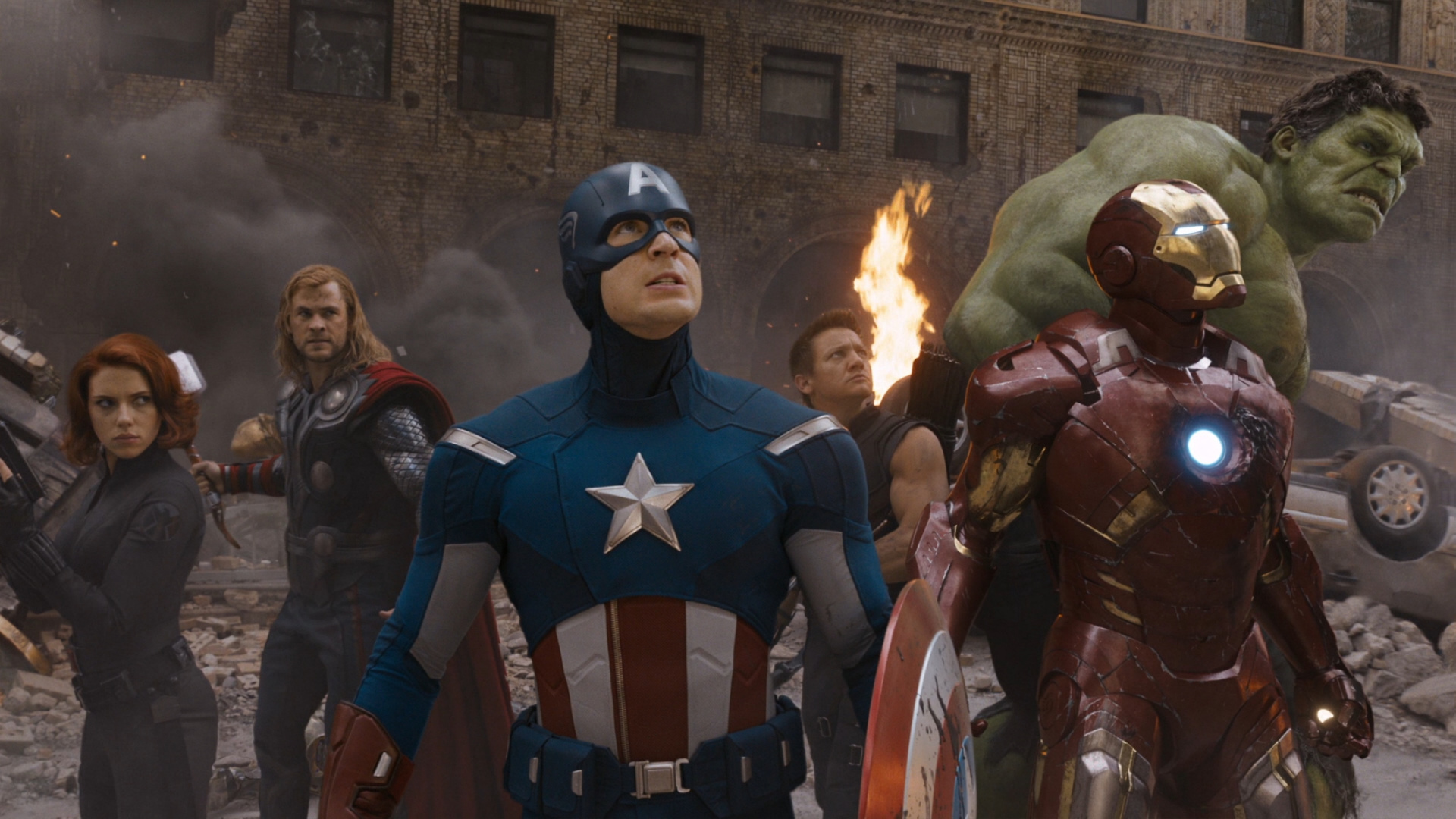
The Avengers is one of the most popular superhero movies ever created, and even considered by some to be the best of the MCU (Marvel Cinematic Universe) movies. When it first came out, I admit that I had fun and enjoyed seeing this superhero team in action. However, I also considered the movie to be average in terms of plot and thought. Even when the movie tries to surprise me, I found myself predicting what the characters were going to do next. Also many of the stakes are low when you know that none of these heroes are at the risk of death.
So, I often considered The Avengers to be overrated and not as great as everyone else seems to make it out to be. I wanted to give it another chance (or should I say, a 4th or 5th chance) and watched it again recently to see just how 'good' or 'great' The Avengers really is. These ratings are now higher than what they would have been in my initial viewings when the movie first came out.
Artistic Value (Rating: 4)

The MCU movies are made so that fictional illustrations can become reality, and indeed The Avengers succeeds in doing that. Whether it is seeing Iron Man fly around or Captain America fighting off the bad guys or even seeing the Hulk crashing through a tunnel, it all looks as realistic as possible. Even with the fantastical elements involved with Thor and Loki, or the alien invasion army, the movie is made in such a way that it looks like it really could happen if we walk outside.
The color palette is also bright and diverse. Between the reds, the blues, and the greens in the team's appearance, you get a lot more vivid colors happening here compared to the DC movies or even some of the MCU movies later on, which tone down the brightness and diversity a little. The choice to stay away from Hawkeye's classic purple suit took me out of the movie a bit at first, but then once I realized his character was essentially a black ops military agent, then his all black attire made more sense.
The technology inside the movie is also well crafted. It is meant to look fancy, expensive, and just a little beyond our current capabilities, all while still seeming possible. The movie also gives the new technology good reason for acting the way it does. The floating fortress helicarrier of S.H.I.E.L.D. uses cloaking technology, but the cloaking comes from using mirrors to refract light instead of just saying 'We pressed a button and now we're invisible'. Iron Man's latest suit can attach to his whole body even when he is falling through the air, but it shows that he has to wear specific devices and the suit has to scan his body before it can fit him.
I went back and forth on whether to rate the value at 4 or 5. Part of the problem is most of my criticisms are nitpicking, but there's enough collective nitpicks plus some minor peeves to keep this movie from being close to artistically perfect. Most people have pointed out how unrealistic it was for the heroes to be communicating to each other without actual earpieces and microphones. Another detractor from the realism is Bruce Banner's random ability to control his transformation in the Hulk for the New York battle. If he could control this ability, why couldn't he stop himself from transforming on the helicarrier or why was he worried about being around people? Banner's conflict comes from his inability to control the Hulk transformations and when the script decides to take that away just for the sake of cool fighting scenes. This movie shoots for ultra-realism, but this minor communication feature is a major flaw in realism. Even with some cool slow-mo punches and a cool extended-take action scene during the New York battle, most of the actual fights were choppy and cut up. I take off some points for some of the make-up that didn't work, such as Loki's appearance in the beginning when he transports into S.H.I.E.L.D's base. These nitpicks are what make the Artistic Value a 4.
Moral Value (Rating: 3)

Here is the tricky part involved with any superhero movie. Are the superheroes the justifiable good guys? Are these role models for kids, and for adults even, to look up to? Some of these more ethical based questions get examined in future movies, but here the lines are just kind of generically established about who fights for good and who fights for evil. Loki is the definitive bad guy, as are the aliens that he works with, while the Avengers just kind of take the hero mantle since they are Loki's oppoinents. These lines are pretty blurry though, when one of the members of the Avengers, Hawkeye, spends 2/3s of the movie brainwashed into working for the villain and also when S.H.I.E.L.D's Phase 2 secrets become revealed.
When it comes to the final battle in New York, the good guys take some questionable actions to do what they need to do. For one thing, the council in charge of S.H.I.E.L.D has a nuclear missile fired upon the city, claiming that destroying the city is for the greater good of stopping the alien army, even if it means killing many innocent civilians. The other thing is the Avengers willingly destroy much of the city's buildings and property in order to defeat their opponents, again trying to save the world but also putting innocent lives at risk with the rubble and destruction. It's frustrating that people give DC so much trouble for all of the destruction that Superman causes, especially in Man of Steel, but I've never really heard any complaints about the destruction from the Avengers.
The PG-13 rating is warranted based on the level of action and violence involved, as well as some references made especially by Tony Stark. The violence wants to be realistic (Loki kills a whole bunch of nameless soldiers right out of the gate) but since it is a movie aimed at a wide age range, it does not have the guts to show...the guts and gore involved in killing. This is perhaps the least realistic part of the movie. It wants to pretend to be a fictional cartoon to get away with the violence even though it otherwise wants as much realism on display as possible.
Tony Stark is a problematic superhero role model because he shouldn't really be a role model based on his characteristics. He has not really seemed to turn away from the alcoholic, playboy lifestyle that was established for him in Iron Man. His snarky, selfish attitude is not really something for kids to emulate, even though our internet-age young adults seem magnetized to that kind of person as influential. Yet, the character arc given to Tony allows him to make up for this character flaw by being willing to sacrifice himself when the nuclear missile threatens New York.
I think one of the positive moral factors in this movie is Hawkeye's story of redemption. I do not think people give him enough credit for being a knowledgeable and skillful member of the Avengers team just because he does not have anything comparatively extraordinary about him. However, while under the control of Loki, Hawkeye is able to come up with plans just as well as Loki does on how to distract or take out the Avengers . He is able to infiltrate the S.H.I.E.L.D helicarrier and successfully lead men into defeating the team. After his encounter with Black Widow, the mind control is lost. Hawkeye knows he helped the villain and hindered the protagonists. He seeks revenge on Loki in the New York battle, but in doing so he helps make up for his mistakes throughout the movie. His skills may not be as heavy-hitting or as flashy as the others, but he is still able to give the team visual guidance and use his skills as an archer to take out as many enemies as possible. Heck, he almost snipes Loki and had he not been a super-powered magical alien, Loki would have died.
So yeah, the confusing imbalance between the complexity and simplicity of the characters' ethical trait detracts from the morality rating. While this is ultimately a good versus evil story, it's not necessarily a light versus darkness story, which is where some of the latter movies improve on.
Monday, October 31, 2016
Voice on Movies: Interview with Steve Donahue
Today
I want to talk about somebody else with other ideas than my own. So may I
introduce you to one of my best friends, Steve Donahue. Steve and I first met
in high school when we were cast in a one-act play together. Steve has remained
a steady and good friend throughout the years and is one of the few people from
high school that I spend time with as often as possible. Even when I've been
out of town on some crazy adventure in the west or even after he became married
to his lovely wife Madalyn, Steve and I make an effort to catch up, eat food,
have a laugh, and continue to be in each other's lives. A fellow Christian as
well as movie fan, Steve has exercised his writing craftsmanship this past year
by creating a movie
review blog. Below
are some questions I had for Steve at our most recent get-together and his
responses.
Steve,
thank you very much for sitting down for this chit-chat on movies. Thank you,
Steve, for your friendship.
P.S.-I
have added links at the end to some of Steve's articles as well as some of my
own articles regarding movies for additional food for thought. There are
multiple references in this interview to reviews that Steve has written and are
worth checking out.
What
inspired you to review movies?
There was an extreme need that I had to start writing again; everyone told me that I need to keep practicing writing because I was good at it. But I never practiced it.
I've
been watching Youtube reviewers for over half a decade now, so I decided to
combine both of those things because I like writing about movies and writing in
general. I decided that was something I could focus on.
Where
does your love and enjoyment of movies come from?
Part
of it does come from actually watching movie reviews and enjoying analyzing the
movies. I'm very fond of the idea of seeing movies as an art form and a form of
storytelling.
I
think movies are more interesting than reading a book. I know that's not the
popular opinion.
It's
also less time consuming than reading or playing videogames… and watching TV
shows for that matter even though I do review some TV shows.
For
your reviews, you grade movies on a 1-10 scale, with 1 being the worst, 5 being
average, and 10 being the best. Why do you use that scale instead of a letter
grading system or smaller number scale like 1-5?
In
regards to how I think about movies being rated, I think certain rating systems
are too generalized because they don't have enough ratings. Then there's ones
that are so diluted by so many ratings that it almost loses meaning. There's
some reviewers I respect that use 4 or 5 star ratings.
Everybody
that I know of that uses the letter grading system suffers from dilution. What
comes to mind is especially Chris Stuckmann [a Youtube movie reviewer]. He
reviewed three separate movies and it seemed like he had equally negative
things to say about all of them and he gave one a D+, one a C-, and one a B-,
and I was like "I don't know what your rating system means, man".
I
think the 1-10 system is a perfect mixture of generalization and specificness.
There's some people, my brother included, that uses the 1-10 system but adds
0.5s like 6.5 and I think that causes dilution...I wonder if dilution is the
right word…If you have too many ratings, things start getting confusing.
On
top of that, my favorite reviewer also uses 1-10.
Do
you know what your favorite movie of 2016 so far?
So
far it's Swiss Army Man. I think the movie is so well performed
that it successfully made me feel almost every single emotion. The emotional
connection for me came from just relating to the characters as well. I mean, I
didn't just rate it a 10/10 cause I could relate to the characters but because
the performances were great. The soundtrack was done in a very unique way.
There was a lot of stuff that was thought provoking about [the movie]. I
wouldn't even say I agree with all the messages that Swiss Army Man even
had, but I just enjoyed it so much and I thought the movie was satisfying
enough to merit that rating, and there hasn't been a rating that's come closer
to that yet. It's funny...I've talked to a few people who have tried Swiss
Army Man and they either really really love it or they turn it off
after 20 minutes because they totally didn't get it so I wouldn't call it a
perfect movie for everybody.
How
does your Christian faith influence the way you watch and review movies?
I
think the way that my faith affects it the most is that my faith affects my
worldview, and my worldview affects how I view truth, and so a lot of
times...really the biggest way it affects how I view movies is based on what
message is being sent because of the movie. Aside from that
though, I try not to make my beliefs color the way I see a movie. There's an
article I wrote and part of it I talk about how there's some moral beliefs in
every movie that I've disagreed with that fall on almost every single rating.
I've given a 1/10 to a movie I morally disagree with, and I think Swiss
Army Man is a movie that, in some ways, I morally disagree with. So
judging a movie for me means being as objective as I can and as fair to a movie
as I can. So if I don't like what a movie is saying I don't immediately discredit
it [unless there’s other things I have problems with].
A
lot of the Christian movies I review, I try to review on the quality of the
film-making and not just on the message. Otherwise, I’d probably give it a
higher rating. A
vast majority of Christian movies I've seen aren't good.
Are
there any Christian movies made in the past 10-20 years that you like or
recommend?
Typically
if it's a [recommendable] Christian movie, it has Christian undertones. I would
argue that Lord of the Rings is one of those kinds of movies
that has those distinct influences. It's not 10-20 years ago, but I did
enjoy Ben-Hur. Not the 2016 Ben-Hur, I thought that one
sucked, but the Charlton Heston one. I mean, it was a bit overly long and
some of the parts could've been cut out and it would've made a much more
tighter movie but the overall performances of the movie were good… I don't know
if it's because I'm used to seeing movies in the 2000s but it was a very unique
experience.
The
Book of Eli would be on that list since it's technically sort of about
the Bible. Is there anything that's come out that was actually a Christian
movie? I can't think of anything.
[I
forgot Risen. That movie was pretty
good.]
There
are many movies that you have reviewed and given a 2 or a 3, something low. Do
you ever feel like you're torturing yourself watching some of these disasters?
Like a bad comedy is the schoolyard bully and it makes you punch yourself in
the head while it taunts 'Stop hitting yourself'?
[Laughs]
The most torturous movies are the 1 out of 10s. I can truly say that almost
every 1/10 was a torturous experience. 2 out of 10s...I think Turbo Kid was
extremely painful. I don't know if I'd say Batman v Superman was
a torturous experience, I was extraordinarily wowed by just how bad it
was. Like my mouth was ajar and I wondered "How in the world are they
doing so bad at this?". I guess I wouldn't say 3 out of 10s are normally
torturous, but I’d call them more obnoxious. They're not the schoolyard bully,
they're more like the kid that just won't leave you alone.
Do
you think there's any appeal in movies that are "so bad they're
good"?
Absolutely.
At the end of my review for Sleeping Beauty (2014), I said I
simultaneously loved and hated that movie because it was so bad but I was
laughing so hard because it was really funny. Another movie was Gods of
Egypt...the amount of boring parts in Gods of Egypt far surpass the
unintentional humor but I still thought it was fun to watch.
[What
makes moves that are "so bad they're good" fun to watch] is because
of the unintentional comedy. Usually when they say it's so bad it's good,
they're talking about how the movie's hilarious but it wasn't their intention
to be funny. Aside from that, the only other movies I can think of, I wouldn't
call them "so bad they're good", they were terrible despite being
entertaining are The Purge: Election Year, which was an awful,
unsubtle movie but it was a lot of fun, and Independence Day:
Resurgence had probably one of the cheesiest scripts I've seen in
awhile, but explosions are fun.
What
is your favorite thing about going to the movie theater?
This
is hard because I wouldn't say "Oh, there's a community" because I
usually go to movie theaters alone by myself. Honestly the best thing about
going to the movie theater is that it provides me material for something to
write about. The primary reason why I see so many movies is so I can write
about it because I think I'm good at it.
And
the inevitable follow-up question: What is your least favorite thing about
going to the movie theater?
Dealing
with the employees. You can tell they're being paid minimum wage because none
of them care. I think I did a tweet about how ticket rippers have the easiest
job in the world but they always manage to screw it up. I collect movie ticket
stubs and there's probably a bunch in there that aren't perfectly ripped. I
mean it's not so bad I wouldn’t go to Wehrenberg Chesterfield ever again but I
mean I've reviewed 90 movies in the theater so far. I don’t remember any of the
people there and none of them remember me, they always seem so disinterested.
Honestly if there was a movie theater that charged a little bit more but had a
more pleasant experience I would probably go, and I'm one who loves cheap movie
tickets. I dislike terrible employees more than I dislike terrible movies
because at least with terrible movies, I have something to write about.
Do
you have any movie favorites at the moment? Favorite director, favorite actor,
favorite genre, etc?
I
haven't really seen anybody that's been consistently awesome. One person that I
did want to search into more, because everyone says I should search into him
more, is Wes Anderson. I think Moonrise Kingdom is one of the
best movies that you could watch on Netflix right now. I've heard great things
about Fantastic Mr. Fox, I've heard great things about The
Grand Budapest Hotel, and I want to see all of them but I haven't given
myself time to find them out. Besides that...I mean, there's some actors that
give me a reason to think that the movie will be better. Bryan Cranston is one
of them, even though he's going to be in a comedy with James Franco and it
doesn't look good at all. To be quite honest, man, there hasn't been an actor
or a director or genre that has consistently been good with me. I think every
single one, except for those few classic directors, have the propensity to suck
at one point or another or at least not be very exceptional.
If
you had the power to stop Hollywood movies from using one terrible cliché,
which would it be?
Only
one?! Oh my goodness....Let me think...
One
of them I'm getting a little tired of is every single movie demanding some of
sort of strong-independent-female-character. It's almost becoming a meme
because I think the vast majority of movies I've seen you have at least one
female character whose sole defining trait is that she doesn't need any man's
help and she'll prove it at one point in the movie. It's not that I hate that
cliché [character]. In fact I think it's good, but they're using it so
much that it's almost becoming meaningless. I can think of so many movies that
have done this and some of them have become worse because they did it. Now
You See Me 2, Warcraft has a little bit of that in it, I
mean obviously Ghostbusters, Star Trek Beyond had
it, The Purge: Election Year, The Legend of Tarzan, Independence
Day: Resurgence had a little bit of it, Alice Through the
Looking Glass...do you want more?...It's super forced.
I
don't know how political I want to get, but you can tell there's a very strong
influence that modern third wave feminism is having on culture because that’s
the only reason I can think of why it almost seems like it has to appear in
every movie.
I
feel bad that I have this criticism because I don't want it to seem like this
character type is a bad thing to have in your movie. It's just becoming
overused to the point where it's not special anymore.
Must
See Relevant Blog Posts
Steve's
Blog
My
Blog
Friday, October 28, 2016
Valuable Movies Series Intro & Hail, Caesar!
Here is hopefully the start of another series of blog posts, in an attempt to get me to write on a more regular basis. My focus of these posts will be movies (and sometimes TV shows) because I love visual entertainment. My hope is to take a movie (generally a popular one) and rate it by examining the artistic and moral values found in it. I wrote a couple of posts a while back explaining the necessity for movies with value and the need to spend our time watching good movies (which have high artistic and moral standards). By looking at popular movie and TV selections, I hope to give an accurate rating as to whether we are really spending our time on good entertainment. While my examination of artistic and moral value will be flexible, I will be trying to follow these questions:
"Artistic value can be judged based on the following questions: Does it look good aesthetically, whether it is an animated movie or because of the direction and cinematography? Does the theme say something honest or truthful about the human condition? Does it have a good reason for existing?
Moral value can be evaluated based on these levels: Can this/ should this be seen by families? Is there a sensible reason for it to be made for adults or teens only? If religious, does it present spiritual truths well? Does the movie uphold natural understanding of what is good, true, and beautiful in the world? If there is a focus on a negative subject, does the positive good overcome in the end?"
What will my rating system be? I want to try to be unique enough but I also want to use something that's easy to understand in a visual form. Steven D. Greydanus, perhaps my favorite film critic and creator of the Decent Films movie review website, has multiple levels to his rating system. For the overall grade, he uses the letter grading system. He too grades movies based on Artistic/Entertainment Value and Moral/Spiritual Value and I am sure that is part of where my rating system and definitions comes from. For the Artistic Value he uses a 5 star rating system and for the Moral Value he uses a +/- number system. My friend Steve Donahue, who also reviews popular movies, uses a 1-10 system, but perhaps that is too big for something like this.
So, I think I will use a 0-5 system, with 0 being the worst, 5 being the best, and with 2.5 being average as well as the only time I use a .5 in my ratings.
I wanted to do a quick examination to provide an example of this series idea. So I will rate the values of Hail, Caesar!, the latest Coen Brothers release. While not really a popular movie, I did rewatch it recently and the Coen Bros are a popular enough team, so this gives me something to work on.

Artistic Value (Rating: 3)
Hail, Caesar! is a very sharp, bright movie. All of the colors and textures pop off the screen. There is also a wonderful recreation of 1950s Hollywood. From the costumes, the cars, and especially the dialogue, this place in the past is brought to reality. Hail, Caesar! examines what life in Hollywood was like for the people who created entertaining media and it also provides the Coen Brothers an opportunity to examine their own life in Hollywood today. People gave this movie trouble for feeling disjointed because it features vignettes or scenes of stories that quickly cut back from one focus to another. However, we have to remember that a single day of our lives can be disjointed, broken up into odd little moments that may not directly connect from one event to another, but they tell a full story of our experience for that day.
Multiple genres are represented in this movie, from biblical epics to westerns to musicals. While each presentation is a caricature of the genre, the atmosphere, pacing, and acting style unique to each genre are all brought out well. It's fun to see everything happening on set, whether it is how the actors move and perform dialogue or whether it is all the camera and microphone people rolling around just a few feet away. It's not often for us to see what is happening off screen while cameras are rolling, and again this is all done with proper representation of the time period.
My caveats or critiques of the artistic value of this movie does go back to the different movie genres. While Hail, Caesar! does try to recreate the different look of past movies, they still look brand new. Even when the footage is in black and white or grainy, it still looks too crisp for the time period. Modern technology offers us the opportunity to not just recreate a style like an homage, but also to really create the style again as if we are using the same cameras from 60 years ago. The other detractor for me involves the secretive group known as 'The Future'. These scenes tend to slow down the movie and drag for me. This is probably because there is so much philosophical, high intellectual jargon being thrown around that it's hard to fully comprehend everything. The biggest problem is that 'The Future' is supposed to be the main conflict and also where a lot of the thematic ideas come from but it is the least interesting thing in the movie to me.
Moral Value (Rating: 2.5)
There is a reason for this movie to be rated PG-13, but ultimately that's because the ideas, the setting, and the topics of conversation would really confuse and bore anyone that wasn't at least in high school or college age, and even then those things can still be confusing. The MPAA rated the movie PG-13 for Some Sexual Content, and this movie does involve dialogue that is either specifically sexual or at least an innuendo, or rather there is one extended innuendo in the dancing number. The PG-13 was also given for Smoking, but I've never really considered that a reason to keep a movie away from the kids because a lot of older movies and cartoons featured smoking and I don't think those were heavy factors in current smoking habits.
This movie acts like all major Hollywood stars during its Golden Age were sexually immoral drunkards and while I don't know enough about the real stars and the real Hollywood back during the 40s and 50s, I doubt that this can fully apply to each big movie star during this time period. Also, there is a brief discussion of theology between different Christian leaders, as well as a Rabbi, in the first quarter of the movie, which provides some humor, but can also cause some confusion for viewers that are not either Christian or Jewish or perhaps just do not have a lot of understanding of both theologies.
The biggest place Moral Value comes in to play is the main character Eddie Mannix (Josh Brolin). On the one hand, the man slaps a woman early on in the movie, he purposefully lies or covers the truth multiple times in order to protect the movie studio, the actors, and himself, and even though he says he wants to be a family man, he is hardly at home and we never see him with the kids when they are awake. This is a deceitful man who easily states big lies, even if he does mean well. On the other hand, he is a Catholic man striving for a solid moral life. He is repentant enough to receive the Sacrament of Reconciliation two times in about the span of one day, he prays with his rosary when he is in most need, he protects the studio actors and directors from public ridicule and scandal, and he really does know what is going on in his family's life and he genuinely cares enough about the welfare of his family to ask questions when he needs to know something.
The way that the character of Eddie Mannix is written is perhaps what rubs me the wrong way and this is big. He is supposed to be a Catholic, and we're inclined to believe he has more devotion than what we might consider a cafeteria Catholic today, but when a Catholic priest refers to Jesus Christ as 'The Son of God' and Mannix replies 'Not sure I follow, padre', that confuses me. This Catholic man is all too willing to devote himself to a life of lies and deceits in order to fix problems at the studio, even if he does have good intentions. Aside from the confusion with Eddie Mannix and the aforementioned theology discussion,the film's handling of religious topics and imagery actually provides some nice food for thought as well as some laughter when you realize what movies, stories, and scenarios it is referring to.
Subscribe to:
Posts (Atom)