Monday, June 9, 2014

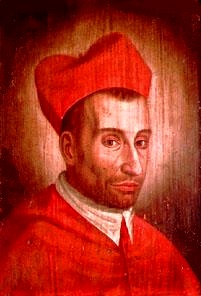
Saints: Role Models for Men- St. Anthony Claret & the Blessed Claretian Martyrs of Barbastro

It's a double header today. Mainly because I wanted to write about the martyrs from Barbastro, yet figured it would be good to introduce the founder of their order first, whom I also wanted to write about. So, here we go!

St. Anthony Claret


First off, no, this is not the St. Anthony that you ask to help you find lost items. St. Anthony Claret is a Spanish priest and bishop. At age 42, he established a religious institute of missionaries with five priests. This became the Claretian Order, members of whom I have met at Catholic Campus Ministry in Springfield. He lived back in the 19th century and became officially canonized in 1950. There are many reasons why I think St. Anthony Claret is a tremendous role model for men.

Jack of All Trades & World Traveler

He was a Weaver and Designer in textile mills in Barcelona. He learned Latin and Printing while working in the mills as well. He was mainly a Writer and Missionary after he became a priest. I'm always impressed whenever I come across men who are multi-talented, and St. Anthony Claret is definitely a man who had experience in a variety of areas. I also am inspired by people who enjoy writing.

This man helped establish Religious Publishing House, a Catholic publishing company in Spain, and wrote or published over 200 pieces of literature. He was able to write about something he is passionate about, which is something we should always strive for in any area of our work. He also traveled to places like Paris, the Canary Islands, Cuba, Madrid, and the Vatican for the First Vatican Council. What guy doesn't have an urge to go on a journey to far away places and experience adventures around the world?

Dedication of Faith

St. Anthony Claret always placed emphasis on the Eucharist and the Immaculate Heart of Mary, whether on mission or retreat or whenever. Both of these, the Eucharist and the Immaculate Heart of Mary, play a huge role in the life of Claretians today. It is said that the Rosary did not leave his hand. St. Anthony Claret also reformed the Archdiocese of Santiago, Cuba, as its bishop. He was known for hearing lots of confessions. He also became infamous in his diocese for opposing concubinage and instructing slaves. It takes courage to stand up for truth amid opposition, but St. Anthony Claret did just that in order to help his diocese grow closer to God.

Assassination Attempt

This man faced an assassin and lived! An assassin in Cuba was hired, but failed to kill St. Anthony Claret. The assassin managed to slash him across his face and wrist before being captured. However, when the assassin was on the verge of receiving the death penalty, St. Anthony Claret intervened and managed to get his would-be killer a prison term instead. He showed us how to be merciful and forgiving by helping save the life of a man who tried to kill him.

Queen

After returning to Spain, he was asked to become the Chaplain to the Queen. However, he did so on three conditions: He resided outside of the palace, he only came to hear the Queen's confessions or to instruct the children, and he would be exempt from court. I think this shows a great example for all of us because St. Anthony did not seek power and politics, but he still preached and did his duty wherever he was called.


Blessed Claretian Martyrs of Barbastro, Spain


I learned of these men when I came to Catholic Campus Ministry. At CCM, there is a beautiful mural that greets visitors. It is a painting of the 51 men, the seminarians, brothers, and priests that were killed in the midst of the Spanish Civil War.

Many of these men were between the ages of 21 and 25. Those that were not killed immediately were imprisoned and awaited execution.

Yet, every single one of them remained faithful to God! They all willingly accepted their martyrdom with joy. They were also very forgiving of their executors and shared their happiness to die for Jesus Christ in notes that they left for their loved ones on Earth.

All of us men, especially men my age, can learn from these martyrs how to joyfully accept God's will and be forgiving and loving towards all people, especially those who persecute or hurt us.

Monday, June 2, 2014

Saints: Role Models for Men-St. Padre Pio


Originally born Francesco Forgione in the southern Italian town of Pietrelcina (which is why he is also known as St. Pio or Pius of Pietrelcina), St. Padre Pio is one of the most modern saints. He was born in 1887 and passed away in 1968. As I mentioned in a previous post, I learned of this holy man after a group of friends in college named their house after him. Below, I have written various facts of his life and explain why St. Padre Pio is a great saint for men to look up to.

Young Model of Faith

At a young age, he began making devotions to God and start the path to priesthood. Part of his devotion was doing intense penances, such as sleeping on the stone floor and using a rock as a pillow. St. Padre Pio became a novice of the Capuchin Order at the age of fifteen and became a priest by 1910. It was after becoming a priest that he became known as Padre Pio rather than Francesco. It seems that he knew what his vocation in life was meant to be early on and began to develop habits and his faith life to help him after he became a priest.

Stigmata

This is one of the aspects of his life that he is most famous for. It was in 1918 that he received the stigmata, and was the first priest in the history of the Catholic Church to receive it. The stigmata is, in essence, the visible signs of the crucifixion on the body of someone who is not Jesus Christ. Although he considered it an annoyance at first, St. Padre Pio carried the marks of the crucifixion on his hands, feet, and his side for the rest of his life. When he died, 50 years later, the marks of the stigmata disappeared from his body.

Supernatural Abilities

St. Padre Pio had many other gifts which were spiritual in nature. He was known to have the gift of bilocation, meaning that he was in two different places at the same time. He was also known to be able to read and understand the hearts of the people who came to him in the confessional for Reconciliation. Majority of these people he had never met before, and yet he knew private, personal moments of their life. I think this shows St. Padre Pio's devotion to aiding those in need of God. He wanted to be in many places in order to help many people and he helped by absolving them in the Sacrament of Reconciliation, even if it was tough and painful for them to confession these sins.

Spiritual Advisor

In one of my previous posts, I presented one of St. Padre Pio's most famous quotes: "Pray, hope, and don't worry". I think this shows his philosophy towards faith and is a great bit of advice for those of us who worry a lot but need to pray more often (including myself).

Many pilgrims came to see him at the friary in order to have him hear their confessions. It is said that often St. Padre Pio would spend his whole day in the confessional, with only small breaks for times like Mass and sleep.

It is said that as a spiritual director, he had five key points of spiritual growth: weekly confession, daily Communion, spiritual reading, meditation, and examination of conscience. These are definitely parts of faith that I need to implement in my own life. Each of these points are different ways of being with God, listening to Him, growing closer to Him in order to be spiritually strong enough to take on the tasks that we need to complete, just like St. Padre Pio.

The Sick

One of the stories of St. Padre Pio is that Pope St. John Paul II once wrote to him in the 60s when the future pope and saint was just Archbishop Karol Wojtyla. The archbishop wrote on behalf of a woman who was dealing with throat cancer, asking St. Padre Pio to pray for her. The story is that, two weeks later, the woman was completely healed. St. Padre Pio was known for helping those who were sick and in need of his healing

He was known for overcoming illnesses as a child as well. Also, when he was drafted into the army during World War I, it was discovered that he had tuberculosis so that he was discharged, though he quickly healed and went back to life as a priest at a friary. Because of his desire to help the sick around him, St. Padre Pio inspired the construction of a hospital close to the friary.


St. Padre Pio truly modeled for all of us men how to care for the sick and needy. He showed us how to devote our lives to God and discern His will for our lives. St. Padre Pio endured his sufferings with faith and love, which is why so many people came to him for guidance. I would like to be the kind of man that people come to for aid and guidance. I would like to be the kind of man that helps people heal. Not to mention, St. Padre Pio also had a pretty sweet beard, which does not necessarily correlate with him being a spiritual role model, but definitely as a manly role model. I want to pray, hope, and not worry and devote myself to God similar to how St. Padre Pio did.

Thursday, May 29, 2014

The Community of St. Paul, MO.

When my parents first told me, at the end of last summer, that they were moving to St. Paul, I looked at them curiously and asked, "Minnesota?". Turns out, there's a St. Paul in Missouri, which is a small community in the northern part of O'Fallon, a city of St. Charles county so it's still pretty close to the other homes that I grew up in.

I really enjoy walking around this area, even if it's the kind of neighborhood that doesn't have a lot of sidewalks, but I can enjoy walking through the grass instead. It's been so great getting to know this place during my short time thus far. I want to share with y'all some of the great things about my new home area, especially with those of you who do not live close by.

The city shares its name with the local Catholic Church, which is pretty much the hub of the community and luckily a short walk from my family's home. While the church may not be very large, the pews get pretty full for every Mass and there is a perpetual adoration chapel in the building so that folks have a close place to quietly pray. When driving around St. Paul, you can see the steeple from far off distance.

It looks even cooler at night with the light shining on it.

The Knights of Columbus have their hall just down the road from the church and it hosts many activities.

Though the chief activity here is Bingo, naturally.

There are soccer fields, baseball fields, and picnic grounds all right around the church as well, giving the local youth places to play and giving family members of all ages a place to enjoy spending time outside together. Surprisingly the church and its community is big enough to have its own school, which always makes for interesting Daily Mass whenever the kids file in.

One of the highlights of my walks or drives around St. Paul is that I spot many statues of  the Blessed Virgin Mary outside of the homes around here. It's pretty inspiring seeing so many images of Mary, along with other statues of angels and the Sacred Heart of Jesus. I think it helps to connect the community here by gathering them together not just as a neighborhood where people live but also as a faith-based community.

The close-by church and church-oriented community are not the only features of St. Paul's.

Cady-corner from my house is the local tavern, the Dog Prairie Tavern, known for their fish fridays and sand volleyball.

What "The Dog" looks like when business is slow on Mondays
There's also a small automotive repair shop across from the tavern, which is pretty reassuring having a car shop so close to the house. The city hall is almost more like a room in the same building as the local fire department, though thankfully we rarely see or hear fire trucks coming in and out of the place.

We also have what I like to call a local "Boo Radley house". It's an old, small brick house that's been abandoned, with a decrepit barn in the backyard, a fenced front porch, and a sign saying "No Trespassing", all of which makes it both creepy and cool to walk by every time.

It's just about a five minute drive down some small rural roads to the closest gas station and library. In my opinion, the only thing missing from the community is a grocery store and perhaps a fast food restaurant or two, although it really does not take long to get to either type of establishment.

Hopefully this post has given you some idea about the size of the community. It's not too big, but that's part of the charm. It's much quieter out here than in most other parts of the county. These are all things that I have found to appreciate in my new community.

Monday, May 26, 2014

Saints: Role Models for Men-St. Charles Borromeo


Right off the bat, I'm talking about a saint that is incredibly near and dear to me. I grew up in the city of St. Charles, MO, went to Mass and received some schooling at St. Charles Borromeo parish, and I chose him as my confirmation saint. Even when I traveled to the Northwest for Reach, I still found St. Charles Borromeo following me since he has two buildings dedicated to him on the campus of Carroll College in Helena. There are so many churches and seminaries named after this Italian man who became a bishop at age 25. Let's look at why.


From the Rich to the Poor

St. Charles was born the second son of a noble family in Milan. Being noble at the time also meant being super rich. The Borromeos were also kin to the Medici family, the most powerful and wealthy family in the Italian region at the time. In fact, St. Charles' uncle, a Medici, eventually became Pope Pius IV.  Even as a young boy, St. Charles was said to give most of his money and other resources to the beggars that came to his family's home and other poor people he found throughout Milan.

Eventually, after becoming bishop of the Archdiocese of Milan, St. Charles devoted his resources to serving as many poor people as possible. This was during a time when he was not only a priest, but also the head of his family (more on that later). He even went in to debt during an outbreak of the plague to feed and heal the people that had been abandoned by the city's officials and other nobles.


Natural Leadership

At 18 years old, St. Charles was asked by his uncle, the Pope, to help at the Vatican. It was pretty much office and administrative-type work, but these types of jobs involved serious responsibilities. Young Charles was known for his high intellect and soon held multiple offices before becoming bishop.

When he was bishop of Milan, the plague spread throughout the region. Many of the city's officials, including the governor, fled the city to remain safe and healthy. St. Charles, meanwhile, as a disciple of Christ, led by example. He stayed in the city and ministered to as many people as he could.

Vocational Discernment

During this period as a young man, while living and serving at the Vatican, St. Charles' parents and his older brother had passed away. This made him the 'man of the house' for his immediate family. This meant that St. Charles was receiving lots of pressure to become a married man and lead his noble family. However, he was a cardinal-deacon and served the Pope at the Vatican, meaning he was already on a path towards the priesthood. He soon discerned that the right thing to do was enter the priesthood, though St. Charles still took on the responsibilities of being the leader of his family. At the age of 25, St. Charles was named bishop of the Archdiocese of Milan (did I mention that already?).

The Council of Trent.

St. Charles may not have been there for the start of the Council of Trent, but he was there to finish it. The Council of Trent was established to respond to the Protestant Reformation, which not only questioned various Catholic doctrines but also threw Catholic-Christianity into chaos. The Council of Trent had been on hiatus for ten years before Pope Pius IV started it back up again, along with the encouragement of St. Charles.

St. Charles was almost like glue that held the council together til the end, even though he was not a part of the council itself. He still had administrative responsibilities and kept the council members on task as they established the true doctrine of the Catholic Church.

Calling Men to be Better

When St. Charles dedicated himself to the needs of his Archdiocese, he evangelized to not just the laity but to the clergy as well. He discerned that the Archdiocese needed reforming and that the clergy, as the leaders of the local church, were responsible for leading the lay peoples  and therefore the clergy needed to be strong leaders. He would replace any priests that did not uphold doctrine or were just plain lazy with new priests who were zealous about the faith. Also, during that exodus of city officials during the plague, St. Charles wrote to the governor and pretty much told him (I'm paraphrasing here a little): "Hey, if you're in charge of the city, man up, get back here, and help the people you're in charge of!".


Of course, there's many other things that St. Charles did in his lifetime. However, I know that long blog posts can get boring and eventually there has to be a stopping point. These are just the main reasons why I personally look up to St. Charles Borromeo and try to apply what I learn about him to my own faith life.

Sunday, May 25, 2014

Saints: Role Models for Men- The Introduction

So, for the summer, I wanted to plan out another series of blog posts that can be put up once a week on a set basis throughout the summer. One such topic that I could readily write about with enthusiasm is manly saints. That is to say, saints who are men and role models of masculinity. On my plane ride home from the Northwest, which was on a Monday, I even chuckled to myself at the idea of posting new additions to the series on Mondays in connection with the social media craze Man Crush Monday.

I think it's important to recognize saints who are true models of manhood. Often times when people think of saints, they automatically come up with names like St. Therese of Lisieux, St. Catherine of Siena, St. Cecelia, St. Gianna, Blessed Teresa of Calcutta or even the Blessed Virgin Mary. There is nothing wrong with thinking of these holy women, but men cannot connect with them the way that women do just as women cannot connect with male saints like men can.

When people define a living person as a "saint", they define that person as being sweet, caring, and giving. While all of these words are good things for men to live up to, at the same time they're not the kind of words that inspire man to grow in masculinity and toughness. I think we also need to move away from the idea that being a manly saint is close to being like the guys in the Boondock Saints movies.

Sorry boys, the Cristeros and others already did the Catholic gunslinger thing long before you came along.

So, today's post is pretty brief, since this is just quick intro to the idea of the series for the summer. You can still expect other posts to be put up in between this Saints series. Please know that a lot of these saints that I am mentioning are personal role models for me with traits that I aspire to attain. Also, I will probably be mentioning Blesseds in this series as well. Blessed men and women are recognized in the Catholic Church as holy role models and people in Heaven, but have not had as many validated miraculous intercessions as recognized saints.

Tuesday, May 13, 2014

Disney's Competition Part 5: Frozen and the Future

This is the final installment of the series, and it's pretty exciting cause it involves less info about history and more creative-thinking about the future. We can use the knowledge that we have gained from the competition over the past couple of decades in order to make an accurate guess as to what future animated movies will be like.

The Success of Frozen

I know at this point everyone is still either super excited about Frozen or sick and tired of hearing about it. However, because it has been such a phenomenon these past several months, it's worth talking about because its success will have a huge impact on what kind of animated movies we'll see in the theatres in the next couple of decades.

I think that we can thank the princess formula for a large part of the success of Frozen. After all, we had a beautiful princess fall in love with a handsome prince-like figure. We had cute animal/ snowman/ rock troll sidekicks. We had orphaned princesses. We had a villainous adult that may not have had magical powers, but in a weird strange twist magic powers played a huge part in the conflict of the story.

Frozen did also manage to poke fun and critique Disney's stereotypical moments in a princess movie. Instead of having Princess Anna and Hans get married, they had Anna take time to fall in love with Kristhoff for the right reasons. Instead of having the prince/ heroic main man save everybody, the sisters helped to save each other and in turn saved everybody else. We didn't see any wedding, but we did get a tiny glimpse at a romantic relationship between Anna and Kristhoff, which shows that they didn't have to immediately get married to be romantically involved with each other.

Besides plot, Frozen was also a highly successful computer-generated animated movie and there were a lot of beautiful animated moments that may not have worked as well with hand-drawn animation (I don't think Olaf the Snowman would have worked as well as a 2-D figure). And, of course, there was the hit soundtrack. I can't recall a Disney song ever such a huge hit on pop radio. It was a combination of all of these parts that made Frozen the most financially successful animated movie to date.

The Future

Now Dreamworks and any other animated company looking to compete against Disney has their work really cut out for them.

I think one of the main things we can expect to see is the disappearance of hand-drawn, 2-D animation in theatrical releases. We saw how Dreamworks tried to make money with that style and quickly shifted to the computer-generated movie-making where they met with more success and more money. Don Bluth's animation team was unable to be successful at creating popular hand-drawn animated movies, even with a little bit of assistance from CGI in the end.

Disney's last attempt to make a smash hit with 2-D animation with The Princess and the Frog and since that film was a minimal success, we haven't seen hand-drawn animation from Disney since. The last group to be successful at hand-drawn animation has been Studio Ghibli, but since Hayao Miyazaki is retiring from movie-making, and Disney absorbed Studio Ghibli in to their company here in the United States, not only is the competition disappearing, but so is the art of hand-drawn 2-D animation. If computers make animation easier, quicker, and cheaper, then that is the route that not only Disney is going to take, but so will the rest of their competition.

I think we will also continue to see a variety of princess movies to come. Sure, we may be running out of popular fairy tales involving princesses to adapt in to movies, but between the popularity of Tangled and Frozen, Disney would be foolish to not keep making princess movies. Especially if they continue this pattern of twisting and flipping their typical princess formula. Even Pixar, as it got absorbed in to Disney, made a princess movie (Brave) which features some of the princess formula ideas, but also twists it for the modern audience's enjoyment. Dreamworks has yet to create a princess movie, but once they do, you can bet they will make a huge franchise out of it with five sequels and a TV show.

I know I give Dreamworks a hard time for milking their hit movies for all the money they're worth, but the reason why they do them is because not only are the original movies (Shrek, Madagascar, How to Train Your Dragon) good, but they're so good that they're guaranteed to draw in an audience again if there is another movie featuring the same characters that the audience enjoyed in the original movies. This cash cow of sequels scheme is what has been keeping Dreamworks going and has allowed them to try to experiment with creative ideas until they find the next hit franchise.

We also may get  pretty nostalgic with future animated movies. What I mean is that there will probably be more movies focused either on the types of movies we loved in the past or there will be more references to shows and things from the past. This may be especially marketed towards my generation, which was the first generation to grow up with easy access to all of the old, classic animated movies, played a huge part in supporting the Disney Renaissance (the 90s), and are suckers for reliving our childhoods (seriously, look at the stuff that's posted on Buzzfeed).

For example, Wreck-It Ralph was a strange movie that may not have seen the popularity of Frozen, but it was still big because of the video game, arcade nostalgia that a lot of guys around my age (and even some of the ladies) geeked over. Toy Story 3 was the most successful animated movie before Frozen because people my age loved the original movies so much and it was a way to not only relive our childhood, but then had to say a necessary though bitter goodbye to that big part of our childhood. Dreamworks just released a Mr. Peabody and Sherman movie, though it's hard to tell who it's for because it references a show that was popular in the generation before mine but it has been updated for kids in this current generation.

Pixar and Disney are going to have an interesting relationship over the next few years. It seems that whenever Pixar has success with original and creative movies, then Disney's releases suffer and lack quality (just look at the mid 2000s). However, whenever Disney has major success, then Pixar seems to rely on returning to their hit movies with sequels (ergo Cars 2 and Monsters University). I think the success of Pixar's next movies will determine the quality and success of Disney's next releases. Pixar has a couple of new, original movie ideas in the works but they also have Cars 3 and The Incredibles 2. I, for one, would rather see Pixar's new ideas make it big instead of their sequels.

Dreamworks has this opportunity to push themselves to experiment with art and plot ideas. With the money they are making from their successful franchises, Dreamworks can afford a couple of more artsy, creative movies that expand the artistry of computer-generated animation and find a new franchise. Rise of the Guardians was an interesting idea that involved beautifully unique designs and artwork. The Croods (which I forgot to mention in the Dreamworks Animation post) was a creative idea that allowed the artists to experiment with design.

I think we may also see another big animation company rise up to take on Disney competitively. This hypothetical new company may be headed by a former Disney employee who wants to create quality artfully tasteful movies that have not been created in recent times.  Remember, Don Bluth was a former Disney employee who wanted to return to the quality of classic Disney artwork. Jeffrey Katzenberg was a former Disney producer who felt that the Disney films produced during his time was not up to snuff with Disney masterpieces. Don Bluth’s animation team lasted about 20 years. Dreamworks is coming close to having been a movie company for 20 years. It’s close to time for another animation company to make it big.

We will always have random animation teams making one or two movies that make it to the big screen. They may be hand-drawn, like The Swan Princess and The Iron Giant, or it may involve claymation like Coraline and Paranorman (the makers of those movies are coming out with another claymation movie called Trolls pretty soon). The reason why I did not make a post about studios like these, however, is because they do not have the same staying power nor the same popularity as films by Disney and Dreamworks.


Disney will always be around. It has been a powerhouse for so long, and even when the company does not release instant classics, they still make movies that become a part of children’s movie collections. Dreamworks will probably not go away pretty soon because they have a load of hits under their belt and really have established franchises that take attention and money away from Disney releases.

Conversion Story

I had the idea of putting up my testimony, that is to say my conversion story, up on this blog ever since I established it, however I obviously put that idea on the back burner. Last Friday at Daily Mass, though, the priest challenged the whole crowd to write down their conversion story to share with present and future generations. I figured a blog post would be a little more permanent and less likely to be forgotten than if I just wrote this down on paper. Now, you may be thinking it weird that I am saying I have a conversion story since I have been raised in Catholic Church for as long as I can remember.

The way I would define "conversion" is: The choice of saying Yes to God and growing in a deep, personal relationship with Him. This is how I define it for the teens and youth whenever I share my conversion story with them. It does not matter whether someone is brand new to Catholicism or if they have been raised in the Church their whole life, at some point when that person has a conversion, it drastically affects the way they live and the way they approach their relationship with God.

Pre-Conversion

Like I said, I grew up going to a Catholic Church for as long as I can remember. One of my parents was raised Catholic and the other wasn't, but they still brought my brother and I up in the Church as best as they could. I grew up in an interesting system where, on one Sunday, I would go to Mass and then the next Sunday, my brother would go to Mass while I stayed home, and then we would switch back and forth every other Sunday of either going to Mass or staying at home. At the time, I felt like it was a win-win situation cause I would either get to sit at home and watch TV or I could expect to get a doughnut and a soda on the way home from Mass.

I was baptized in the Catholic Church as a baby. I went to Catholic grade school from Kindergarten until 5th grade, during which I first experienced the Sacraments of Eucharist and Reconciliation. I was Confirmed in the Catholic Church during 8th grade, after I began attending public school for a couple of years. However, none of these moments when I received the Sacraments were a big deal to me.

Even with this educational background and a somewhat regular Mass attendance (where I was hardly what you would call "focused" during Mass), I had a weak faith life. I was not taking action outside of Mass or grade school to grow in my faith. I did not read the Bible outside of Mass or Sacramental prep. I was lucky enough that we had an Advent wreath that we would pray around before Christmas time, but that was the extent of my more spiritual prayers. If I was ever praying outside of those moments, it was usually asking God for things that I desired.

Perhaps this kind of situation may be familiar to you: I would spend my mornings in the shower getting ready for school. I would start to have deep, philosophical thoughts during my morning routine. And there, in the middle of showering, I would make the sign of the cross and say "God, please make Jane Doe my girlfriend" or "God, please let me get an A on this test". That was really the extent of my prayer life during this time period.

After Confirmation, my parents decided that it was now up to me to figure out whether I wanted to continue being a Catholic or if I wanted to do something else (guess it must have been because I was at the age of reason or something). So, during high school, I began to focus on other things since I wasn't forced to go to Church anymore. My biggest focus was getting a girlfriend. A part of the reason why I got involved in the world of theatre in high school was because I noticed a bunch of attractive girls were involved in the department and so I figured I could increase my chances of getting a date by joining up (the results of which should be saved for another post).

Also during this time, I gained my first job: working at McDonalds. I'm not ashamed to admit I worked there for a long time, I learned so much and grew as an individual from my time there. However, I figured it was a smart decision to work at Mickey Ds on Sunday mornings rather than go to Mass because my other focus during high school was money, getting more money to buy more things for myself. I figured being at a place I didn't enjoy being at, getting annoyed with customers, and overall just struggling through several hours of work was a better decision than just sitting through one hour of Mass because I was focused on the paycheck. Looking back, I realize I was making the wrong decision.

So, I really didn't have much of a plan or a purpose in my life.

Conversion Time Period

The thing that turned my life around during this time was at the end of my high school career and being asked by my cousin Irene and her husband Rob to be the godfather of their first child, their son J.D. (which stands for James Douglas). At J.D.'s Baptism, I had a moment where I began to realize the responsibility that I was taking on. I was not only being partially responsible for raising this child to be a good person, but I was also responsible for helping to raise this child in the Catholic faith. This meant that I needed to take on more responsibility for my own faith in order to fulfill my role as a godfather.

So, when I went to college, I quickly found Catholic Campus Ministry. Of my own free will, I began to attend Mass on a more regular basis and I joined up Bible Study which was led by the FOCUS missionaries on campus. However, these things were still more to-do list items than priorities that truly mattered to me. However, it was enough to get me to go on my first college spiritual retreat the fall of my sophomore year.

During that retreat, I was in the chapel and looked up at the crucifix. As I saw the wooden representation of Jesus hung up on the cross, I began to contemplate this idea.

Jesus died to save everybody, He suffered for all of us. However, at the same time, He especially suffered and died for me in particular. If He did that for me, then that must mean that He has some sort of relationship with me, which therefore means that I have a relationship with Him. Yet, I did not understand that relationship at all.

After that retreat, everything that had been part of my to-do list spiritually became priorities in my life. I went to Mass on a more regular basis and even started going to Mass as a daily occurrence. I became more invested in Bible Study and eventually went to lead a small Bible Study of my own. I began to develop a regular prayer life, going to the chapel to pray as often as I could. All in an effort to better understand my relationship with God.

Post-Conversion Life 

All of this happened over a periods of months, even years. My conversion story was not something that happened overnight after hitting rock bottom. I recognize that I have been lucky and have taken my faith and my relationship with God for granted for a long time. In fact, when I was applying to FOCUS and Reach during my last year of college, I had a hard time piecing together my conversion story in order to give a testimony. I felt like my life did not have enough drama and that my change of heart was not drastic enough to be interesting to ministry staff or to people that they ministered to.

Here’s what I have learned over time and shared with people over this past year or so: A conversion does not have to mean that someone became a Catholic after being some other denomination beforehand. A conversion is a change of heart and it needs to happen for all of us, whether we are brand new to the faith or we have been raised as cradle Catholics (born and raised in the Church). A conversion does not have to be a lightning-flash moment after hitting rock bottom. It can take a long period of time. A conversion is important, however, because it helps us build our relationship with God. Not that God has to grow closer to us, but we have to take those steps to grow closer to Him.


By growing closer to God, we better understand the purpose that He made us for and are better able to fulfill His will for our lives. By following God’s plan, we find a lasting joy, an eternal happiness, rather than the temporary pleasure that comes from seeking other things whether it’s money or sex or whatever else it may be.